

Key Takeaways
- The three-part size code tells you tyre width, aspect ratio, and wheel diameter in millimetres and inches.
- The load index number maps to a maximum weight each tyre can safely carry.
- The speed rating letter indicates the highest sustained speed the tyre is designed for.
- Never fit a tyre with a lower load index or speed rating than your vehicle manufacturer specifies.
- The DOT code stamped on the sidewall reveals the tyre's manufacture date — relevant for safety checks.
- Your vehicle's correct tyre spec lives on the door jamb placard, not the old tyres themselves.
Tyre Sidewall Markings
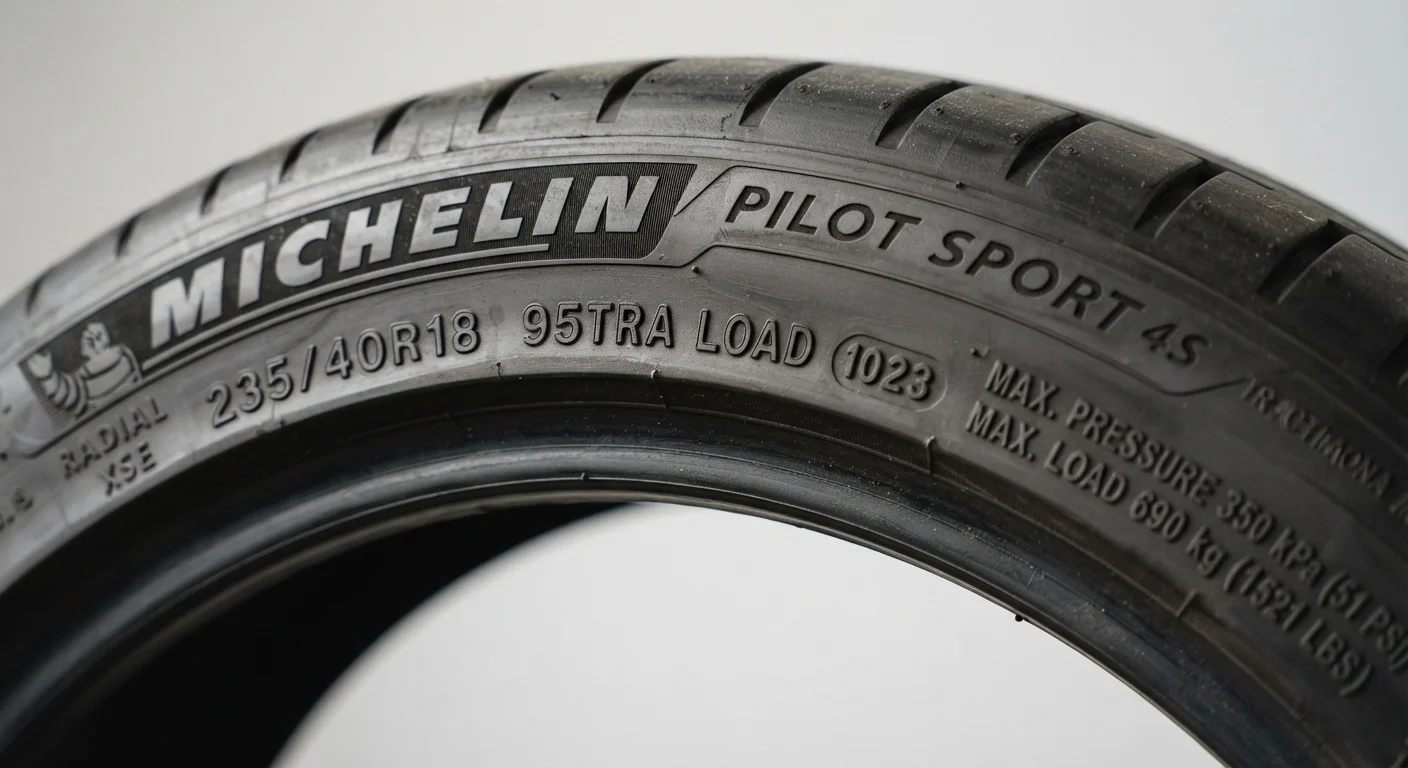
The string of numbers and letters moulded into the side of every tyre is a standardised code that describes the tyre's size, load capacity, speed rating, and construction type. Reading these markings correctly helps you confirm you have the right tyres fitted and understand their safe operating limits. Mismatched or misread codes can quietly create a safety risk.
The code follows a format set by international tyre standards bodies. A typical example looks like: 205/55R16 91V — each segment carries a distinct, measurable meaning.
Breaking Down the Core Size Code
Take a tyre marked 215/60R17. That sequence packs three pieces of information into a compact format:
- 215 — The tyre's section width in millimetres, measured from sidewall to sidewall when mounted on its specified rim.
- 60 — The aspect ratio. This is the sidewall height expressed as a percentage of the section width. A 60 here means the sidewall height is 60% of 215 mm. Lower numbers mean a shorter, stiffer sidewall — common on performance-oriented vehicles.
- R17 — R confirms radial construction; 17 is the wheel diameter in inches that the tyre is designed to fit.
Getting any one of these wrong when replacing a tyre can affect your speedometer accuracy, braking distance, and clearance inside the wheel arch. Always cross-reference against your door jamb placard, not just the tyre being replaced. See also our guide on tyre pressure and what the numbers mean, since correct inflation depends on having the right size fitted in the first place.
Load Index and Speed Rating: The Safety Pair
After the size code you'll see two more characters — a number and a letter. On a tyre marked 91V, the 91 is the load index and V is the speed rating.
Load Index
The load index is a standardised number that corresponds to a specific maximum weight per tyre. Index 91 equates to 615 kg per tyre. Common passenger car indices run from around 75 (387 kg) to 105 (925 kg). Four tyres at index 91 give a combined capacity of 2,460 kg — your vehicle's Gross Vehicle Weight Rating must fall within that. Fitting a lower index than specified is a safety risk and may affect your insurance validity.
Speed Rating
The letter indicates the maximum sustained speed the tyre is designed to withstand. T = 118 mph, H = 130 mph, V = 149 mph, W = 168 mph. This isn't a target — it's a structural ceiling. Sustained driving above the rated speed generates heat the tyre isn't built to manage. Fit at or above your manufacturer's specified rating, never below.
~11%
US crashes linked to tyre-related failures
NHTSA data indicates tyre-related issues are a contributing factor in a significant share of reported vehicle crashes annually.
6–10 years
Recommended maximum tyre service life
Multiple vehicle manufacturers and tyre safety organisations recommend replacing tyres within this window regardless of remaining tread depth.
25%
Vehicles on US roads with at least one under-inflated tyre
NHTSA surveys have consistently found that a significant proportion of passenger vehicles are operated with at least one tyre below recommended pressure — a condition tyre markings help drivers prevent when read correctly.
The DOT Code: Reading Your Tyre's Age
On the inner or outer sidewall you'll find a sequence beginning with DOT, followed by a mix of letters and numbers. Most of it is manufacturer and plant codes — useful to industry but not to you at roadside. The part that matters is the final four digits.
Those four digits are the week and year of manufacture. A tyre stamped 1422 was made in the 14th week of 2022. Tyre compounds degrade over time through oxidation, even when tread depth looks fine. Many safety authorities and vehicle manufacturers recommend retiring tyres at six to ten years from that manufacture date — not from when you bought them.
This matters especially for spare tyres, which sit unused for years and are often overlooked during routine checks. If you're unsure about a tyre's condition or age, a qualified tyre technician can assess it properly.
Check Your Spare Tyre's Date Code
Most drivers never look at the DOT date on their spare tyre. Locate the spare, find the last four digits of the DOT code, and confirm it's within the recommended service window. A decade-old spare sitting in your boot may look fine but could fail under load — check it now, not at the side of a highway.
Other Markings Worth Knowing
Beyond the core codes, several other markings appear on most tyres:
- M+S or M&S — Mud and Snow. Indicates the tyre meets a minimum threshold for wet and light snow traction. It is not the same as a winter tyre rating.
- Three-Peak Mountain Snowflake (3PMSF) — A symbol (a snowflake inside a mountain outline) indicating the tyre has passed standardised winter performance tests. Significantly more capable in cold, snowy conditions than an M+S-only tyre.
- XL or Extra Load — Reinforced sidewall construction capable of carrying higher loads at higher inflation pressures. If your vehicle specifies XL tyres, a standard equivalent will be underrated.
- Run Flat indicators — Brands use their own abbreviations (ROF, RFT, SSR, among others). Run-flat tyres can be driven a limited distance after a complete pressure loss, but require a compatible wheel and usually a tyre pressure monitoring system to be used safely.
Understanding these lets you make informed decisions and ask the right questions at a tyre shop — without needing a course or specialist knowledge. For related reading, our guide on tyre rotation, alignment, and balancing explains the service jobs that keep correctly-specified tyres performing as intended. You can also check what your dashboard warning lights mean to understand when your vehicle is flagging a tyre-related issue.