

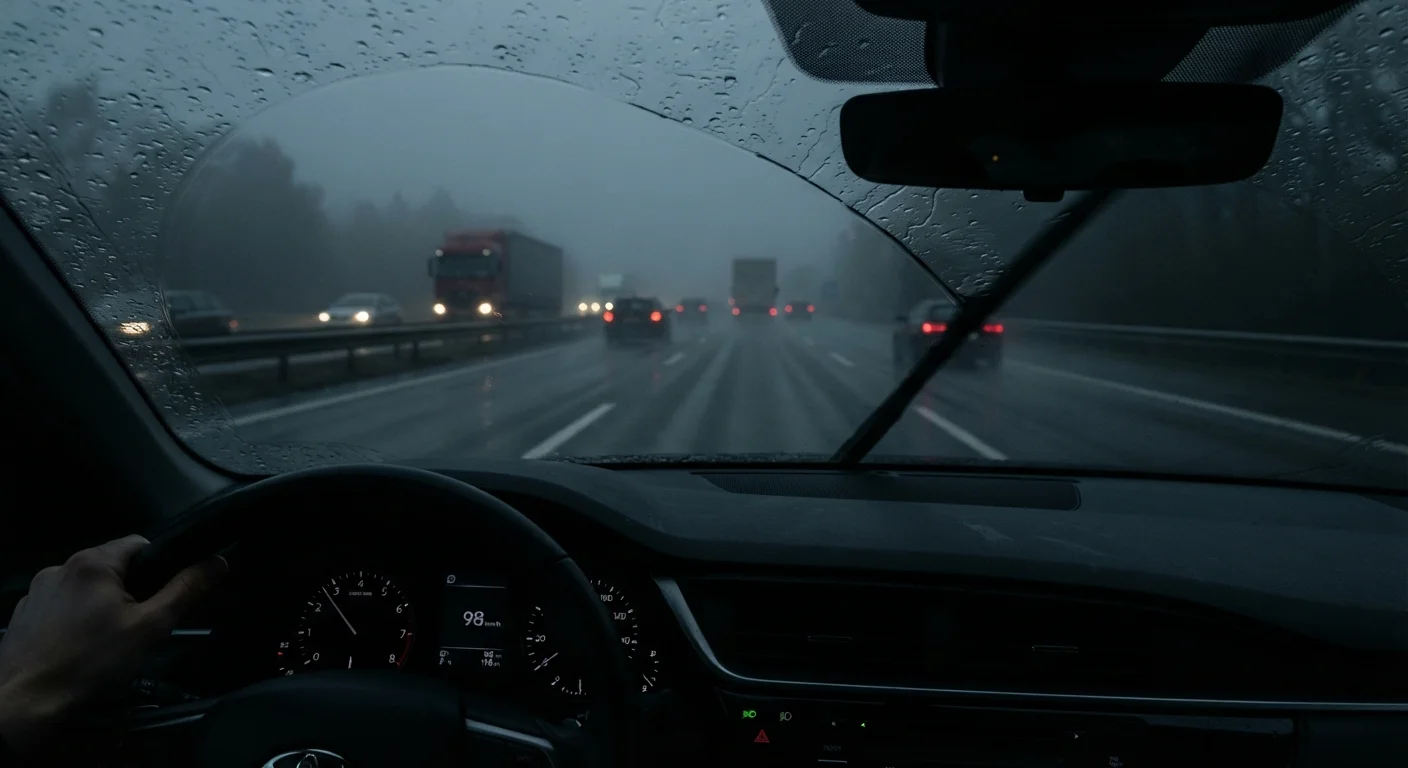
Key Takeaways
- Rain, fog, and ice each demand different responses — one-size-fits-all caution isn't enough.
- Reducing speed is necessary in all three conditions, but by different amounts and for different reasons.
- Headlight use, following distance, and braking technique all need to change based on the specific hazard.
- Most weather-related crashes are preventable with early adjustments, not emergency reactions.
- None of these habits require expensive equipment — just awareness and deliberate practice.
Why Weather Demands Condition-Specific Responses
Most drivers know to slow down when the weather turns bad. That's a start — but treating all bad weather the same way leaves real gaps in your safety. Rain reduces tire grip and visibility. Fog strips away depth perception. Ice makes standard braking and steering almost useless. Each condition changes what the road is doing to your car, which means your adjustments need to match the actual hazard.
The good news: nearly all of the adaptations that work are free. They're habits, not hardware. And they're learnable by any driver at any experience level. For more on how road-reading skills tie into hazard anticipation generally, see Reading the Road.
In rain, drop your speed and add at least three seconds of following distance.
Wet pavement significantly reduces tire traction. Stopping distances can increase by 50% or more on a wet road compared to dry. The standard two-second gap simply doesn't give you enough room to brake safely if the car ahead stops suddenly.
Use low-beam headlights in rain and fog — never high beams in fog.
High beams in fog reflect off water droplets and scatter light back at you, making visibility worse, not better. Low beams project light downward and forward in a way that cuts under the fog layer. In rain, headlights help other drivers see you, not just the other way around.
In fog, use your speedometer — not your sense of speed — to set your pace.
Fog distorts perceived speed. Without visual reference points like lane markings at a distance, drivers often feel they're going slower than they are. This leads to underestimating speed and overestimating reaction time available.
On ice, apply brakes and steering inputs gently and much earlier than normal.
Ice dramatically reduces friction between tires and road. Hard braking or sharp steering on ice causes skidding because the tires lose grip instantly when force is applied abruptly. Smooth, gradual inputs keep the tires rolling rather than sliding.
In fog, pull off the road if visibility drops to near zero — don't crawl along the shoulder.
A common but dangerous instinct in dense fog is to creep forward on the shoulder. This puts a nearly invisible stationary vehicle in a position where faster-moving traffic may not see it until too late. Parking lots, rest areas, or a fully off-road stop are safer options.
Watch for hydroplaning and know how to respond without overcorrecting.
Hydroplaning happens when a tire rides up on a film of water instead of maintaining contact with the road surface, usually at speeds above 35 mph in standing water. Steering and braking become temporarily ineffective. Overcorrecting — jerking the wheel or braking hard — worsens the skid.
Quick Actions You Can Take Before You Pull Out
A few checks before you leave can cut your risk significantly in any adverse condition. These take under two minutes and cost nothing.
What the Data Says About Weather and Crash Risk
Weather-related crashes account for a substantial share of serious road incidents in the US each year. Understanding the numbers helps put the risk in context — and makes the case for taking conditions seriously rather than assuming your normal habits are sufficient.
21%
US crashes linked to weather conditions annually
According to the Federal Highway Administration, weather-related crashes account for roughly 21% of all vehicle crashes on US roads each year.
70%
Weather crashes occur on wet pavement
The Federal Highway Administration reports that approximately 70% of weather-related crashes happen on wet pavement, making rain the most common weather hazard by volume.
4–10x
Increase in stopping distance on ice vs. dry road
Road safety research consistently shows that stopping distances on ice can be four to ten times longer than on dry pavement, depending on speed and tire condition.
If you're new to driving or building your foundational habits, these numbers are particularly relevant. New licence holders are disproportionately represented in weather-related incidents, partly because they haven't yet developed the automatic adjustments that more experienced drivers apply instinctively. Similarly, if your car has ABS or traction control, it's worth understanding what those systems actually do — and don't do — in wet or icy conditions. See what drivers get wrong about safety systems for a grounded explanation.
After the Conditions Clear: Resetting Your Habits
One common mistake is failing to de-escalate once conditions improve. Drivers who've been white-knuckling through ice sometimes stay tense and over-cautious on dry roads, creating their own hazards — jerky braking, excessive gaps that disrupt traffic flow. Equally, some drivers drop back to normal speed the moment rain lightens, before the road surface has actually dried.
Pay attention to the road surface, not just the sky. Water pooling in lane lines takes longer to clear than rain stopping. Black ice can persist well after temperatures nominally rise, especially in shaded areas, on bridges, and on overpasses. When conditions have genuinely cleared, gradually return to normal following distances and speeds — don't snap back immediately.
Weather-related driving challenges don't end when visibility improves. For a related set of adjustments that apply after dark — which often compounds with rain or fog — see night driving habits. And if a bad-weather situation ever escalates into a skid or loss of control, knowing what to do in advance makes a measurable difference in outcome.