

Key Takeaways
- Fatal crash rates per mile driven are roughly three times higher at night than during the day.
- Your headlights typically illuminate only 200–250 feet ahead, but stopping distance at 60 mph exceeds that.
- Eye fatigue, glare from oncoming headlights, and reduced contrast all compound nighttime risk.
- Slowing down — even slightly below the posted limit — is the single most effective low-cost adjustment.
- Clean headlights and an unobstructed windshield can meaningfully improve nighttime visibility at no cost.
- Fatigue and night driving are a dangerous combination; recognizing drowsiness early is critical.
Night Driving
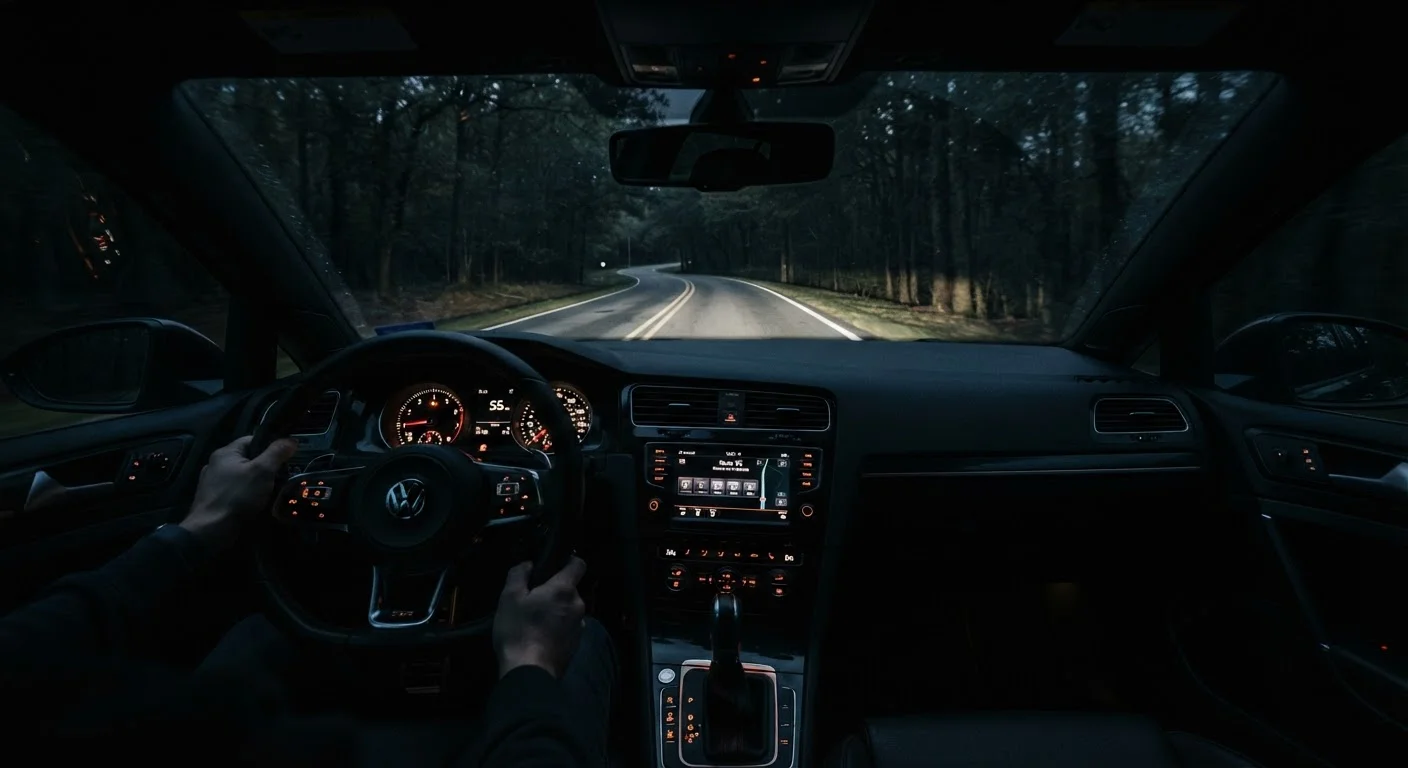
Night driving refers to operating a vehicle after dark, when reduced ambient light significantly limits how far and how clearly a driver can see. Unlike daytime conditions, the eyes must rely on headlights and road lighting rather than natural sunlight, shrinking the effective visual field. This change in visibility affects stopping distances, hazard detection, and overall reaction time.
Human eyes shift from cone-based (color, detail) to rod-based (low-light) vision after dark, but rods are slower to process motion and detail — a physiological factor that directly impacts driving performance.
Why Night Driving Is Genuinely Riskier
Most drivers understand night driving is less safe, but the actual numbers are striking. According to the National Highway Traffic Safety Administration (NHTSA), roughly half of all traffic fatalities occur at night despite the fact that far less driving happens after dark. Per mile traveled, the fatal crash rate at night is approximately three times higher than during daylight hours.
The core reason is visibility — or the loss of it. In daylight, you can see hazards, pedestrians, and road features hundreds of feet away. At night, your headlights typically illuminate only 200 to 250 feet ahead on low beam. At 60 mph, your vehicle travels about 264 feet per second and needs well over 200 feet to stop after you perceive a hazard and react. That math leaves almost no margin.
Beyond stopping distance, darkness reduces your ability to judge the speed and distance of other vehicles accurately. Peripheral vision, which the brain uses to process motion, weakens in low light. Depth perception degrades. And glare from oncoming headlights causes temporary vision loss that can last several seconds — long enough to miss a pedestrian or a stopped vehicle.
~3x
Higher fatal crash rate per mile at night
NHTSA data consistently shows nighttime fatal crash rates are roughly three times higher per mile traveled than daytime rates.
200–250 ft
Typical low-beam headlight coverage
Most passenger vehicles on low beam illuminate only 200–250 feet ahead — less than the stopping distance at highway speeds.
90%
Driving decisions dependent on vision
Safety researchers estimate that roughly 90% of a driver's reactions depend on visual information, making visibility loss the central night driving risk.
What Happens to Your Eyes After Dark
Your eyes contain two types of photoreceptors: cones, which process color and detail in bright light, and rods, which handle low-light vision. After dusk, your visual system transitions toward rod-dominant processing. Rods are more sensitive to light but significantly slower at detecting sharp detail and motion — exactly the information you need most while driving.
This transition takes time. Full dark adaptation can take 20–30 minutes, which means driving immediately after leaving a brightly lit area (a gas station, a restaurant) temporarily leaves your vision less adapted than the surrounding darkness warrants. Age compounds this: drivers over 50 generally need more light to see clearly and recover more slowly from glare.
Eye fatigue is another factor. Sustained effort to see in low contrast conditions tires the ocular muscles, reducing focus accuracy. Long night drives make this worse, and it interacts directly with general fatigue. For a closer look at how tiredness affects driving judgment, see our article on driving while tired.
Practical Adjustments That Actually Help
The good news is that most effective adaptations cost nothing and require no special equipment.
- Reduce speed: Even 5–10 mph below the posted limit on unlit roads meaningfully extends your reaction window. Speed limits are set for adequate conditions; darkness changes conditions.
- Use headlights correctly: Switch to high beams on dark roads when no oncoming traffic is present. On roads with streetlights, low beams are generally sufficient. Ensure your headlights are aimed correctly — many aren't, and misaligned beams reduce coverage.
- Clean your headlight lenses: Oxidized or yellowed plastic headlight covers scatter light instead of projecting it. A basic polish can restore significant brightness without replacing any parts.
- Clean your windshield — inside and out: Interior film on glass scatters incoming light badly, amplifying glare. Use a proper glass cleaner on the inside surfaces regularly.
- Dim your instrument cluster: Bright dashboard lights reduce your eye's ability to adapt to the dark outside. Most vehicles allow you to dim cluster brightness — use this feature.
- Increase following distance: Standard two-second following distance is designed for daylight. At night, three to four seconds gives additional buffer for the reduced visibility margin.
Zero-Cost Visibility Check Before a Night Drive
Before any significant night drive, take two minutes: check that both headlights are working, wipe down the inside of your windshield with a clean microfiber cloth, and dim your instrument cluster to a comfortable level. These three steps are free, take under three minutes, and tangibly improve what you can see in the dark.
Learning to read road cues earlier is especially valuable at night. Our guide to hazard anticipation explains how to build this skill systematically.
Managing Fatigue on Night Drives
Darkness and fatigue reinforce each other in ways that feel gradual but compound quickly. The body's circadian rhythm naturally pushes toward sleep after midnight and again in the early afternoon. Driving during these windows — even if you don't feel tired — elevates crash risk.
If you regularly drive at night, treat sleep as part of trip planning. A six-hour drive starting at 11 p.m. crosses the highest-risk window for drowsy driving. Starting earlier or splitting the drive with rest breaks isn't just cautious — it's logical risk management.
Practical countermeasures include stopping every 90–120 minutes on long trips, keeping the cabin cool, and not relying on caffeine alone to stay alert. Caffeine takes 20–30 minutes to affect alertness and wears off. It is not a substitute for rest. New and younger drivers face particular risk at night; see our piece on habits for new licence holders for broader context on managing early driving risk.
Night driving on highways also demands different habits than urban roads after dark. The article on motorway vs. urban driving differences covers those distinctions in detail.