

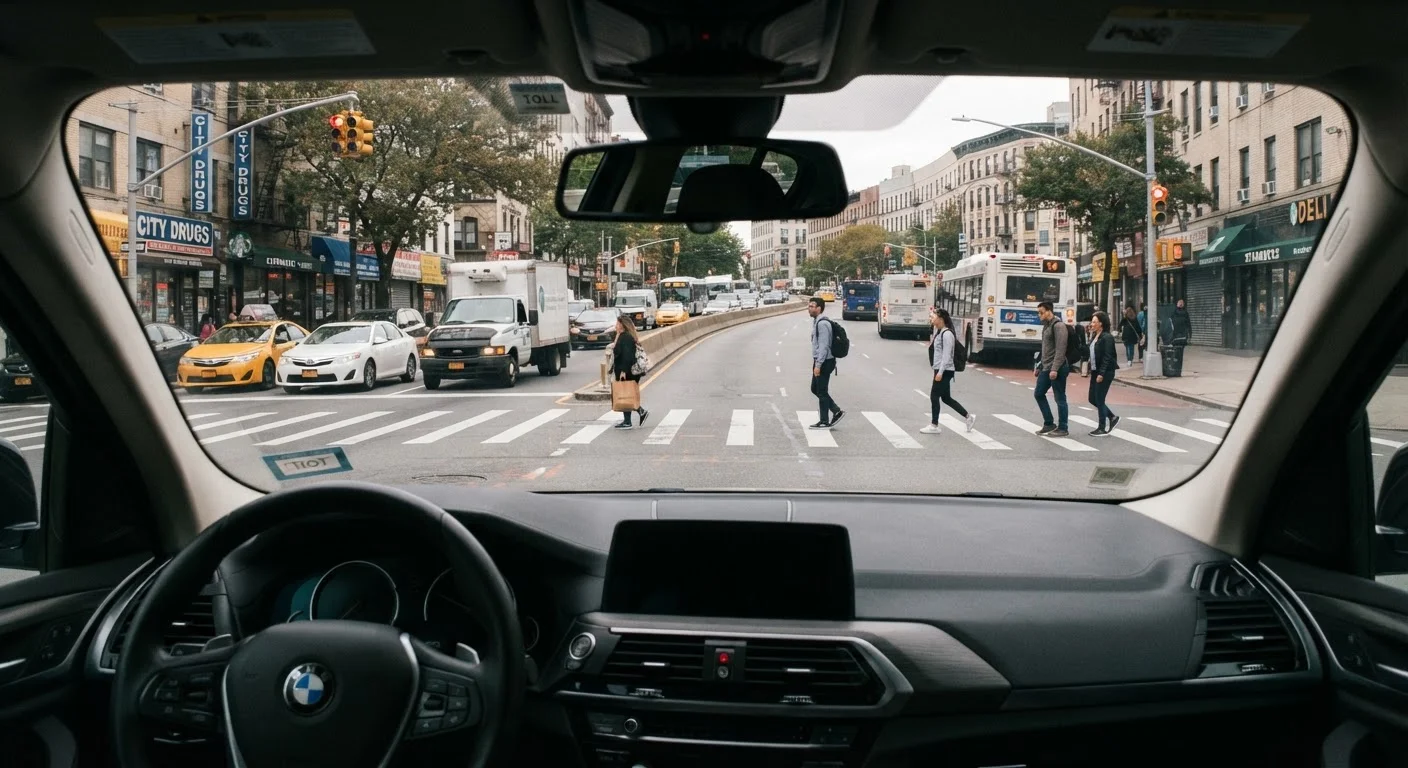
Key Takeaways
- Experienced drivers scan 12–15 seconds ahead; most novices focus only 3–4 seconds in front of their car.
- Reading environmental cues — shadows, tire marks, pedestrian behavior — gives you time to react before a hazard materializes.
- Hazard anticipation is a trainable habit, not an innate talent, and costs nothing to develop.
- Distraction is the primary reason drivers fail to notice early warning signs on the road.
- Adjusting scanning habits in specific environments (school zones, highways, wet roads) meaningfully reduces collision risk.
What you will need
Why Most Drivers React Instead of Anticipate
There's a meaningful difference between a driver who brakes because they see brake lights directly ahead, and one who began easing off the gas because they noticed a cluster of brake lights three cars up thirty seconds earlier. The second driver isn't more talented — they've just trained where to look and what to look for.
New drivers tend to fixate close to the hood of their car. It's a natural stress response: when something feels unfamiliar, the brain narrows its focus. The problem is that by the time a hazard is visible at close range, your options — braking distance, lane changes, escape routes — are already compressed. Traffic safety research indicates that experienced drivers habitually scan further ahead and process environmental information more broadly than novices, and that this skill improves with deliberate practice rather than just accumulated years behind the wheel.
The good news: you don't need an expensive course or specialized equipment to build this habit. You need a systematic approach and the discipline to apply it consistently. If you're a newer driver, our guide on habits worth building from day one is a useful companion read.
What you will need
The Six-Step Hazard Anticipation Method
The steps below build on each other. Work through them in order — the earlier steps create the foundation that makes the later ones possible. You can practice most of them on any drive, starting today.
Rearview and side mirrors
Used to monitor vehicles behind and beside you as part of a continuous scanning routine.
Properly adjusted driver's seat
A correct seating position ensures your line of sight is high enough to scan far down the road.
Clean windshield and mirrors
Dirt, haze, or smearing significantly narrows what you can detect at a distance.
Push your focal point further down the road
Most drivers stare at the vehicle directly in front of them. Driving instructors and traffic safety researchers consistently recommend looking 12–15 seconds ahead at highway speeds — roughly a quarter mile — and at least one full block ahead in city traffic. At 60 mph, 12 seconds of look-ahead gives you nearly 1,000 feet of warning time.
To practice: pick a landmark well ahead — a traffic light, a bend, a parked truck — and make it your primary focus point. Let the car immediately in front of you exist in your peripheral vision, not your direct gaze.
Scan systematically, not randomly
Random glancing misses things. A structured scan pattern — ahead, mirrors, ahead, mirrors — repeated roughly every 5–8 seconds keeps your picture of the road current. Check your rearview mirror every 7–10 seconds. Glance at each side mirror before changing lanes or slowing.
This habit also prevents fixation — where your eyes lock on one point (often a hazard itself) and you stop processing the broader scene. The scanning rhythm changes between highway and city driving, so adjust accordingly.
Read environmental cues, not just vehicles
Other cars aren't the only hazards. Train yourself to notice:
- Shadows or shapes emerging from driveways and side streets before the vehicle itself appears
- Brake light patterns — if three or four cars ahead begin braking, slow now, not when the car in front of you does
- Tire marks or debris indicating recent incidents or road surface problems
- Pedestrian body language — someone moving toward a curb edge or glancing over their shoulder is often about to step into traffic
- Overhanging branches or standing water that signal a road surface change
These cues appear well before the hazard demands a reaction. Catching them early converts an emergency brake into a calm, controlled slow-down.
Identify escape routes as you drive
Anticipation isn't just about spotting trouble — it's about knowing where you'd go if you needed to act. As you drive, briefly note: Is there a shoulder? A gap in adjacent traffic? An open parking lot entry? This mental map means your response, if needed, is deliberate rather than panicked.
This is especially relevant on multi-lane roads. Knowing which lane has space reduces the chance of an overcorrection that creates a second hazard. See also our guide to staying calm in skids, blowouts, and brake failures — having a mental plan beforehand is the common thread.
Eliminate in-cab distractions before they interrupt your scan
A well-trained scan pattern collapses the moment attention is divided. Research consistently shows that cognitive distraction — including hands-free phone conversations — reduces a driver's ability to notice peripheral hazards even when their eyes appear to be on the road.
Before driving: set your GPS route, adjust your mirrors, and stow loose items. Pull over to take calls or handle anything requiring focused thought. Protecting your scan pattern is the single most cost-effective safety habit available to any driver.
Adjust your approach for high-risk environments
Some environments require a calibrated upgrade to your baseline habits:
- School zones and residential streets: Slow to posted limits and extend your scan to sidewalks well ahead.
- Intersections: Even on a green light, scan left-right-left before committing — a large share of serious crashes involve a driver who had the right of way but didn't verify cross-traffic had stopped.
- Poor weather: Wet or icy roads demand more following distance and earlier identification of hazards. Our guide to driving in rain, fog, and ice covers the specific adjustments for each condition.
- Night driving: Your headlights limit visibility to around 160–250 feet on low beam, well short of the 12-second look-ahead zone at highway speeds. See what changes after dark.
Practice on familiar routes first
When you're building a new scan habit, start on roads you know well — your commute, your neighborhood. Familiar surroundings reduce the cognitive load of navigation, freeing up mental bandwidth to consciously practice looking further ahead and reading environmental cues. Once the habit feels automatic there, it transfers more easily to unfamiliar roads.
Following distance is part of hazard anticipation
No scan habit compensates for being too close to the vehicle ahead. If you're tailgating, you eliminate the time buffer that makes early hazard detection useful. The two-second rule is the foundation; in adverse conditions, three to four seconds is more appropriate.
Anticipation Doesn't Replace Defensive Driving
Reading the road well reduces risk — it doesn't eliminate it. Other drivers can and do make unpredictable moves regardless of how carefully you scan. Always maintain safe speed and following distance as your primary buffer. Hazard anticipation is an additional layer, not a substitute for fundamentals.
Road signs are another layer of early information worth revisiting. Our reference on road signs drivers often forget covers markings that carry more weight than most people realize.