

| Typical shop labor rate range (US) | $75–$175 per hour (Varies significantly by region and shop type) |
| Labor time basis | Industry guide estimate, not clock time (Mitchell, AllData, and similar labor databases) |
| Shop supply fee | Commonly 5–10% of labor charge (Standard across most US independent garages) |
| Diagnostic fee range | $50–$150 typical (May be waived or credited toward repair cost) |
| Part types available | OEM, Aftermarket, Remanufactured (Ask which type is quoted before approving) |
Why Quotes Look So Confusing
Most mechanic quotes use shorthand that makes perfect sense inside a workshop but lands like a foreign language at the service counter. Terms like "labor rate," "OEM part," and "diagnostic fee" get listed without explanation, and many drivers end up approving work they don't fully understand. That's not stupidity — it's an information gap, and it's easy to close.
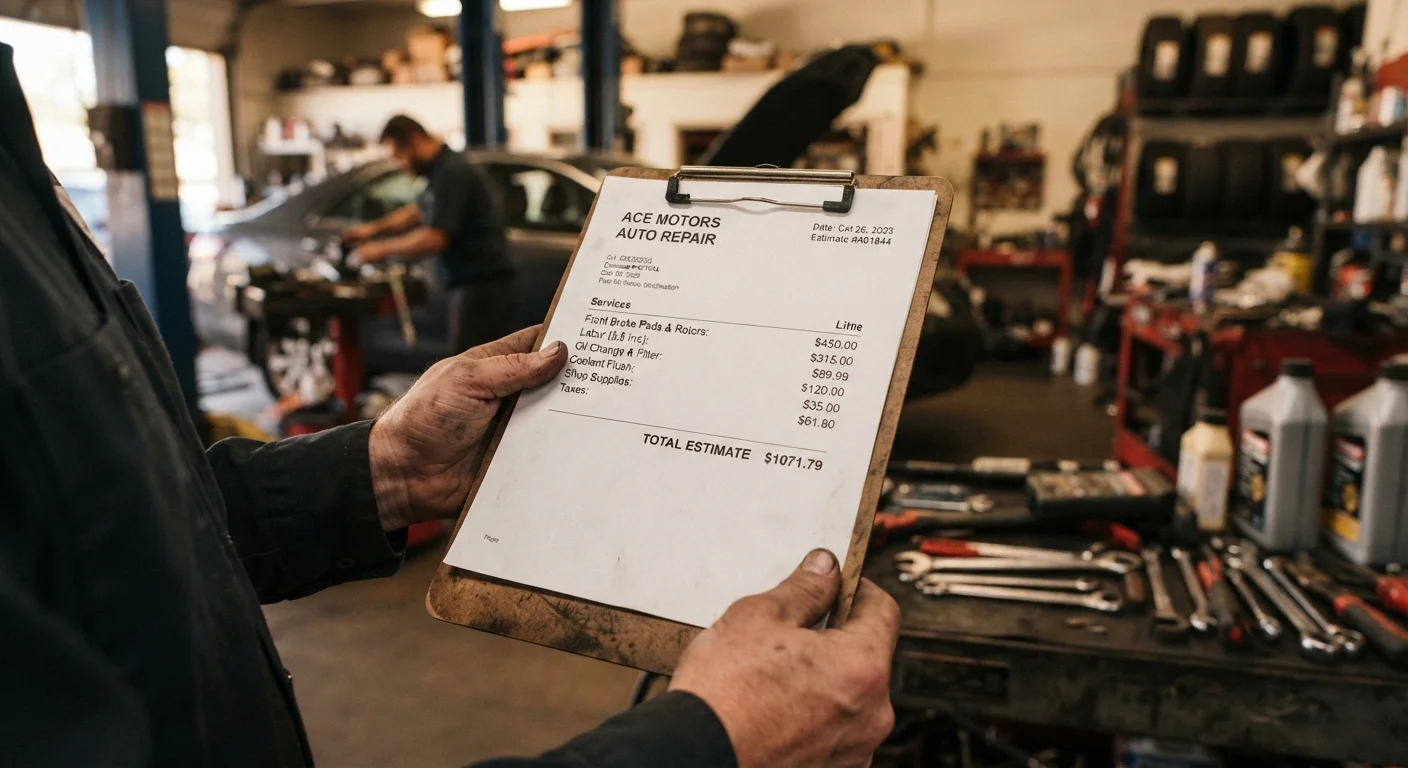
A standard repair quote typically breaks into three buckets: parts, labor, and miscellaneous charges (which can include diagnostics, shop supplies, and disposal fees). Understanding each one lets you ask better questions and spot anything that doesn't add up — without needing to be a mechanic yourself.
For a deeper look at how service bills are structured from the shop's side, see our full invoice breakdown guide.
| Typical shop labor rate range (US) | $75–$175 per hour (Varies significantly by region and shop type) |
| Labor time basis | Industry guide estimate, not clock time (Mitchell, AllData, and similar labor databases) |
| Shop supply fee | Commonly 5–10% of labor charge (Standard across most US independent garages) |
| Diagnostic fee range | $50–$150 typical (May be waived or credited toward repair cost) |
| Part types available | OEM, Aftermarket, Remanufactured (Ask which type is quoted before approving) |
Parts: OEM, Aftermarket, and Remanufactured
The parts section of a quote lists each physical component being replaced and its price. What often goes unexplained is the type of part.
- OEM (Original Equipment Manufacturer): Made to the same specification as the part your car shipped with. Generally carries the highest price and a warranty. Dealerships almost always use OEM parts.
- Aftermarket: Made by a third party to fit your vehicle. Quality varies widely — some aftermarket parts match or exceed OEM standards; others don't. Always ask which brand the shop sources from and whether it carries a warranty.
- Remanufactured (Reman): A used core part that has been rebuilt to a defined standard. Common for alternators, starters, and brake calipers. Often a cost-effective middle ground.
You're entitled to ask which type of part is being quoted and whether you can choose. Many shops will offer alternatives if you ask directly. See how this choice plays out differently depending on where you get your car serviced: dealership vs. independent garage costs explained.
Labor Rate
The dollar amount a shop charges per hour of technician time. It's multiplied by a job's estimated hours — drawn from an industry labor guide — to produce the labor charge on your quote.
OEM Part
Original Equipment Manufacturer part — made to the same specification as the component your vehicle was built with. Usually carries a warranty and is the standard at dealerships.
Aftermarket Part
A replacement part made by a third-party manufacturer, not the original vehicle maker. Quality and warranty coverage vary, so it's worth asking about the specific brand and warranty before approving.
Remanufactured (Reman) Part
A used component that has been professionally disassembled, inspected, and rebuilt to a defined performance standard. Common for alternators, starters, and brake calipers.
Diagnostic Fee
A charge for the technician's time and tools spent identifying the cause of a problem before any repair begins. Some shops credit this fee toward the repair cost if you proceed with the work.
Sublet Work
Repairs that a shop sends out to a specialist — such as a transmission rebuild or wheel alignment — rather than performing in-house. The primary shop marks up the specialist's charge.
Shop Supply Fee
A line item covering consumable materials used during the repair — rags, solvents, fasteners, and similar items. Typically expressed as a small percentage of the labor total.
Labor: How Shops Calculate the Time Charge
Labor is typically the largest single line item on a quote. Shops charge a labor rate — a flat dollar amount per hour — multiplied by the estimated time for the job. That time estimate usually comes from a published labor guide (such as the Mitchell or AllData database) rather than the actual clock time a technician spends.
This means a repair listed as "2.5 hours" at a $120/hr rate costs $300 in labor — whether the technician finishes in 90 minutes or takes three hours. It's a standard industry practice, not a trick, but it's worth understanding before you assume the bill reflects real time spent.
If a quote shows labor for multiple jobs at once, ask whether there's overlap. Replacing a timing belt and a water pump at the same time, for example, often shares disassembly time — a shop that charges full hours for both separately may not be accounting for that efficiency.
Neglecting repairs often turns a one-hour labor job into a much longer one down the road. Skipping small repairs can quietly escalate costs in exactly this way.
Diagnostic Fees, Shop Supplies, and Other Charges
Beyond parts and labor, several smaller line items commonly appear:
- Diagnostic fee: Charged when a technician connects a scan tool or spends time identifying the root cause of a problem. This is legitimate work — finding the fault takes skill and time. Some shops waive this fee if you proceed with the repair; others don't. Ask upfront.
- Shop supplies / environmental fee: A percentage or flat charge covering consumables like rags, brake cleaner, and oil-absorbent materials. Typically 5–10% of labor. It's standard, but it should appear as a disclosed line item, not buried in inflated parts prices.
- Disposal fee: Covers legal disposal of used oil, tires, batteries, or refrigerant. This is a real cost regulated by federal and state environmental rules.
- Sublet work: Some repairs — wheel alignment, transmission rebuilds, glass replacement — are sent to a specialist. The shop charges you their cost plus a markup. Ask if this is the case so you know who's actually doing the work.
If you're weighing which tasks are worth approving versus handling yourself, our DIY vs. garage trade-off guide is a practical starting point. And if your quote is tied to a scheduled service interval, understanding your car's service schedule can help you verify whether the recommended work is actually due.
You Have the Right to a Written Estimate
In most US states, auto repair shops are legally required to provide a written estimate before starting work and to get your authorization before exceeding it. If a shop refuses to provide one in writing, that's a red flag worth taking seriously. Check your state's consumer protection office for the specific rules that apply to you.