

Key Takeaways
- Driving the PCH in smaller segments reduces burnout and lets you actually enjoy each stop.
- Many of the highway's most memorable spots are free, uncrowded, and easy to miss if you follow standard itineraries.
- Timing your trip outside peak summer months significantly cuts both crowd levels and accommodation costs.
- Roadside state beaches and pullouts often outshine heavily marketed attractions nearby.
- Packing food for driving stretches prevents tourist-trap pricing from blowing your daily budget.
Stop Treating the PCH Like a Checklist
The Pacific Coast Highway — officially California State Route 1 — runs roughly 650 miles of coastline from Orange County to Leggett in Mendocino County. Most first-timers arrive with a highlight reel of ten must-sees crammed into four days. The result is an expensive, exhausting blur of parking lots and gift shops.
The better approach is to pick a manageable segment — say, Santa Barbara to Carmel, or Morro Bay to San Francisco — and actually explore it. Shorter segments mean more time at each stop, lower fuel costs, and far less of the decision fatigue that derails so many road trips before they're even half done.
Where the Real Value Hides Along the Route
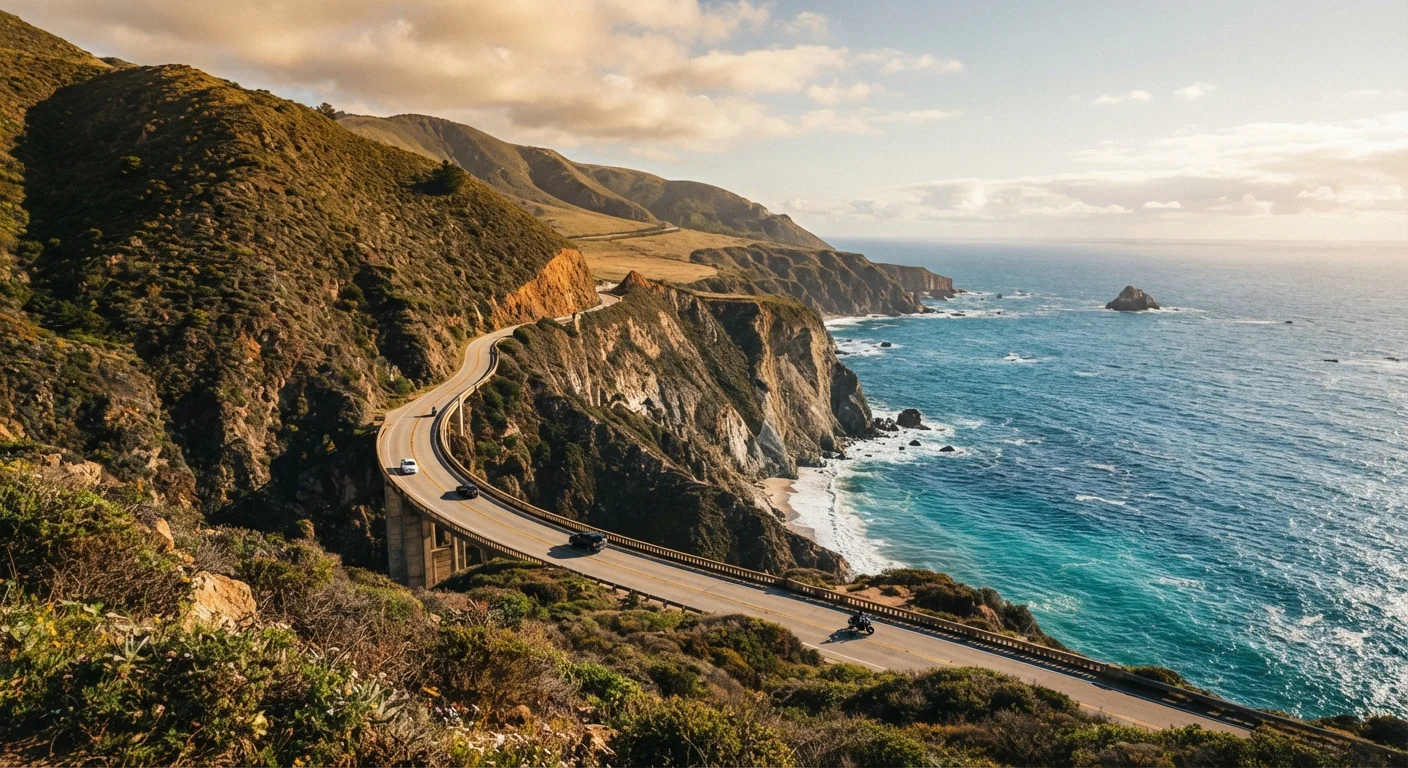
The PCH's most Instagrammed spots — Bixby Creek Bridge, Pfeiffer Beach, the elephant seal overlook near San Simeon — are genuinely spectacular, but they're also surrounded by premium pricing. The strategy isn't to avoid them entirely; it's to understand that equally striking scenery often sits just a few miles off the standard itinerary.
State beach parking is usually a few dollars per vehicle, and many pullouts are free. Pack a lunch and eat at a clifftop picnic table instead of a highway-adjacent restaurant. Your food budget will stretch considerably further, and you'll have the view almost to yourself.
For a deeper look at what hidden costs can do to a road trip budget, see our guide on expenses that catch budget travelers off guard.
Timing, Pacing, and the Off-Season Advantage
July and August on the PCH means bumper-to-bumper traffic through Big Sur, sold-out campgrounds, and hotel rates that can triple compared to shoulder season. California's central coast is genuinely pleasant from late September through early November and again in March and April — cooler, occasionally foggy, but far less congested.
Not every destination rewards off-season visits equally, but the PCH is one that genuinely does. Our breakdown of which US destinations benefit from off-peak timing explains why coastal California sits near the top of that list. Before finalizing dates, always verify campground availability and any seasonal road closures with California State Parks or Caltrans directly, as conditions can change.
Building a Budget That Actually Holds
The PCH's reputation as a bucket-list drive leads many travelers to underplan their finances, assuming they'll figure it out on the road. That approach consistently backfires. Fuel costs from LA to San Francisco alone can reach $80–$120 for a typical passenger vehicle depending on current gas prices and fuel efficiency. Add nightly accommodation, park fees, and food, and a loose budget dissolves quickly.
Building a daily spending cap before you leave — and tracking it — is the single habit that separates travelers who finish the trip feeling good from those who arrive home stressed. Our guide on building a road trip budget that holds up walks through the categories most people forget to include.