

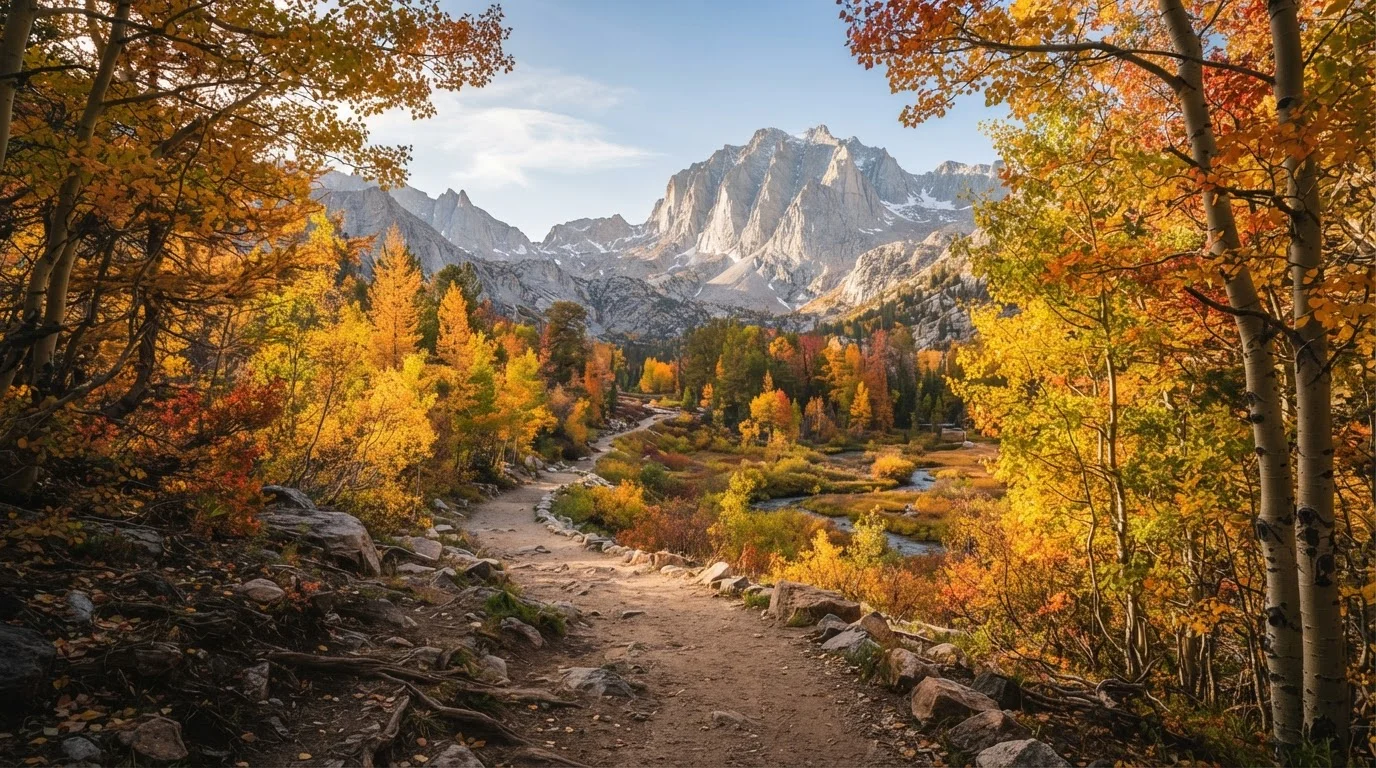
Why Timing Shapes the Entire Trip
Choose the wrong week and you'll battle traffic, pay peak prices, and stand in line for a view. Choose the right window and that same destination feels like a private discovery. Seasonal timing isn't a minor detail — it's often the single biggest variable in whether an outdoor adventure feels worth it or exhausting.
The good news: understanding when to go is a learnable skill. It rests on three overlapping cycles — weather windows, crowd patterns, and booking calendars — and once you see how they interact, planning becomes far less overwhelming.
For a deeper dive into why this timing advantage exists, see what shoulder season actually means and how travelers use it to reshape their trips.
The Three Seasonal Categories Every Traveler Should Know
Most destinations cycle through three recognizable phases:
- Peak season — highest demand, fullest facilities, most predictable weather, and the steepest prices. Think July at a national park or December in a ski town.
- Shoulder season — the weeks flanking peak season on either side. Weather is often nearly as good, crowds thin noticeably, and accommodation costs typically drop. This is frequently the practical sweet spot for budget-conscious explorers.
- Off-season — lowest prices and fewest visitors, but with real tradeoffs: some services close, weather can be genuinely difficult, and certain trails or roads may be inaccessible. It suits specific destinations better than others.
Not every destination benefits equally from off-peak travel. Which US destinations actually gain from off-season visits is worth checking before you assume low season equals a better trip everywhere.
Peak Season
The period when a destination experiences its highest visitor numbers, typically coinciding with school holidays, favorable weather, or a known event. Prices and demand are at their highest during this window.
Shoulder Season
The transitional weeks directly before or after peak season. Conditions are often still favorable, but crowds and costs are noticeably lower, making it a practical compromise for many travelers.
Off-Season
The period of lowest demand at a destination, usually due to weather, closures, or reduced services. Costs are typically lowest but the experience may come with real tradeoffs.
Weather Window
A specific stretch of time when conditions at a destination are reliably suitable for a planned activity. Weather windows are more precise than calendar seasons and can vary significantly by elevation and microclimate.
Microclimate
The localized climate conditions of a specific area, which can differ substantially from the broader regional climate. Coastal fog zones, canyon bottoms, and mountain ridgelines all have distinct microclimates.
Weather Windows: Reading Conditions, Not Just Months
Calendar month is a rough proxy at best. A more useful frame is the weather window — the stretch of weeks when conditions align for your specific activity. These windows vary significantly by region, elevation, and climate pattern.
A few principles to anchor your research:
- Elevation changes everything. A trailhead accessible in May may still have snowpack at the summit through late June. Always check conditions at your actual destination elevation, not just the nearest town.
- Monsoon and storm seasons are real constraints. The American Southwest, for instance, sees afternoon thunderstorms reliably from mid-summer onward. Starting hikes early and finishing before noon isn't optional in those conditions — it's a safety margin.
- Coastal and inland climates diverge sharply. Pacific coastal fog can make August cooler and gloomier than October, while inland valleys bake all summer. Research the microclimate, not just the region.
Permit availability often tracks weather windows closely — popular corridors sell out months in advance specifically because everyone wants the same favorable weeks. See how permit systems and booking windows work to plan ahead without frustration.
Practical Timing Moves for Everyday Explorers
You don't need a complex algorithm. A handful of consistent habits will put you ahead of most travelers:
- Shift by two to three weeks. Visiting just before or after the acknowledged peak weekend (Labor Day, Fourth of July, school spring break) often cuts crowds dramatically with minimal weather sacrifice.
- Favor weekdays over weekends. Even within peak season, a Tuesday entry versus a Saturday entry at a popular trailhead can mean a fundamentally different experience.
- Check the booking calendar first, then plan the trip. If permits for your target date are already gone, that's useful information before you've booked flights.
- Build in a flex day. Weather windows are real but imperfect. A single buffer day absorbs the surprise storm without derailing the whole trip.
Before any road trip, it's also worth making sure your vehicle is ready for the season you're driving into. The seasonal car maintenance checklist covers what to verify before summer heat or winter conditions put extra stress on your vehicle.
Travel conditions, permit availability, entry requirements, and seasonal closures change frequently. Always verify current information with official park and government sources before your trip.