

Key Takeaways
- Algorithms prioritise active users, so logging in consistently boosts your visibility.
- Your early swipe behavior teaches the algorithm what profiles to show you.
- Profile completeness and photo quality directly affect how often you're surfaced to others.
- Engagement rate — how often your likes get returned — influences your ranking over time.
- Free users can still work with the algorithm effectively through smart, consistent behavior.
Dating App Algorithm
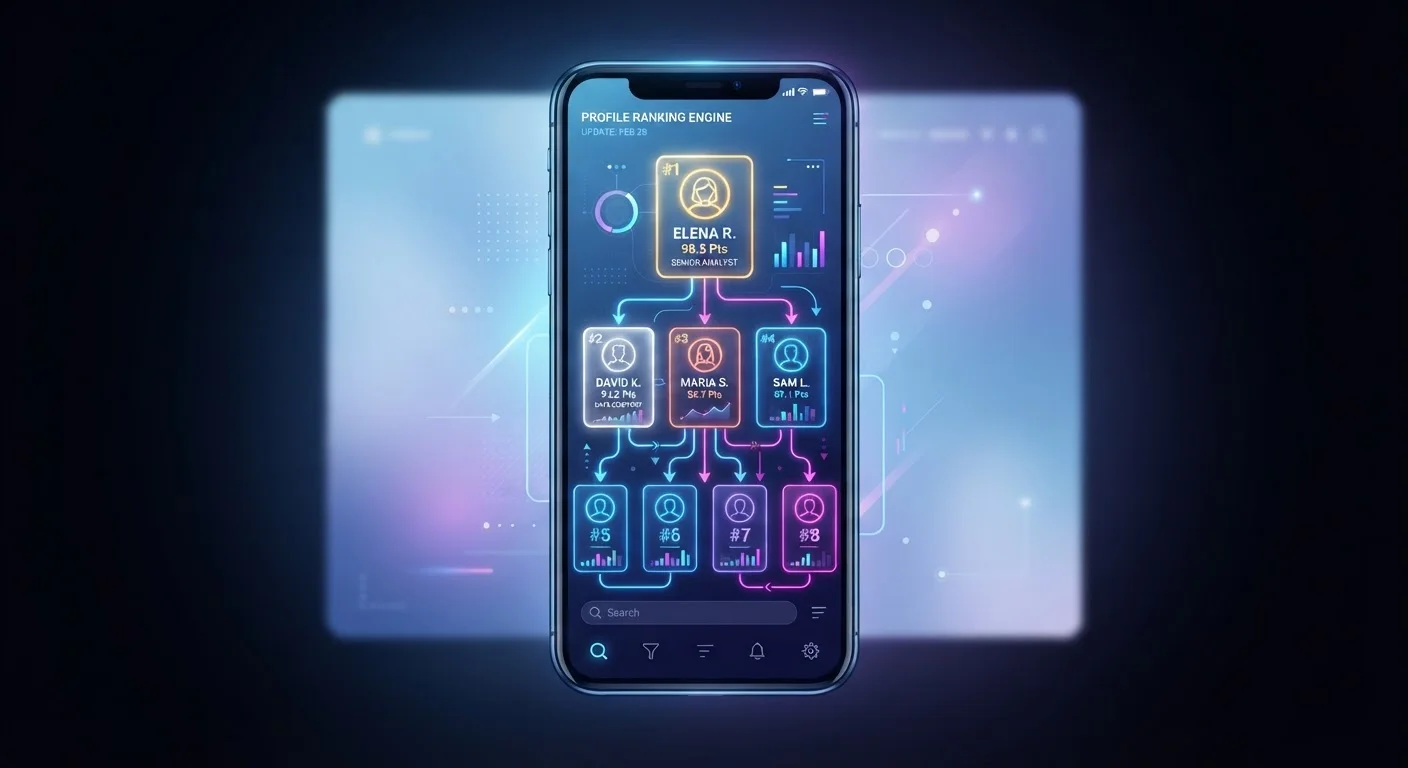
A dating app algorithm is a set of automated rules that determines which profiles are shown to which users — and in what order. Rather than displaying every profile at random, apps use behavioral signals, profile data, and engagement patterns to decide whose face appears on your screen. Think of it as a behind-the-scenes ranking system constantly adjusting based on how you and others use the app.
Most major apps use collaborative filtering and reinforcement learning models, meaning the algorithm improves its predictions over time based on accumulated user behavior — similar to recommendation engines used by streaming services.
Why Algorithms Exist — and What They're Actually Trying to Do
Dating apps aren't neutral storefronts displaying every available profile equally. They're businesses built on engagement, which means their algorithms are optimised to keep you on the app long enough to feel like progress is happening — while ideally delivering real matches along the way.
At the core, most algorithms are solving a sorting problem: with potentially millions of users, how does the app decide which few dozen profiles to show you today? The answer involves a mix of your stated preferences (age range, distance), your behavioral signals (how often you swipe, when you're online), and the collective behavior of users similar to you.
Understanding this helps reframe how you use these platforms. You're not just passively browsing — your behavior is constantly feeding data back into a system that adjusts what you see and who sees you. See how this compares to meeting people organically in our look at old-school dating vs. app dating.
30%+
U.S. adults who have used a dating app
According to Pew Research Center survey data, over 30% of American adults report having used a dating app or website at some point.
~72 hours
New profile visibility boost window
Industry observers and platform disclosures suggest most apps surface new profiles more prominently in the first 24–72 hours after account creation.
39%
U.S. couples who met online
A Stanford sociology study found that roughly 39% of U.S. heterosexual couples who met between 2017–2019 first connected online.
The Signals That Actually Move the Needle
Apps vary in their specifics, but several behavioral signals consistently influence algorithmic ranking across major platforms:
- Activity and recency: Algorithms heavily favor users who log in regularly. An account that's been dormant for a week is typically deprioritized in favor of someone who opened the app this morning. Consistent, daily use — even just a few minutes — tends to maintain your visibility far better than sporadic marathon sessions.
- Engagement rate: It's not just about how many likes you send — it's about how many you receive in return. A profile that gets a high proportion of right-swipes is interpreted as desirable and gets surfaced more. This is why profile quality matters so much — a strong first photo and clear bio can meaningfully shift this ratio.
- Selectivity: Some platforms, Hinge being a documented example, reward more selective swiping. Liking every profile signals low engagement quality to the algorithm; thoughtful, selective interaction tends to produce better matches over time.
- Response and conversation behavior: On some apps, actually messaging matches — and getting replies — sends positive signals. A stack of uncontacted matches can work against you over time.
Refresh, Don't Reset
If your match rate has stalled, try updating your lead photo or rewriting one prompt before considering a full account reset. Fresh content can re-engage the algorithm's interest signals without losing your existing activity history. Small, periodic profile updates tend to perform better than starting over from scratch.
What Your Profile Data Contributes
Beyond behavior, static profile elements influence how the algorithm treats your account from the start. Profile completeness is a clear signal on most platforms — apps like Hinge explicitly encourage filling out all prompts, and incomplete profiles are often ranked lower regardless of photo quality.
Photos carry significant weight because apps use implicit feedback (who gets liked) to assess visual appeal as a ranking factor. This doesn't mean you need professional shots, but it does mean lighting, clarity, and showing your face prominently in at least one image have measurable effects. If you're unsure how your profile reads to strangers, our guide on what your bio is actually communicating is a useful starting point.
Location data also matters more than many users realize. Algorithms tend to show you profiles of people who are not just nearby, but who have overlapping activity windows — meaning if you're usually online at 8 p.m., you're more likely to appear to others who are also active then.
Working With the Algorithm Without Gaming It
The most sustainable approach isn't to trick the algorithm — it's to align your behavior with what the algorithm already rewards: genuine, consistent engagement and a profile that accurately represents you.
A few practical implications:
- Log in at consistent times rather than in random bursts. Evening activity tends to overlap with peak usage on most platforms.
- Invest time in your first photo and opening prompts. These drive the engagement rate that signals your profile's worth to the ranking system.
- Send a message when you match, even a short one. Matches you never contact can weaken your standing on some platforms over time.
- Resist the urge to swipe right on everyone hoping for volume. Selectivity tends to produce better algorithmic outcomes and better matches.
If you're just getting started, our guide to your first week on a dating app walks through how to build good habits from day one. And if you're weighing which platform to use, understanding that Tinder and Hinge prioritise very different signals can help you choose where to focus your energy.