

| Running toilet water waste | Up to 200 gallons per day (EPA WaterSense program estimates) |
| Most common DIY fix | Toilet flapper replacement |
| Leading cause of house fires | Electrical failures and malfunctions (U.S. Fire Administration, recurring findings) |
| First step for HVAC issues | Check and replace the air filter |
| Stair-step wall cracks | Potential foundation movement — get assessed |
| Renters: document issues | Always notify landlord in writing with photos |
Why Small Signals Deserve Attention
Homes communicate constantly — through sounds, smells, surfaces, and how doors behave. Most people learn to tune these things out, which is understandable. But the gap between a minor fix and a major repair bill is often just a matter of timing.
A sticky door isn't annoying by accident. A running toilet doesn't just waste water. A musty smell doesn't appear without a cause. Each of these signals points to an underlying condition that tends to get worse — and more expensive — the longer it goes unaddressed.
This reference covers the most common warning signs renters and homeowners encounter, what they typically indicate, and when to act. For a structured seasonal approach to staying ahead of problems, see our pre-winter home maintenance checklist.
| Running toilet water waste | Up to 200 gallons per day (EPA WaterSense program estimates) |
| Most common DIY fix | Toilet flapper replacement |
| Leading cause of house fires | Electrical failures and malfunctions (U.S. Fire Administration, recurring findings) |
| First step for HVAC issues | Check and replace the air filter |
| Stair-step wall cracks | Potential foundation movement — get assessed |
| Renters: document issues | Always notify landlord in writing with photos |
Common Warning Signs and What They Mean
Use this as a quick-reference lookup. The goal is to help you decide whether a sign warrants immediate attention, monitoring, or a professional assessment.
Flapper valve
A rubber seal inside the toilet tank that controls water flow into the bowl. When it wears out or warps, water seeps continuously from the tank — the most common cause of a running toilet.
Vapor barrier
A material (often plastic sheeting) installed in walls, floors, or crawl spaces to slow the movement of moisture into the building structure. A failing vapor barrier can lead to mold and wood rot.
Subfloor
The structural layer of wood or panel material beneath your finished flooring. Subfloor damage — often from water intrusion — can cause floors to feel soft, spongy, or uneven.
Pressure regulator
A valve, typically located near the main water shutoff, that limits incoming water pressure to a safe range for household pipes and fixtures. A failing regulator can cause very low or very high pressure throughout the home.
Ductwork
The network of metal or flexible channels that carry heated or cooled air from your HVAC system to each room. Leaks or disconnections in ductwork reduce efficiency and cause uneven temperatures.
Water and Moisture
- Musty smell indoors: Often signals mold or mildew growing somewhere hidden — behind walls, under flooring, or in crawl spaces. Mold spreads and can affect indoor air quality. Locate the moisture source first. See also: improving indoor air quality on a budget.
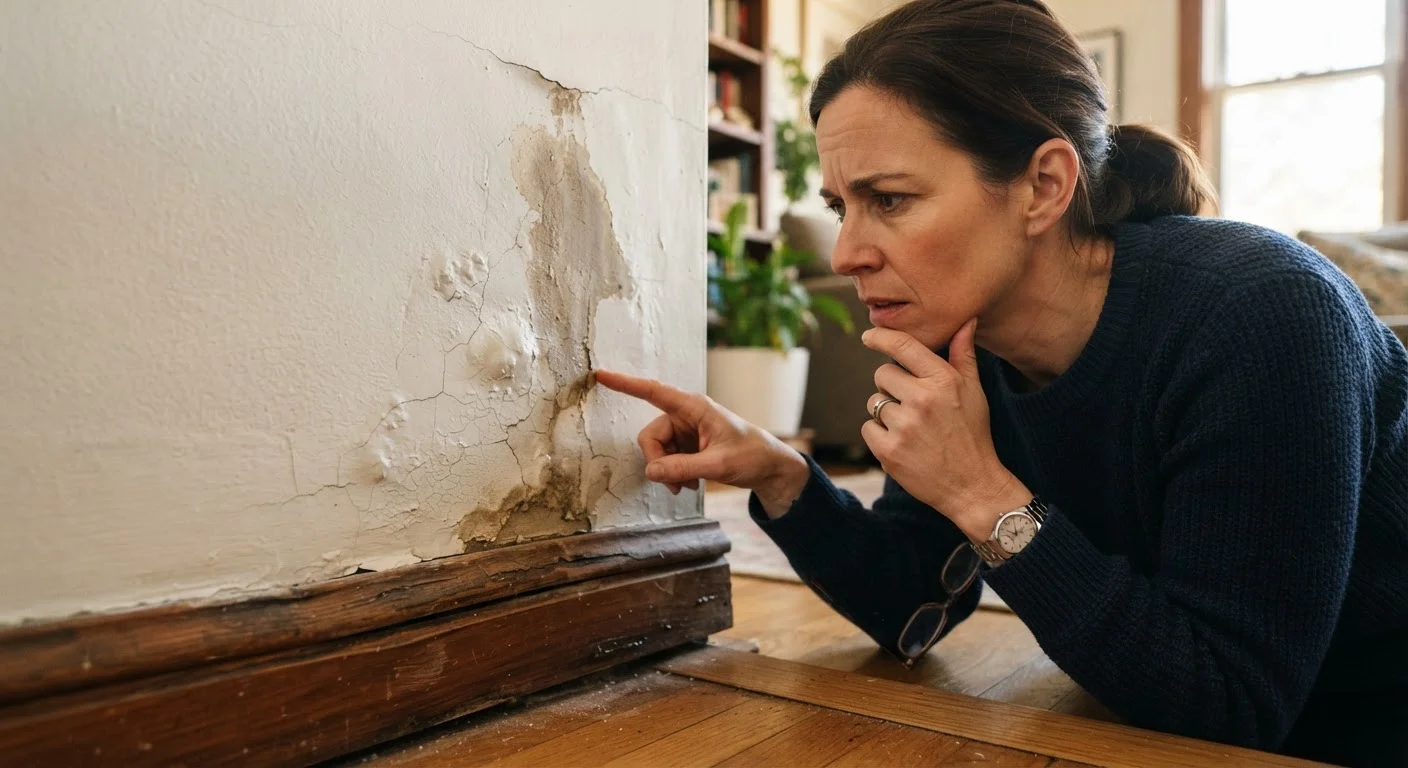
- Water stains on ceilings or walls: Indicate a past or ongoing leak — from a roof, a pipe, or an upstairs bathroom. A dry stain may be old; a growing or soft stain is active. Don't paint over it until the source is confirmed.
- Bubbling or peeling paint: Usually moisture trapped beneath the surface. On exterior walls, this can signal poor drainage or a failing vapor barrier.
- High water bills without increased use: A common sign of a hidden leak. Check toilets (a few drops of food coloring in the tank will reveal a flapper leak within minutes), outdoor hose connections, and under sinks.
Structural and Settling Clues
- Doors and windows that stick or won't close squarely: Seasonal wood expansion causes minor sticking, but persistent sticking — especially in multiple spots — may indicate foundation settling or moisture-related framing movement.
- Cracks in drywall or plaster: Hairline cracks near window and door corners are common and usually cosmetic. Wide cracks, stair-step cracks in brick or block, or cracks that grow over time deserve professional evaluation.
- Sloping or bouncy floors: Can point to joist damage, subfloor rot, or foundation issues. Don't ignore floors that feel soft underfoot, especially in bathrooms or kitchens where water use is high.
Electrical and Heating
- Flickering lights or frequently tripping breakers: Occasional trips can be caused by an overloaded circuit. Frequent or unexplained trips, or lights that flicker across multiple rooms, should be assessed by a licensed electrician — electrical faults are a leading cause of house fires.
- Rooms that won't heat or cool evenly: Often a sign of blocked vents, leaky ductwork, or a failing HVAC component. Check filters first — a clogged filter is one of the most common and cheapest fixes in any home.
- Burning or unusual smells from outlets or switches: This is urgent. Turn off the circuit, stop using that outlet, and contact a licensed electrician. Do not delay.
Plumbing
- Slow drains across multiple fixtures: A single slow drain is usually a local clog. Multiple slow drains suggest a blockage or venting problem in the main line.
- Running toilet: A flapper that doesn't seal properly can waste dozens of gallons a day. This is usually a straightforward DIY fix using parts available at any hardware store.
- Low water pressure throughout the home: Can indicate a supply line issue, a failing pressure regulator, or — in older homes — corroded galvanized pipes narrowing over time.
If budget is a constraint when problems do surface, home maintenance on a tight budget offers practical guidance on how to prioritise what to fix first.
When to DIY and When to Call a Professional
Not every warning sign requires a contractor. Many — like a running toilet, a clogged drain, or a dirty HVAC filter — are reasonable DIY fixes with basic tools and a little research. Others involve systems where mistakes can be dangerous or costly, particularly electrical, gas, structural, and main plumbing work.
Safety First for Certain Repairs
Electrical, gas, and structural repairs carry real risk if handled incorrectly. Many jurisdictions require permits for this work, and unlicensed repairs can affect home insurance coverage and complicate future sales. When in doubt, a professional assessment is usually worth the upfront cost compared to the potential downside of a problem done wrong.
A useful general rule: if a repair involves the electrical panel, gas lines, load-bearing structure, or the main sewer line, consult a licensed professional. Local codes in many areas also require permits for certain types of work — it's worth a quick check before starting anything significant. Common home maintenance myths can also lead people to attempt fixes that make problems worse, so it helps to verify your approach before diving in.
For renters: document warning signs with photos and notify your landlord in writing. In most US states, landlords are legally responsible for maintaining habitable conditions, and a written record protects you if disputes arise.
This article is for general informational purposes only. For work involving electrical systems, gas, or structural concerns, consult a licensed professional and verify local permit requirements before proceeding.