

Key Takeaways
- Replacing HVAC filters regularly is one of the cheapest and most effective air quality fixes available.
- Excess moisture is a leading cause of indoor air problems — controlling humidity reduces mold risk significantly.
- Most impactful air quality improvements cost little or nothing and require no special skills.
- Ventilation habits — like running exhaust fans and opening windows strategically — matter more than most people realize.
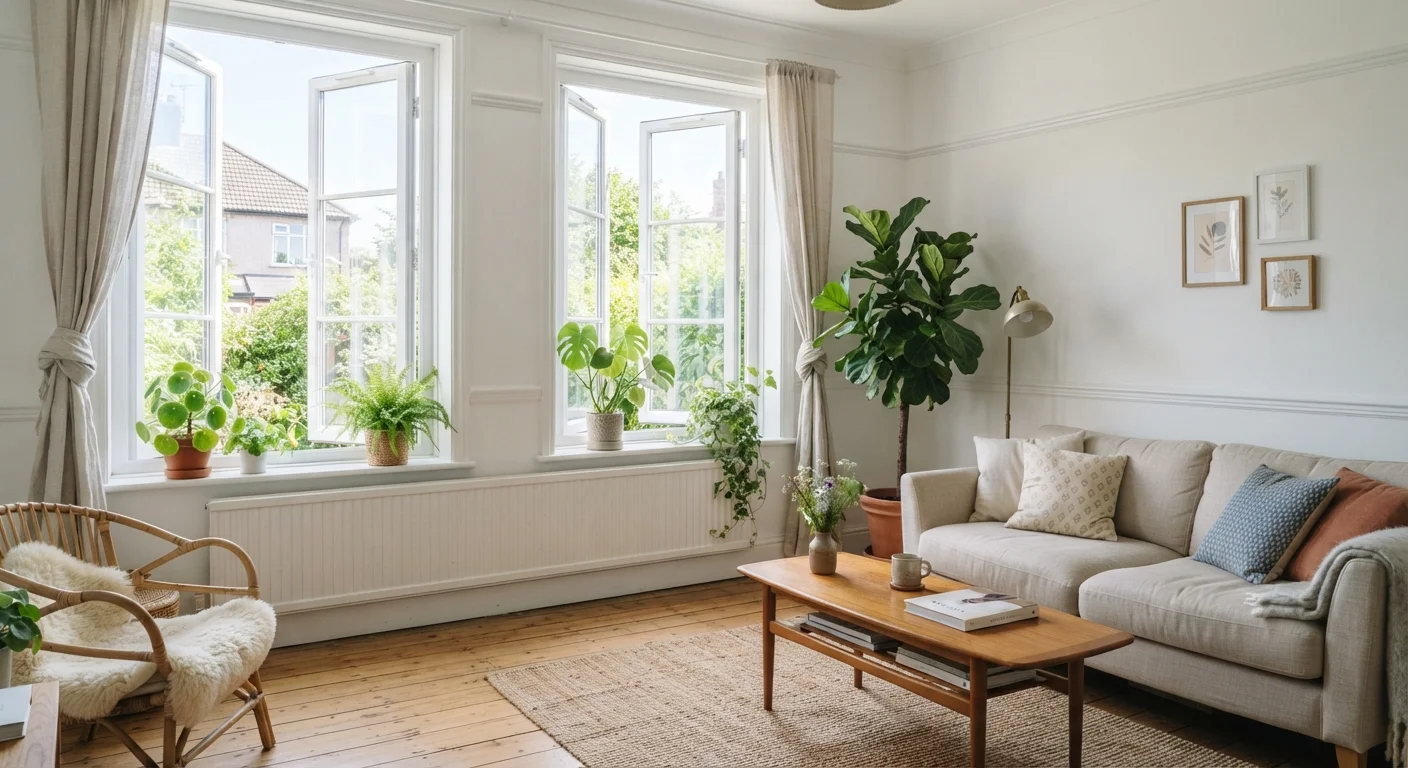
- Houseplants offer modest air benefits but work best as part of a broader ventilation strategy.
Why Indoor Air Quality Deserves Your Attention
Indoor air can be more polluted than outdoor air, even in cities. Dust mites, mold spores, volatile organic compounds (VOCs) from cleaning products and furnishings, and combustion byproducts from gas appliances can all accumulate in a home that isn't well-ventilated. For renters and homeowners on a tight budget, this sounds like an expensive problem — but most of the meaningful fixes cost very little.
You don't need an air quality monitor or a whole-house filtration system to make a real difference. What you need is an understanding of where the problems come from and a handful of consistent habits. This list covers the most practical, affordable steps — the ones that address root causes rather than masking symptoms.
If you're also tackling bigger home comfort issues, the guide to home maintenance on a tight budget offers useful context on prioritising fixes by impact and cost.
Change your HVAC filter on schedule
A clogged air filter doesn't just reduce heating and cooling efficiency — it recirculates dust, pet dander, and other particles through your home. Most standard 1-inch filters should be replaced every 30 to 90 days depending on whether you have pets or allergy sufferers in the household. Higher-MERV filters (MERV 8 to 11) trap finer particles without straining most residential systems. Check your system's manual if you're unsure what rating it can handle.
Filter replacements typically cost $5–$20 each. Buying a few at once is cheaper per unit and means you're less likely to skip a change because you don't have one on hand.
A clogged filter recirculates dust and dander — replacing it is the single easiest air quality fix.
Use exhaust fans consistently
Bathrooms and kitchens generate large amounts of moisture and airborne grease — two significant contributors to poor indoor air. Running the bathroom exhaust fan during and for at least 15 minutes after a shower removes the bulk of that humidity before it can settle on walls or ceilings. Kitchen range hoods work the same way for cooking fumes.
If your exhaust fan is sluggish or noisy, cleaning the cover and fan blades can restore significant airflow. Replacement fans are inexpensive if the motor has failed — and in most jurisdictions, swapping a like-for-like exhaust fan doesn't require a permit.
Running your bathroom fan for 15 minutes after a shower prevents most moisture-related air problems.
Control humidity throughout the home
Indoor relative humidity between 30% and 50% is the range where mold growth is least likely and dust mites are least active. Above 60%, both become significantly more common. A basic hygrometer (humidity gauge) costs a few dollars and tells you exactly where your home sits.
In damp climates or basements, a portable dehumidifier can help. In dry climates, humidifiers reduce static and respiratory discomfort — but they require regular cleaning, since standing water inside a humidifier can itself become a mold source. Emptying and wiping the tank every few days is essential.
Keeping humidity between 30% and 50% is one of the most effective ways to suppress mold and dust mites.
Vacuum with a HEPA-filter vacuum regularly
Standard vacuum cleaners without HEPA filters can exhaust fine particles back into the air as fast as they collect them from carpets. A vacuum with a HEPA (High-Efficiency Particulate Air) filter traps particles as small as 0.3 microns, including many allergens. You don't need to replace your vacuum immediately, but if yours is due for replacement, a HEPA model is worth prioritising.
Focus on areas where dust accumulates fastest: under furniture, along baseboards, and on fabric upholstery. Vacuuming once or twice a week in high-traffic areas makes a measurable difference — especially in homes with pets or carpet.
A vacuum without a HEPA filter may return fine particles to the air rather than removing them.
Ventilate strategically by opening windows
Even a few minutes of cross-ventilation can flush out stale air and dilute indoor pollutants significantly. Open windows on opposite sides of a room or home to create airflow rather than just opening one. Morning hours — before outdoor traffic and pollen peaks — are often best for urban residents.
If outdoor pollen is a concern, check local air quality indexes before ventilating and use window screens to block larger particles while still allowing airflow. Sealing drafts with weather-stripping improves energy efficiency without blocking your ability to ventilate intentionally.
Cross-ventilation for even a few minutes a day flushes stale air and reduces pollutant buildup indoors.
Switch to low-VOC cleaning products
Many common household cleaners, aerosol sprays, and air fresheners release volatile organic compounds that linger in the air long after use. VOCs are associated with headaches and respiratory irritation. Swapping to unscented or fragrance-free products — or mixing your own solutions from white vinegar, baking soda, and water — substantially reduces this load.
Store cleaning products in a ventilated cabinet or utility area rather than under the kitchen sink in a closed space. Never mix bleach with ammonia or vinegar — the fumes are harmful. The guide to unclogging drains without harsh chemicals shows how to handle common plumbing tasks without reaching for caustic products.
Fragrance-free cleaners and basic pantry ingredients dramatically reduce the VOC load in your home.
Add a few houseplants — but keep expectations realistic
Research suggests that some houseplants can absorb limited amounts of VOCs from indoor air. However, the effect in a normal living space is modest — you would need an impractical number of plants to replicate what good ventilation achieves. That said, a few low-maintenance plants like pothos, snake plants, or spider plants contribute positively to the environment and have no downsides for most households.
The bigger consideration: overwatered plants and wet soil can themselves become mold sources. Water them only when the top inch of soil is dry, and avoid leaving standing water in saucers beneath the pot.
Houseplants help slightly, but ventilation and humidity control will always do more heavy lifting.
Building Better Air Quality Habits Over Time
None of these steps require a significant investment. Most take under an hour and cost under $20. The key is consistency — skipping filter changes for a year, letting bathroom moisture linger, or storing chemicals in closed rooms quietly erodes indoor air quality in ways that add up faster than most people expect.
Check Vents and Registers Too
Dust buildup on supply and return air vents restricts airflow and adds particles to circulating air. Removing vent covers and washing them in warm soapy water every few months costs nothing but a few minutes. While you have the cover off, shine a flashlight into the duct opening — visible dust accumulation near the opening can often be vacuumed out with a hose attachment.
Musty odors, persistent coughs, or allergy symptoms that improve when you leave home are worth paying attention to. The guide to reading your home's warning signs can help you figure out whether a smell or symptom points to a larger issue like a hidden moisture problem.
Indoor air quality also connects to the broader project of making your home genuinely livable on a budget. For a full picture of affordable home improvements, see the complete framework for improving your home on a tight budget.