

Key Takeaways
- Sleep deprivation raises emotional reactivity, making anxiety symptoms feel more intense.
- Anxiety activates the body's stress-response system, making it physically harder to fall and stay asleep.
- The cycle is bidirectional — addressing either problem can create positive momentum in the other.
- Consistent sleep schedules and calming pre-bed habits are among the most accessible general strategies.
- Chronic or severe sleep and anxiety issues warrant professional evaluation, not self-diagnosis.
The Sleep-Anxiety Cycle
The sleep-anxiety cycle describes a self-reinforcing loop in which poor sleep heightens anxiety, and heightened anxiety in turn disrupts sleep. Each condition actively worsens the other, making it hard for the brain and body to settle. Understanding this feedback loop is the first step toward addressing both problems together rather than in isolation.
Research points to the amygdala and prefrontal cortex as key players: sleep deprivation increases amygdala reactivity while reducing the prefrontal cortex's ability to regulate emotional responses, amplifying perceived threat and worry.
How Sleep Deprivation Amplifies Anxiety
When you miss adequate sleep, your brain does not simply feel tired — it becomes emotionally less stable. The amygdala, a region involved in processing threats and fear, becomes significantly more reactive after even one night of poor sleep. At the same time, the prefrontal cortex — the area responsible for rational thinking and emotional regulation — loses some of its ability to put the brakes on anxious thoughts.
The practical result is that the same worry that felt manageable on a well-rested morning can feel overwhelming after a night of tossing and turning. Sleep research broadly supports the idea that sleep loss lowers the threshold for perceived threat, making everyday stressors feel more urgent and harder to dismiss.
This matters because it means anxiety is not simply a personality trait or a sign of weakness — it has a measurable physiological trigger in sleep loss. Chronic stress affects far more than mood, and disrupted sleep is one of the most consistent ways stress escalates in the body over time.
~1 in 3
U.S. adults not getting enough sleep
The CDC reports that roughly one in three American adults regularly sleeps less than the recommended seven hours per night.
2x
Higher anxiety risk with chronic poor sleep
Research published in sleep and psychiatry literature consistently finds that people with chronic insomnia face substantially elevated rates of anxiety disorders compared to those sleeping adequately.
17%
Adults with an anxiety disorder in the U.S.
Anxiety disorders are among the most common mental health conditions in the United States, affecting tens of millions of adults, according to general epidemiological estimates.
How Anxiety Steals Your Sleep
Anxiety works against sleep through a mechanism called hyperarousal — a state in which the nervous system remains on alert rather than shifting into the rest mode the brain needs to initiate sleep. The body releases stress hormones like cortisol and adrenaline, heart rate stays elevated, muscles hold tension, and racing thoughts prevent the mental quieting that sleep requires.
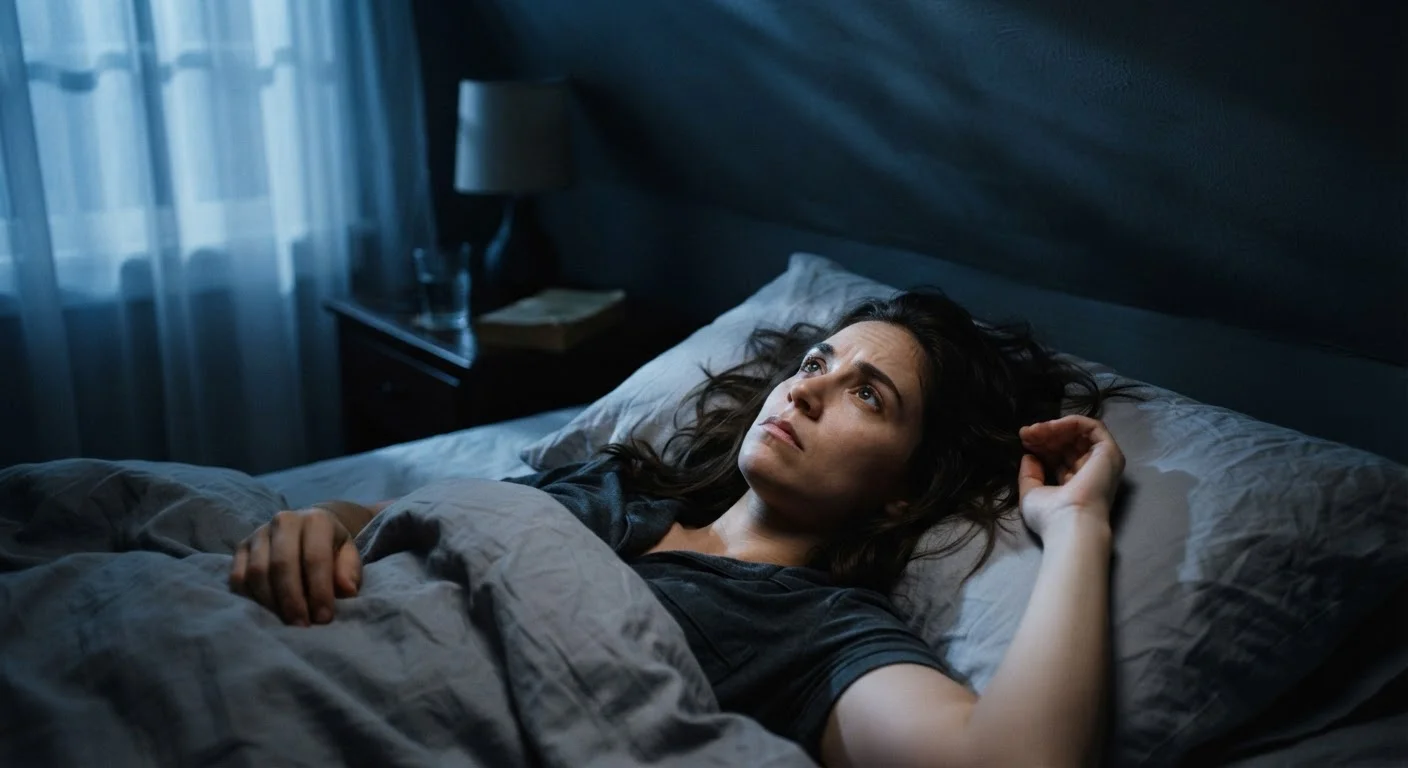
People with anxiety often describe lying in bed with an active mind — replaying conversations, anticipating problems, or worrying about worrying itself. This is not simply a bad habit; it reflects the biology of a nervous system that has not received a clear signal that it is safe to power down.
Certain common behaviors can quietly make this worse. Checking the news, scrolling social media, or rehashing stressful events close to bedtime can all reinforce the alert state. Our article on common habits that amplify stress explores several patterns worth knowing about.
“Sleep is not a luxury. It is a biological necessity, and its disruption has cascading consequences on emotional regulation, cognitive function, and overall health.”
— Matthew Walker, Professor of Neuroscience and Psychology, University of California, Berkeley; author of widely cited sleep research
The Feedback Loop and What Drives It
The reason this cycle is so persistent is that both problems share the same underlying system: the body's stress-response network. When either sleep deprivation or anxiety activates that network, it raises the baseline level of arousal — making the next night of sleep harder and the next day of anxiety more likely.
Over weeks and months, this can shift from an occasional bad night into a stable pattern that feels impossible to interrupt. Daily habits like movement, light exposure, and social connection also interact with this system, either reinforcing the cycle or helping buffer against it.
Importantly, the cycle is bidirectional — which is actually useful news. It means that improving either sleep or anxiety can create positive momentum in the other direction. You do not need to solve both simultaneously from scratch.
General Strategies That May Help
While this article is general health information and not a substitute for personalized medical advice, sleep research and behavioral health literature point to some broadly supported approaches worth understanding:
- Consistent sleep timing: Going to bed and waking at the same time daily — including weekends — helps anchor the body's internal clock and can reduce the time it takes to fall asleep.
- A wind-down buffer: Giving yourself 30–60 minutes of low-stimulation activity before bed helps signal to the nervous system that the threat-scanning phase of the day is over. See our guide on building a wind-down routine that actually helps you sleep for a practical, no-cost framework.
- Reducing stimulant and screen exposure: Caffeine consumed late in the day and bright screens close to bedtime both delay the brain's shift toward sleep readiness.
- Breathing and grounding techniques: Slow, deliberate breathing can activate the parasympathetic nervous system — the body's counterbalance to the stress response — helping lower heart rate and physical tension.
None of these approaches are guaranteed to eliminate anxiety or insomnia, and they are not replacements for professional care when symptoms are significant.
Start With One Small Change
If the cycle feels overwhelming, pick a single, concrete habit to adjust — such as setting a consistent wake time for one week — rather than overhauling everything at once. Small, sustainable changes are more likely to stick and can build momentum without adding to your stress load.
This article is for general informational and educational purposes only and does not constitute medical advice. If you are experiencing persistent sleep difficulties or anxiety symptoms, please consult a qualified healthcare professional for personalized guidance.