

Key Takeaways
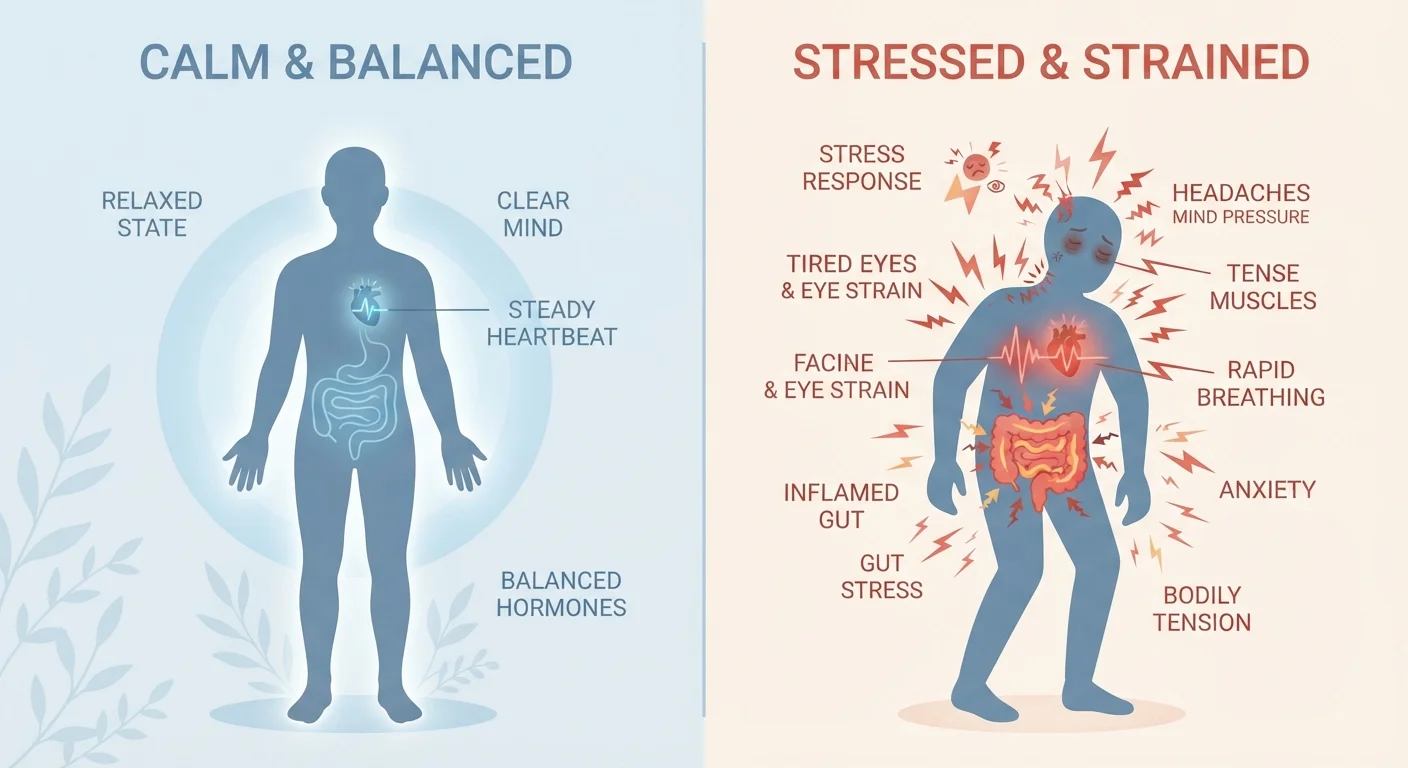
- Chronic stress keeps your body in a low-grade emergency state that disrupts normal biological functions.
- The cardiovascular system, immune function, digestion, and sleep are all measurably affected by prolonged stress.
- Many physical symptoms people attribute to other causes — frequent colds, stomach upset, fatigue — can be stress-related.
- Recognizing physical signs of stress is the first step toward addressing them.
- Consult a healthcare provider if stress-related symptoms are persistent or severe.
Chronic Stress
Chronic stress is a state of prolonged psychological and physiological tension that persists over weeks, months, or years. Unlike acute stress — which is short-lived and can even sharpen focus — chronic stress keeps your body's alarm systems switched on long after the triggering situation has passed. Over time, this sustained activation takes a measurable toll on multiple organ systems.
Physiologically, chronic stress is associated with dysregulation of the hypothalamic-pituitary-adrenal (HPA) axis, leading to persistently elevated cortisol and other stress hormones that interfere with normal body functions.
Your Body's Stress Response Was Built for Sprints, Not Marathons
When you sense a threat — a near-miss in traffic, a confrontation at work — your brain triggers a cascade of hormones including adrenaline and cortisol. Heart rate rises, breathing quickens, muscles tense, and digestion slows. This is the classic fight-or-flight response, and for short-term survival, it's remarkably effective.
The problem is that modern stressors — financial pressure, job insecurity, relationship conflict, chronic overwork — rarely resolve in seconds. They linger. When your nervous system stays in high-alert mode for weeks or months, those same protective mechanisms start working against you. The body was designed for brief bursts of stress followed by recovery, not a continuous low hum of threat.
“Stress is not what happens to us. It's our response to what happens. And response is something we can choose.”
— Maureen Killoran, Wellness educator and author on stress and resilience
What Prolonged Stress Does to Your Heart and Blood Pressure
One of the most studied effects of chronic stress is on the cardiovascular system. Sustained high cortisol levels contribute to elevated blood pressure, increased heart rate, and higher levels of inflammation — all recognized risk factors for heart disease. Research has linked chronic psychological stress to a meaningfully higher risk of cardiovascular events, though stress is rarely the sole cause; it interacts with sleep, diet, activity, and genetics.
People under chronic stress also tend to adopt habits that compound cardiovascular risk: disrupted sleep, reduced physical activity, and relying on comfort foods. The effect is cumulative rather than dramatic — a slow erosion rather than a sudden break.
77%
Adults reporting physical stress symptoms
According to the American Psychological Association's Stress in America survey, a large majority of US adults regularly experience physical symptoms they associate with stress.
2–3x
Increased cardiovascular risk with high chronic stress
Multiple epidemiological studies suggest individuals with high chronic psychological stress have a significantly elevated risk of cardiovascular events compared to low-stress peers, though causality involves multiple factors.
40%
Adults reporting stress disrupts their sleep
The APA's Stress in America data consistently finds that a substantial share of American adults cite stress as a primary reason they cannot get adequate sleep on a regular basis.
Immune Function, Digestion, and Sleep: The Quiet Casualties
Cortisol is designed to suppress non-essential functions during a crisis — including immune activity. In the short term, that's efficient. Over time, chronically elevated cortisol can impair the immune system's ability to respond to pathogens, which is why people going through stressful periods often notice they catch colds more easily or take longer to recover.
The gut is equally sensitive. The digestive tract is sometimes called the "second brain" because it contains an extensive network of neurons that communicate directly with the brain. Stress can disrupt this gut-brain axis, contributing to symptoms like bloating, nausea, irregular bowel habits, and worsening of conditions like irritable bowel syndrome (IBS).
Sleep is both a victim and an amplifier of stress. Stress hormones make it harder to fall and stay asleep, and poor sleep in turn raises cortisol the next day — creating a reinforcing loop. For a deeper look at that specific cycle, see how sleep and anxiety feed each other.
Track Your Physical Symptoms Over Time
Keep a simple log noting when physical symptoms appear alongside your stress levels — even a brief daily note on your phone works. Patterns often become visible within a few weeks and give you useful information to share with a healthcare provider. You don't need an app or any special tools to start.
Recognizing Stress in Your Body — and What to Do About It
Many people don't connect physical symptoms to stress because the link isn't obvious. Persistent headaches, tight shoulders, frequent infections, and stomach troubles are often investigated in isolation when chronic stress may be an underlying thread.
Tracking patterns matters. If symptoms cluster around high-stress periods — or improve during calmer stretches — stress is worth discussing with a healthcare provider. Lifestyle factors that support stress resilience are well-researched: consistent sleep schedules, regular moderate movement, social connection, and limiting excessive caffeine and alcohol all influence how your body handles pressure. Daily habits shape your baseline mood in ways that can make chronic stress more or less tolerable.
This article provides general health information only and is not a substitute for professional medical advice. If stress-related symptoms are affecting your daily life, please consult a qualified healthcare provider.
This article is for informational purposes only and does not constitute medical advice, diagnosis, or treatment. Always consult a qualified healthcare professional for concerns about your health.