

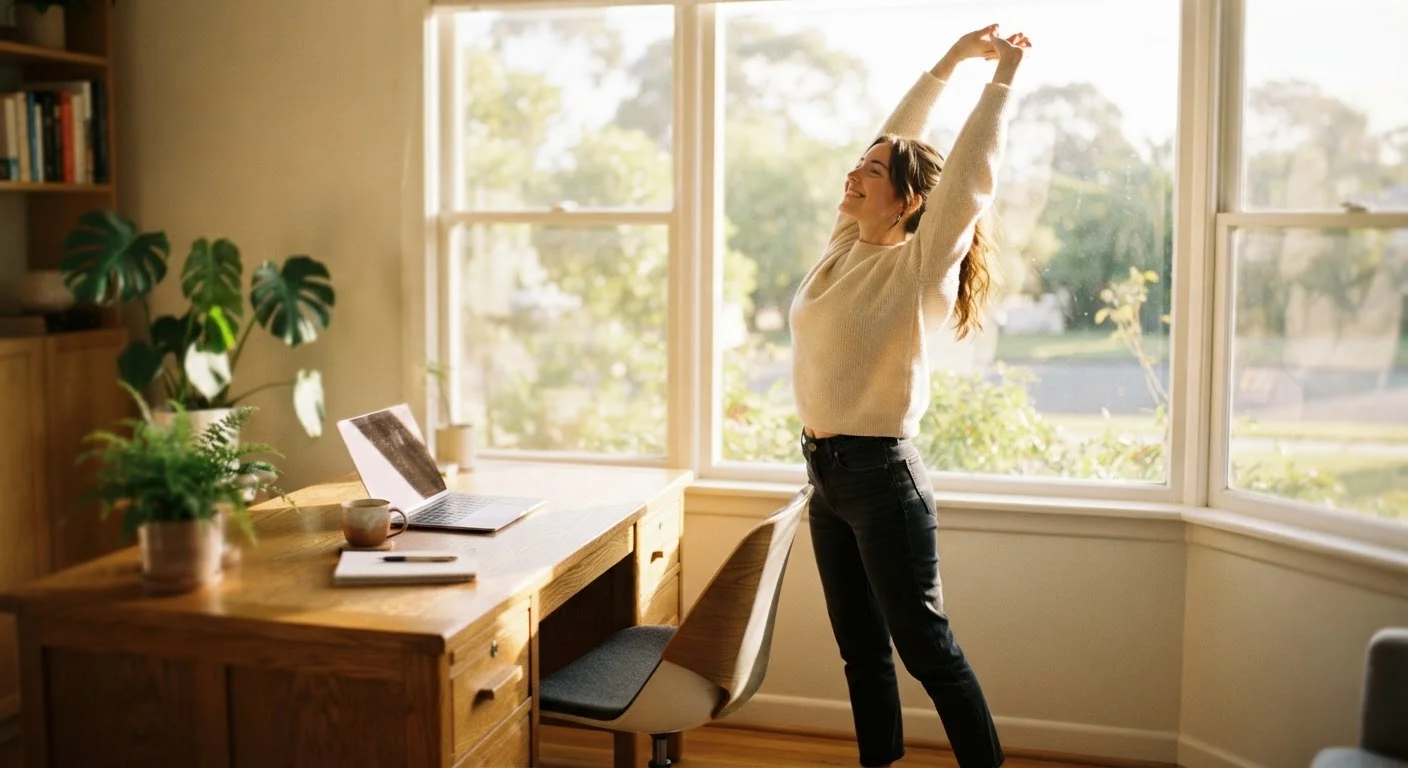
Key Takeaways
- Prolonged sitting is associated with health risks independent of whether you also exercise.
- Short movement breaks spread across the day provide real physiological benefits.
- No gym, equipment, or fitness background is required to benefit from regular movement.
- Movement supports mood, circulation, joint health, and energy — not just fitness.
- Even small habits, like standing up every hour, can shift your body's baseline over time.
Regular Movement
Regular movement means incorporating physical activity into your daily life through frequent, low-intensity actions — not just structured exercise sessions. It includes walking, standing, stretching, climbing stairs, and any other activity that gets your body out of a stationary position. The key idea is consistency throughout the day, rather than intensity during a single workout window.
Health researchers distinguish between 'exercise' (planned, structured activity) and 'non-exercise physical activity' (NEPA) — the latter covers all movement that happens outside formal workouts and contributes significantly to overall metabolic health.
The Problem With Sitting Still
Most Americans spend a large portion of their waking hours sitting — at desks, in cars, on sofas. This has become so normal that it rarely feels like a health concern. But the body wasn't designed for extended stillness, and the effects of prolonged sitting accumulate quietly over time.
Research in exercise science has established a concept sometimes called the "sitting disease" — the idea that long, unbroken periods of physical inactivity carry health risks even for people who exercise regularly. Metabolic processes that regulate blood sugar, cholesterol, and circulation slow significantly when the large muscles of the legs remain inactive for hours at a stretch.
This matters because it reframes the question. It's not simply about whether you work out — it's about how much of your day your body spends in motion versus stillness. For people who sit most of the day, a one-hour gym session may not fully compensate for the remaining hours of inactivity. The good news: the solution doesn't require a gym, a trainer, or any equipment at all.
6–8 hrs
Average daily sitting time for U.S. adults
Estimates from national health surveys suggest most American adults spend the majority of their waking hours sedentary, including time at work, in transit, and at home.
~25%
Adults meeting weekly physical activity guidelines
The CDC has reported that only about 1 in 4 U.S. adults meets the recommended guidelines for both aerobic and muscle-strengthening activity.
2 min
Activity break shown to lower blood sugar response
Research published in health journals has found that even very brief walking breaks after meals can meaningfully reduce post-meal glucose levels compared to uninterrupted sitting.
What Movement Actually Does for Your Body
Physical movement triggers a cascade of biological responses that go well beyond burning calories. Understanding what's actually happening can make it easier to stay motivated — especially when the benefits feel invisible.
Circulation and Oxygen Delivery
When you move, your muscles contract and your heart rate rises slightly, even during gentle activity. This pushes blood more efficiently through your system, delivering oxygen and nutrients to tissues — including the brain. Improved circulation is one reason a short walk can make you feel more alert.
Blood Sugar Regulation
Light muscle activity helps your body use glucose more effectively. Breaking up sitting time with brief movement has been shown in research to reduce blood sugar spikes after meals, which matters for long-term metabolic health.
Joint and Muscle Health
Joints are nourished by movement — synovial fluid, which lubricates joint surfaces, is distributed more effectively when you move regularly. Long periods of stillness can contribute to stiffness and discomfort, while regular light movement helps maintain range of motion and reduce tension. For a deeper look at how a daily stretching habit fits in, see our article on what daily stretching actually changes.
Mood and Mental Clarity
Movement influences brain chemistry. Even low-intensity activity prompts the release of endorphins and other neurotransmitters associated with mood regulation. This connection between physical movement and emotional wellbeing is explored further in our piece on how daily habits shape your baseline mood.
Why Short Bursts Count More Than You Think
One of the most common misconceptions about physical activity is that it only counts if it's sustained for a significant block of time. In fact, the body responds to movement in relatively short windows. A two-minute walk, a set of standing stretches, or a brief bout of activity after a meal all register as genuine physiological input.
This is why the concept of "movement snacks" — small, frequent activity breaks spread across the day — has gained traction in health research. These micro-sessions keep circulation moving, interrupt prolonged muscle inactivity, and prevent the metabolic slowdown associated with extended sitting.
If you work at a desk or spend long hours seated, building simple habits around your existing schedule is more sustainable than trying to carve out large exercise blocks. Our guide on fitting movement into a long workday offers practical, low-disruption strategies for exactly this situation.
Getting Started Without Overhauling Your Life
The most effective movement habit is one you'll actually maintain. Starting small isn't a compromise — it's a strategy. Research on behavior change consistently shows that small, consistent actions build more durable habits than ambitious overhauls that fade within weeks.
A few low-barrier entry points worth considering:
- Stand up every hour. Set a timer or use a reminder app. Even 60 seconds of standing interrupts sedentary time.
- Walk during transitions. Before or after meals, between tasks, or during phone calls — these moments add up without requiring dedicated time.
- Use stairs when available. Brief stair climbs are a compact way to engage large muscle groups with no equipment.
- Stretch while waiting. Countertop stretches while waiting for water to boil, or neck rolls at your desk, require almost no time or space.
If you're ready to build these moments into a more intentional structure, our guide to building a morning routine around movement is a practical next step — no gym membership required. And if you're starting completely from scratch, a realistic first month of regular movement maps out a gentle, sustainable path forward.
This article is for general informational purposes only and does not constitute medical advice. If you have a health condition, injury, or are unsure what level of activity is appropriate for you, please consult a qualified healthcare professional before making changes to your routine.