

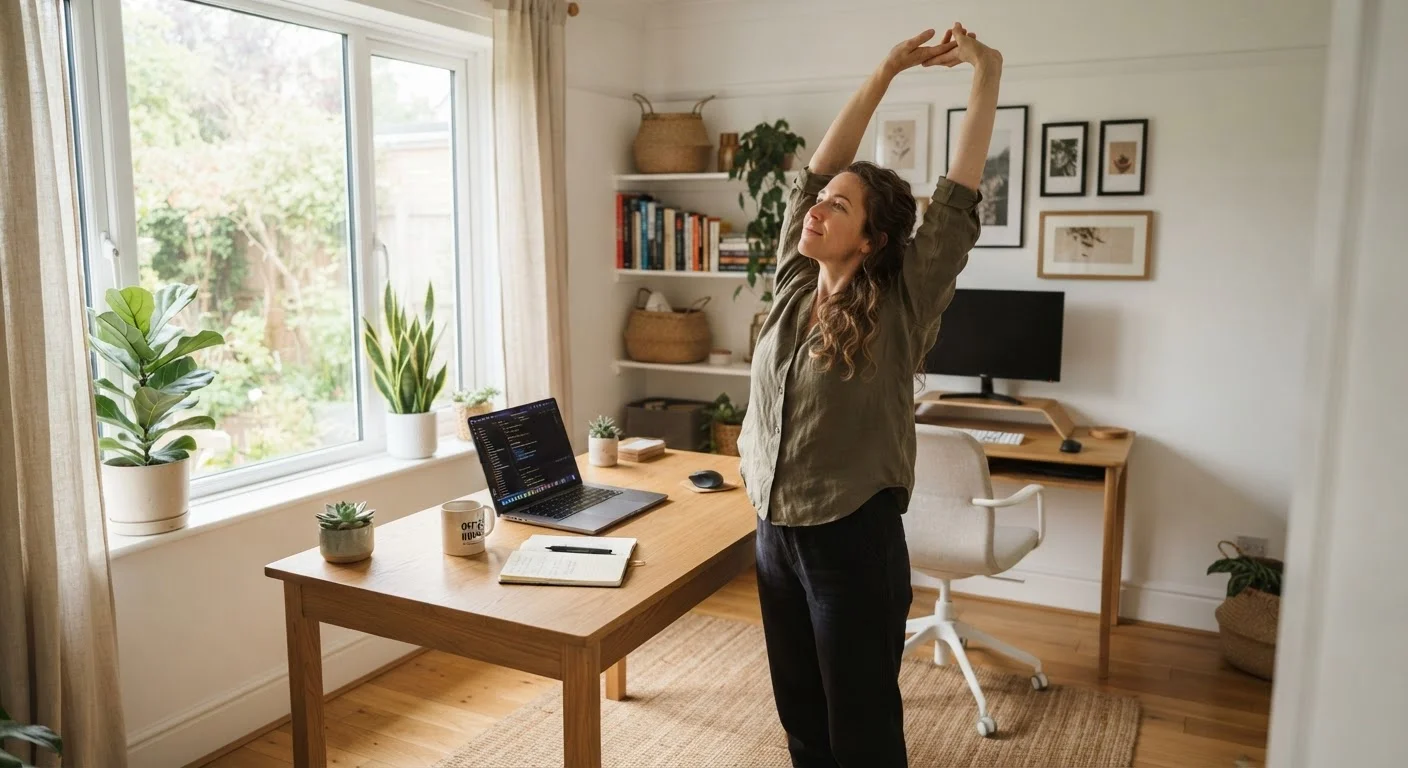
Key Takeaways
- Prolonged sitting is associated with health risks independent of other exercise habits.
- Breaking up sitting time with brief movement every 30–60 minutes is a widely supported strategy.
- Most desk-friendly movement requires no equipment and minimal space.
- Consistent small habits accumulate more benefit than occasional intense effort.
- Simple environmental changes — like desk placement or calendar reminders — reduce friction.
What you will need
Why Sitting for Extended Periods Matters
Many desk workers log eight or more hours seated each day — and public health researchers have noted that this level of prolonged sitting is associated with a range of health concerns, including cardiovascular risk and metabolic changes, even among people who exercise regularly outside of work. The phrase sometimes used is "sedentary behavior independent of exercise" — meaning that sitting for long continuous stretches carries its own risks separate from whether you hit the gym afterward.
The good news is that the solution doesn't require major life changes. Evidence increasingly points to breaking up sitting time frequently as one of the most practical interventions available. Short, regular movement throughout the day — rather than one concentrated exercise session — appears to carry meaningful benefit.
This guide gives you a practical, low-disruption system for doing exactly that.
This Is General Information, Not Medical Advice
The strategies in this article are general wellness information for healthy adults. If you have a health condition, injury, or physical limitation that affects your ability to move, please consult a qualified healthcare professional before making changes to your activity routine.
What You'll Need Before You Start
The approach here is designed to be accessible with minimal resources. Before working through the steps, make sure you have the basics in place.
What you will need
Phone or Smartwatch Timer
Set repeating reminders every 30–60 minutes to prompt movement breaks throughout the workday.
Resistance Band
Enables seated and standing stretches or light strengthening exercises without taking up desk space.
Supportive Footwear
Comfortable shoes make impromptu walking breaks more practical, especially in office environments.
If you work in a limited physical space — whether at home or in a compact office — movement is still very achievable. Our article on moving more in a small space covers practical options when floor space is tight.
Step-by-Step: Adding Movement to Your Workday
Follow these steps to build a consistent, low-effort movement habit into even the busiest desk-based day. Each step is designed to be done within your existing environment — no gym, no equipment required.
Set a Movement Reminder Every 30–60 Minutes
The biggest barrier to movement during a long workday is simply forgetting. Use your phone, computer calendar, or smartwatch to set a recurring alert every 30 to 60 minutes. When it sounds, treat it like a required task — not optional.
Research consistently suggests that breaking up long bouts of sitting, even briefly, is more beneficial than a single long exercise session bookending a full day of stillness. The goal here is frequency, not intensity.
Stand Up and Walk for Two to Three Minutes
When your reminder fires, stand up completely and walk — even if it's just to a different room, the kitchen, or around your workspace. Two to three minutes of low-intensity walking has measurable effects on blood sugar and circulation compared to remaining seated.
If you work from home, a lap around your living space counts. In an office, use the stairs or walk to a colleague instead of messaging them.
Do a Short Desk-Friendly Stretch Sequence
After walking, spend one to two minutes on targeted stretches for the areas most affected by sitting: hip flexors, upper back, neck, and wrists. Simple options include:
- Chest opener: Clasp your hands behind your back and gently lift, opening the chest
- Neck rolls: Slowly roll your chin toward each shoulder, then to your chest
- Seated hip stretch: Cross one ankle over the opposite knee and lean forward gently
- Wrist circles: Rotate wrists in both directions for 10 seconds each
None of these require floor space or changed clothes.
Introduce Bodyweight Exercises at Natural Break Points
At lunch, before a meeting, or when finishing a task, add two to five minutes of light bodyweight movement. Good options for a desk environment include:
- Wall push-ups
- Standing calf raises
- Seated leg raises under the desk
- Shoulder rolls and arm circles
These don't require changing clothes or working up a sweat, making them practical even in shared office environments.
Redesign One Part of Your Environment
Small environmental changes can prompt movement automatically. Consider placing your water bottle across the room so you have to get up to refill it, or moving your printer farther from your desk. If you have flexibility in your workspace, a temporary standing surface — even a shelf at the right height — lets you alternate postures without buying anything.
If you're thinking about furniture changes, it's worth reading a balanced overview first: multifunction furniture trade-offs before committing to a purchase.
Book-End Your Workday With Intentional Movement
A short movement routine at the start and end of your workday creates a natural container that offsets the sitting in between. Even 10 minutes of walking or stretching before you sit down and after you finish can meaningfully shift your daily total.
For structured morning ideas, see our guide on building a morning routine around movement — all no-equipment, no-membership approaches. If you're newer to regular activity, starting from zero outlines a gentle on-ramp.
Stack Movement With Existing Habits
Pair movement breaks with things you already do — stand up every time you take a phone call, do a short walk loop before making coffee, or stretch while waiting for a document to load. Habit stacking reduces the mental effort of remembering to move.
Don't Ignore Pain or Discomfort
If any movement causes sharp pain, joint discomfort, or dizziness, stop immediately and consult a healthcare provider. Discomfort is not a sign to push through — especially for those returning to activity after a long sedentary period.
Making It Stick Over Time
The hardest part of any new habit isn't starting — it's maintaining consistency through busy or stressful periods. A few principles help:
- Lower the bar on hard days. Even one or two movement breaks is better than zero. Perfection is not the target.
- Track loosely. A simple tally on paper or a note in your phone of how many breaks you took can build awareness without pressure.
- Adjust the system, not the goal. If 30-minute reminders feel intrusive during focused work, try 45. The schedule should serve you, not stress you.
Over several weeks, these small habits accumulate into a meaningfully more active day — without disrupting your workflow or requiring any additional time outside of work hours.
This article is for general informational and educational purposes only and is not a substitute for professional medical advice, diagnosis, or treatment. Always consult a qualified healthcare professional with any questions you may have regarding your health or physical activity.