

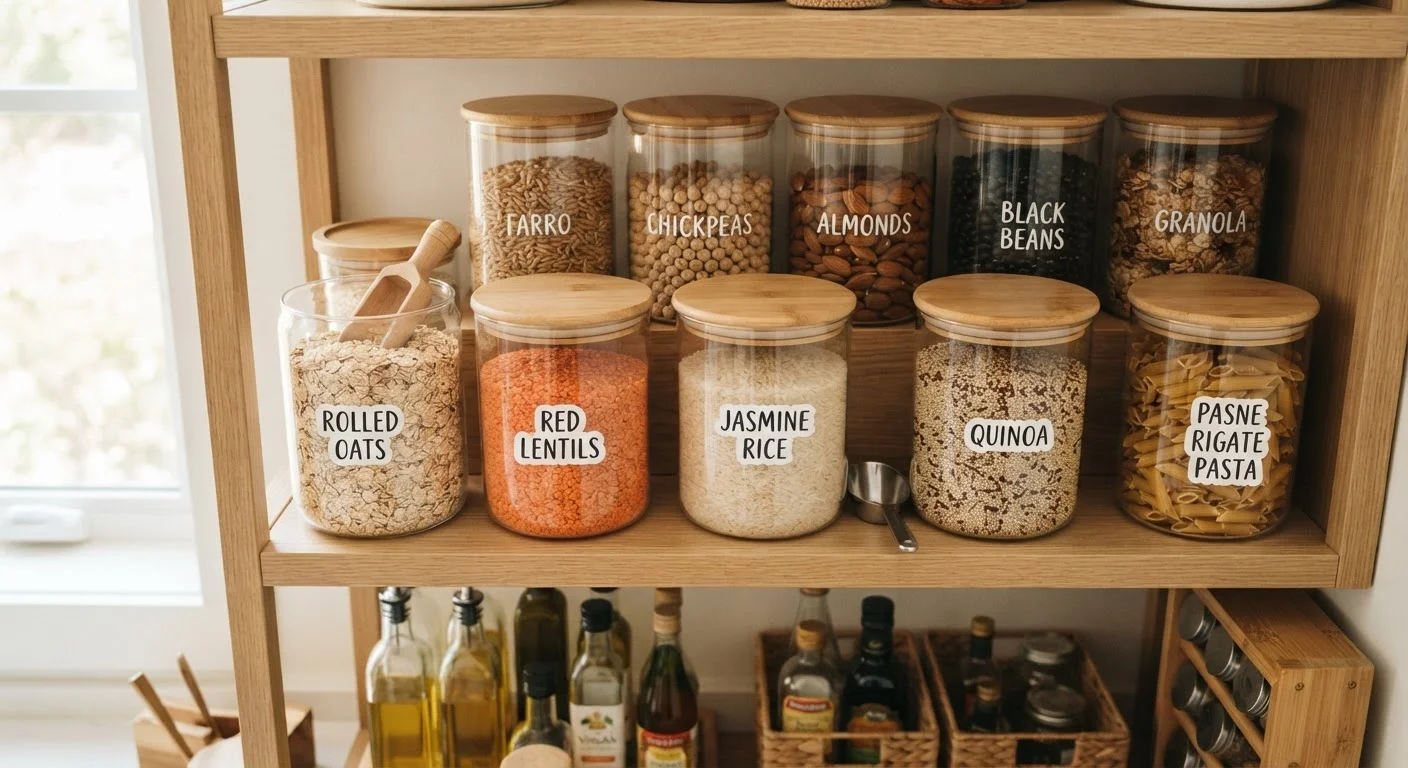
Key Takeaways
- Bulk buying lowers the cost per unit, but only saves money if you actually use what you purchase.
- Perishable foods bought in bulk often spoil before they're consumed, negating any savings.
- High upfront costs can strain a tight grocery budget even when the long-term math works out.
- Non-perishables like dried beans, rice, oats, and pasta are usually the safest bulk purchases.
- Storage space and household size are key factors in whether bulk buying makes practical sense.
Lower cost per unit on most staple items
Buying larger quantities almost always reduces the price per ounce, pound, or serving. This effect is most pronounced with shelf-stable staples like dried beans, rice, and oats.
Fewer shopping trips saves time and money
Stocking up less frequently means fewer opportunities for impulse purchases and less spent on fuel or transit getting to the store.
Reduces the risk of running out of essentials
A well-stocked pantry means you're less likely to make emergency purchases at higher-priced convenience stores when a staple runs out mid-week.
Supports consistent, low-cost meal planning
Having reliable quantities of core ingredients on hand makes it easier to plan nutritious meals in advance without last-minute substitutions that cost more.
High upfront cost strains tight budgets
Even when per-unit savings are real, the total checkout amount can be significantly higher. For households managing week-to-week, that lump sum may not be feasible.
Perishables often spoil before they're used
Fresh produce, dairy, and bread bought in bulk frequently go to waste if not consumed quickly, turning a perceived saving into a direct loss.
Requires adequate storage space
Large quantities of dry goods, frozen items, or canned products need appropriate shelving, pantry space, or freezer capacity — a real barrier in smaller homes or apartments.
Encourages overconsumption of some foods
Research suggests that larger package sizes can lead to eating more than intended, particularly with snack foods and calorie-dense items.
Poor value for infrequently used ingredients
Specialty spices, sauces, or ingredients used in just one or two recipes rarely justify bulk quantities, and may expire or lose quality long before you finish them.
Our Verdict
Bulk buying is a genuinely useful strategy for reducing grocery costs — but only under the right conditions. It works best for shelf-stable staples you consume regularly, and falls apart when applied to perishables, items you rarely use, or situations where storage and upfront cash are limited.
Best for households with consistent meal routines, adequate storage space, and a list of staple ingredients they reliably go through every month.
What Bulk Buying Actually Means
Bulk buying means purchasing larger quantities of a product at once — typically at a lower cost per unit than buying smaller packages. You might do this at a warehouse-style retailer, through a co-op, or simply by grabbing the jumbo-size version at your regular grocery store.
The appeal is straightforward: buy more, pay less per serving. But that math only holds if the extra quantity doesn't go to waste. For a deeper look at how unit pricing works and how to use shelf labels to your advantage, see our guide to unit pricing.
Bulk buying is part of a broader set of affordable eating strategies covered in our comprehensive budget eating resource.
The Pros of Buying in Bulk
For the right products and households, bulk purchasing offers clear financial and practical advantages.
Lower cost per unit on most staple items
Buying larger quantities almost always reduces the price per ounce, pound, or serving. This effect is most pronounced with shelf-stable staples like dried beans, rice, and oats.
Fewer shopping trips saves time and money
Stocking up less frequently means fewer opportunities for impulse purchases and less spent on fuel or transit getting to the store.
Reduces the risk of running out of essentials
A well-stocked pantry means you're less likely to make emergency purchases at higher-priced convenience stores when a staple runs out mid-week.
Supports consistent, low-cost meal planning
Having reliable quantities of core ingredients on hand makes it easier to plan nutritious meals in advance without last-minute substitutions that cost more.
~30%
Potential unit-cost savings on pantry staples
Consumer research consistently shows bulk purchases of shelf-stable foods can cost 20–30% less per unit compared to standard retail sizes.
30–40%
Share of food purchased that US households waste
The USDA estimates that US households waste between 30 and 40 percent of the food supply, a figure that rises when bulk purchases exceed what families can realistically consume.
Beyond the per-unit savings, buying in bulk also means fewer shopping trips, which can reduce impulse purchases. Having a well-stocked pantry of staples — dried lentils, oats, rice, canned tomatoes — also makes it easier to build nutritious, low-cost meals without needing to run to the store for every ingredient.
The Cons of Buying in Bulk
Bulk buying has a real downside that's easy to underestimate at checkout. If the conditions aren't right, you may spend more, not less.
High upfront cost strains tight budgets
Even when per-unit savings are real, the total checkout amount can be significantly higher. For households managing week-to-week, that lump sum may not be feasible.
Perishables often spoil before they're used
Fresh produce, dairy, and bread bought in bulk frequently go to waste if not consumed quickly, turning a perceived saving into a direct loss.
Requires adequate storage space
Large quantities of dry goods, frozen items, or canned products need appropriate shelving, pantry space, or freezer capacity — a real barrier in smaller homes or apartments.
Encourages overconsumption of some foods
Research suggests that larger package sizes can lead to eating more than intended, particularly with snack foods and calorie-dense items.
Poor value for infrequently used ingredients
Specialty spices, sauces, or ingredients used in just one or two recipes rarely justify bulk quantities, and may expire or lose quality long before you finish them.
It's also worth noting that bulk buying can create a false sense of frugality. Spending $80 on a large supply of something you already had plenty of isn't saving money — it's just spending more of it sooner. This is one of several cheap eating myths that can actually cost you more over time.
What to Buy in Bulk — and What to Skip
The key to making bulk buying work is being selective. Not every product category benefits equally.
Generally good candidates for bulk
- Dried grains and legumes: rice, lentils, oats, dried beans, pasta
- Canned goods with long shelf lives: tomatoes, chickpeas, corn
- Frozen proteins if you have freezer space: chicken, fish, edamame
- Pantry staples: olive oil, vinegar, soy sauce, spices (in quantities you'll use within a year)
Usually better bought in smaller amounts
- Fresh produce, dairy, and bakery items — these spoil quickly
- Snacks and treat foods — larger quantities can encourage overconsumption
- Items you're trying for the first time — buy small before committing to bulk
- Anything with a short best-by date relative to your expected usage
A Note on Spices Bought in Bulk
Ground spices begin to lose potency within six to twelve months of opening. Buying large quantities can seem economical, but if the spice sits unused for a year or more, you'll end up with flavorless powder rather than a genuine saving. Consider splitting bulk spice purchases with a friend or neighbor to get the lower price without the waste.
If you're working with a very tight weekly budget, bulk buying's high upfront cost can create cash-flow problems even when the long-run math is sound. In those cases, smaller, more frequent purchases may be the more practical choice — and skipping meals to compensate is never a good solution, as explored in our piece on skipping meals to save money.