

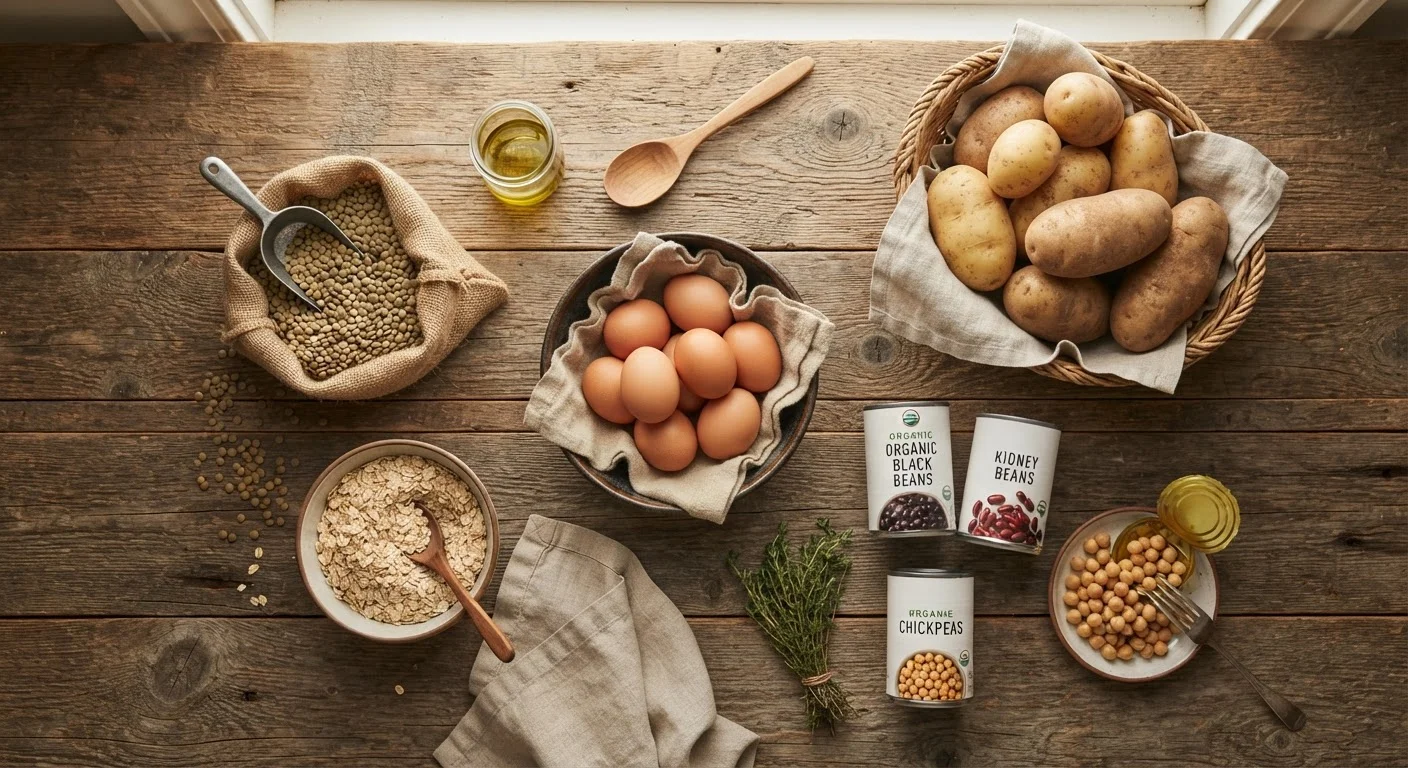
Key Takeaways
- Foods high in protein, fiber, and water content tend to satisfy hunger more effectively than processed snacks.
- Many of the most filling foods — eggs, lentils, oats, potatoes — cost very little per serving.
- Combining budget staples strategically helps you stay fuller longer without overspending.
- Satiety isn't just about calories; nutrient density and food volume both matter.
- Cooking whole foods at home gives you far more filling power per dollar than packaged convenience foods.
Why Some Cheap Foods Fill You Up (and Others Don't)
Not all inexpensive foods are created equal when it comes to keeping hunger at bay. A bag of puffed chips might feel like a bargain until you've eaten the whole thing and you're still hungry an hour later. The difference comes down to what nutrition researchers call satiety — your body's sense of fullness — which is influenced most by three things: protein, dietary fiber, and water content.
Foods rich in these three elements slow digestion, stabilize blood sugar, and send stronger fullness signals to the brain. The good news for budget-conscious eaters is that many of the most satiating foods on earth are also among the least expensive. The key is knowing which ones to reach for.
For a broader framework on eating well without overspending, see our practical foundation guide. The list below focuses specifically on affordable foods that genuinely earn their place in a filling, budget-friendly diet.
Lentils
Lentils are one of the most nutrient-dense foods you can buy at a budget price. A single dry cup yields multiple servings loaded with plant-based protein and soluble fiber — both of which slow digestion considerably. That slow digestion translates directly into sustained fullness, making lentils a standout among plant proteins.
They cook without soaking, absorb flavors well, and work in soups, stews, salads, and grain bowls. Dry lentils keep for months in a sealed container, so there's no waste. Green, brown, and red varieties all deliver similar nutritional value, though textures differ.
Lentils deliver sustained fullness thanks to a powerful combination of protein and soluble fiber.
Eggs
Eggs consistently perform well in satiety research relative to their calorie content. They contain high-quality complete protein — meaning all essential amino acids are present — along with healthy fats that slow gastric emptying. Studies comparing egg-based breakfasts to carbohydrate-heavy alternatives have generally found that eggs help people eat less later in the day, though individual responses vary.
Scrambled, boiled, or poached, eggs are ready in minutes and pair with almost any vegetable or grain. Per serving, they remain one of the most affordable protein sources available at most US grocery stores.
Eggs provide complete protein and healthy fats that work together to keep hunger at bay.
Oats
Rolled oats or steel-cut oats offer a different kind of fullness than most breakfast options. Their primary fiber is beta-glucan, a soluble fiber that forms a gel in the digestive tract, slowing the release of glucose into the bloodstream and prolonging the feeling of fullness well past breakfast. Oats also have a relatively high protein content for a grain.
A large container of rolled oats costs very little and provides dozens of servings. They work as porridge, overnight oats, or a base for savory bowls — a versatility that makes them a true pantry workhorse for budget eaters.
Oats' beta-glucan fiber forms a gel that meaningfully slows digestion and extends fullness.
Canned or Dried Beans
Black beans, kidney beans, pinto beans, and chickpeas are all high in both protein and fiber, making them among the most filling foods per dollar available in any grocery store. A can of beans costs around a dollar and provides two to three servings; dried bags cost even less. Unlike many cheap foods, beans also deliver iron, magnesium, and folate.
They work as a main protein in tacos, burritos, soups, and grain bowls, or as a side dish on their own. Rinsing canned beans reduces excess sodium without affecting their nutritional profile.
Beans pack protein, fiber, and key micronutrients into one of the most affordable foods on the shelf.
Potatoes
Potatoes sometimes get unfairly dismissed as empty carbohydrates, but research using the Satiety Index — a measure of how filling foods are relative to their calorie content — has placed boiled potatoes among the most satisfying foods tested. Their fiber content, combined with a compound called resistant starch (especially in cooled potatoes), supports a prolonged sense of fullness.
Plain, baked, boiled, or roasted potatoes are nutritious and filling. The satiety benefit drops sharply when potatoes are fried in oil or loaded with calorie-dense toppings, so preparation method matters. A five-pound bag remains a practical, affordable staple for most households.
Boiled potatoes rank among the most filling foods per calorie, according to satiety research.
Canned Fish
Canned tuna, salmon, sardines, and mackerel provide high-quality protein and omega-3 fatty acids at a fraction of the cost of fresh fish. Protein is the most satiating macronutrient by a wide margin, and canned fish delivers it in a shelf-stable, no-prep format. Omega-3 fatty acids may also support appetite regulation, though the research in this area is still developing.
These proteins work well in salads, wraps, grain bowls, and pasta dishes. Sardines and mackerel tend to cost less than tuna while providing similar or greater nutritional value, making them worth considering if you haven't tried them.
Canned fish delivers high-quality protein that keeps hunger at bay — at a fraction of fresh fish prices.
Cabbage and Other Hearty Vegetables
High-water, high-fiber vegetables add bulk and volume to meals without adding significant cost or calories. Cabbage, carrots, frozen spinach, and frozen mixed vegetables all fit this profile. Volume eating — filling your plate with lower-calorie, high-volume foods — is a practical strategy for managing hunger without overspending.
A head of green cabbage is one of the most inexpensive vegetables in any produce section and stores well for a week or more. Roasted, sautéed, or raw in slaws, it adds genuine bulk to meals. Frozen vegetables often match or exceed fresh in nutritional value and cost far less per serving when fresh produce prices rise.
High-volume, high-fiber vegetables add real bulk to meals and extend fullness without raising the grocery bill.
Making These Foods Work Together
The real power of these staples comes from combining them. A bowl of oatmeal topped with a boiled egg on the side hits protein, fiber, and complex carbohydrates in one simple, cheap meal. A pot of lentil soup with potatoes and canned tomatoes stretches across multiple servings and costs very little per bowl.
Batch Cook for Maximum Value
Cooking a large pot of lentils, beans, or oatmeal at the start of the week gives you ready-made, filling meals for days. Batch cooking is one of the simplest ways to reduce both food costs and last-minute hunger-driven spending. Store portions in the refrigerator or freezer and reheat as needed throughout the week.
Don't overlook the role of water in your meals either — soups, stews, and porridges add volume and extend fullness without adding significant cost. These are some of the most effective hunger-management tools in any kitchen.
For more ideas on building meals around these ingredients, explore our easy meal ideas hub or browse simple nutrition basics for context on how these foods fit into an everyday eating pattern. You can also find a full pantry reference list in our guide to staple ingredients that keep food costs low.
This article is for general informational and educational purposes only and is not a substitute for personalized medical or dietary advice. Please consult a qualified healthcare professional or registered dietitian for guidance tailored to your individual health needs.