

| Shape of regulatory signs | Typically rectangles or octagons (stop signs) (MUTCD — Manual on Uniform Traffic Control Devices) |
| Shape of warning signs | Diamond-shaped, yellow or orange background (MUTCD — Manual on Uniform Traffic Control Devices) |
| Advisory speed placard color | Yellow — not a legal speed limit (Federal Highway Administration) |
| Right-lane requirement | Left lane passing-only laws active in 29+ US states (Governors Highway Safety Association) |
| Standard low clearance sign unit | Feet and inches (e.g. 12 ft 6 in) (MUTCD) |
Why Sign Knowledge Slips Over Time
Most drivers learned road signs for one purpose: passing the written test. After that, the details fade fast. The signs you see every day — stop, yield, speed limit — stay sharp. The ones you encounter once a month, or once a year, tend to become guesswork.
That guesswork has real consequences. Misreading a regulatory sign can mean a moving violation, a fine, or a collision you didn't see coming. It can also mean driving confidently into a situation you legally had no right to enter.
This reference covers the signs most drivers quietly misread or have forgotten entirely. No course required — just a clear rundown of what each sign means and why it matters on real roads.
For context on how sign awareness connects to broader hazard reading, see anticipating road hazards before they escalate.
| Shape of regulatory signs | Typically rectangles or octagons (stop signs) (MUTCD — Manual on Uniform Traffic Control Devices) |
| Shape of warning signs | Diamond-shaped, yellow or orange background (MUTCD — Manual on Uniform Traffic Control Devices) |
| Advisory speed placard color | Yellow — not a legal speed limit (Federal Highway Administration) |
| Right-lane requirement | Left lane passing-only laws active in 29+ US states (Governors Highway Safety Association) |
| Standard low clearance sign unit | Feet and inches (e.g. 12 ft 6 in) (MUTCD) |
Regulatory Signs Drivers Frequently Misread
No Turn on Red. This sign is often posted at intersections where turning on red is otherwise permitted by default. Many drivers treat it as optional or fail to notice it entirely, especially at unfamiliar intersections. It is not optional — violating it is a moving violation in all US states.
Divided Highway Begins / Ends. These two signs are commonly confused with each other. "Divided Highway Begins" means a median or barrier is about to separate opposing traffic. "Divided Highway Ends" means that separation disappears — oncoming traffic will now share your road. Getting these backward can be dangerous, particularly at night.
Do Not Pass. This is distinct from double yellow center lines, but carries the same weight. The sign appears where sight distance, road geometry, or traffic patterns make passing unsafe. It applies in both directions unless otherwise marked.
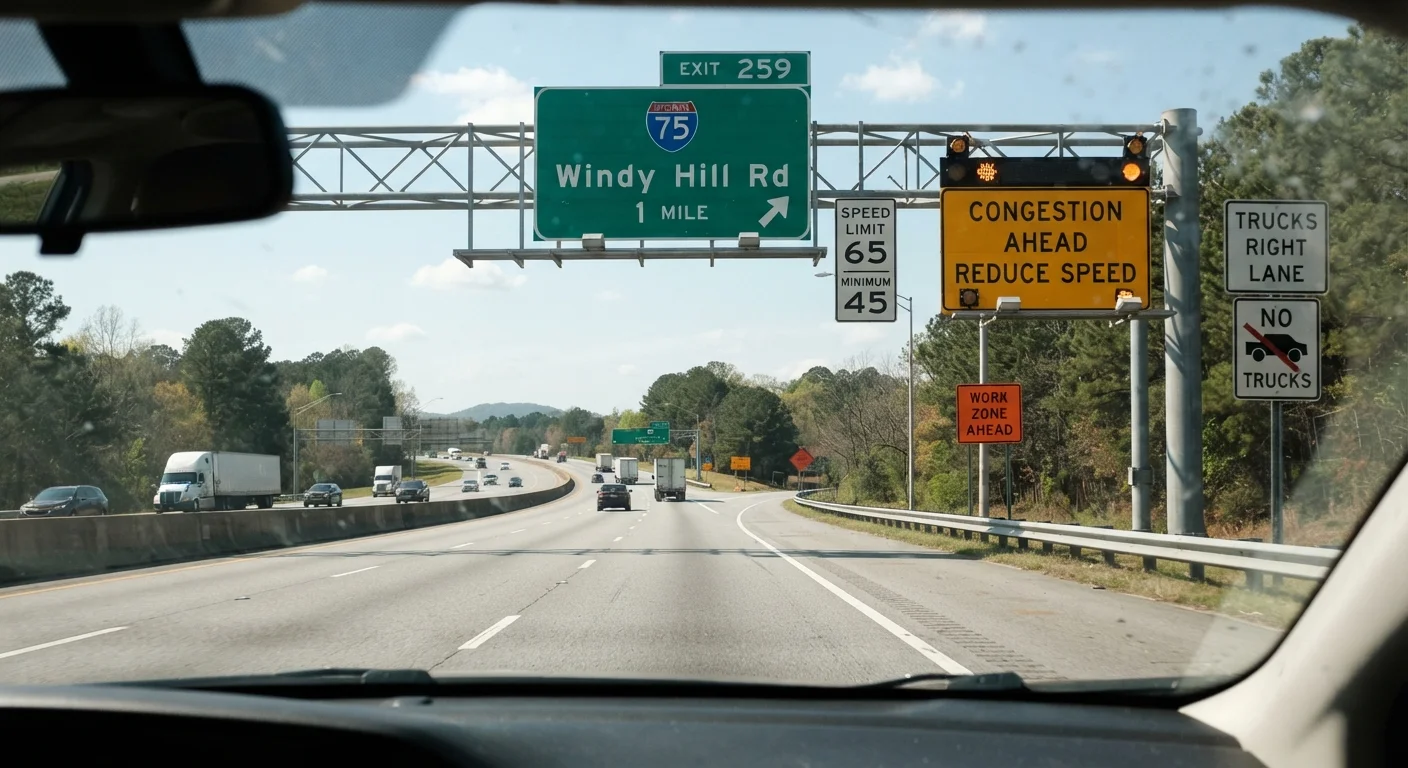
Keep Right Except to Pass. Common on multi-lane highways, this sign is widely ignored. In many states, remaining in the left lane when not actively passing is a ticketable offense — not just a courtesy issue. Speed limits are a ceiling, not a target, and lane discipline is part of that same legal framework.
Low Clearance. These yellow signs display a maximum height in feet and inches. They matter most to drivers of rental trucks, vehicles with roof cargo, or anything taller than a standard passenger car. Ignoring one is costly — structurally and financially.
State Laws Vary on Key Signs
Some signs — particularly those governing lane use, turn on red, and advisory speeds — are interpreted or enforced differently across states. If you frequently drive across state lines, it's worth checking the driver's manual for each state. Most state DMV websites publish their full manual as a free download.
Warning Signs That Deserve More Attention
Slippery When Wet. This sign marks roads where the surface becomes unusually hazardous in rain — often due to materials, road camber, or drainage issues specific to that location. It's a prompt to reduce speed meaningfully, not by a token 5 mph.
Advisory Speed Placard. The yellow placard posted beneath a curve warning sign gives a recommended speed for that specific curve — not a legal limit, but a serious engineering recommendation. Vehicles have rolled on curves where drivers treated the posted speed as conservative.
Emergency Vehicle Warning. Some jurisdictions use flashing signs near fire stations or hospital entrances. These activate when an emergency vehicle is about to exit. Treat them the same as seeing lights and sirens: slow down and prepare to yield.
Hill Blocks View. Less common but important. This sign appears on two-lane roads where the crest of a hill cuts sight distance to near zero. It's a direct instruction not to attempt a pass.
New and returning drivers benefit from reviewing these alongside foundational habits — see habits worth building from your first days on the road.
Pavement Markings That Function Like Signs
Road markings are legally equivalent to posted signs in most states, yet drivers often treat them as advisory.
White stop line. You must stop before the line — not at or beyond it. Stopping past the line, particularly at a crosswalk or intersection sensor, is a violation and can block pedestrians or trigger a red-light camera.
Yellow crosshatch box (Yellow Box Junction). Present in some US cities: you may not enter this intersection unless your exit is clear. Blocking it — even if you had a green light — is a violation.
Bicycle lane markings. A solid white line separating a bike lane from traffic means do not enter. A dashed line near intersections indicates drivers may merge briefly to make a right turn — but must yield to cyclists already in the lane.
Understanding road markings pairs well with understanding what other data is embedded in your vehicle. Tyre sidewall markings carry critical safety data most drivers have never decoded.