

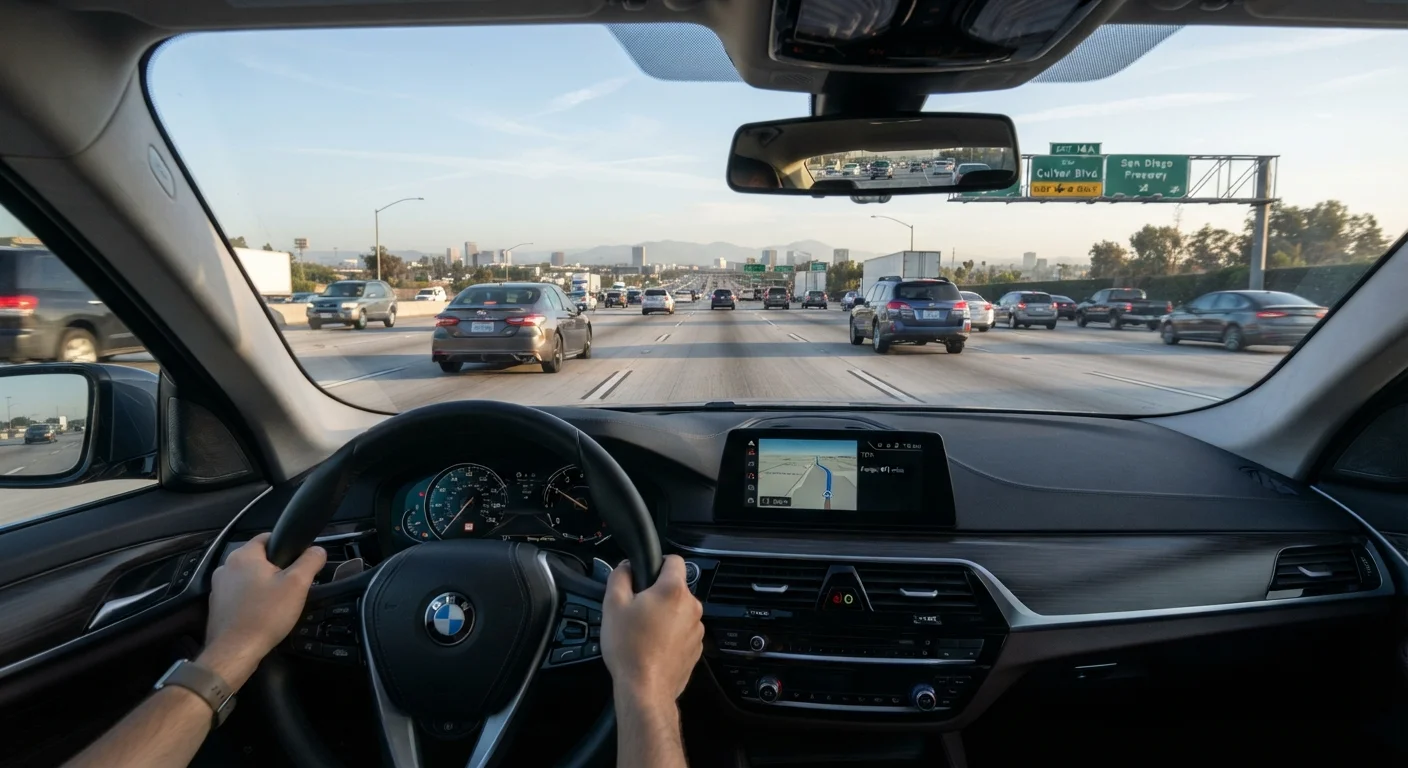
Key Takeaways
- Defensive driving means anticipating hazards rather than just reacting to them.
- Core principles — scanning ahead, maintaining space, managing speed — cost nothing to practice.
- Formal courses can lower insurance premiums, but the skills themselves are freely learnable.
- Defensive driving reduces crash risk but cannot eliminate it; other drivers remain unpredictable.
- The habits apply equally to city streets, highways, and night driving conditions.
Reduces crash involvement through proactive hazard awareness
By scanning further ahead and identifying risks before they become emergencies, defensive drivers create reaction time that pure instinct doesn't provide. Research consistently links better hazard perception to lower collision rates.
Can lower auto insurance premiums
Many insurers offer discounts for completing an approved defensive driving course. The discount varies by insurer and state, but savings of 5–15% on certain coverage portions are commonly advertised.
Core skills cost nothing to practice
Maintaining a safe following distance, checking mirrors every 5–8 seconds, and avoiding blind-spot lingering require zero equipment and zero spending — just consistent attention.
Builds confidence in unfamiliar or high-risk conditions
Drivers trained in defensive principles tend to handle highway merges, wet roads, and heavy traffic with less anxiety because they have an established decision-making framework rather than improvising.
May satisfy court-ordered requirements or ticket dismissal
In many states, completing a certified defensive driving course can result in a moving violation being dismissed or points removed from a driving record, reducing long-term insurance cost increases.
Cannot control the behavior of other drivers
Even perfect technique cannot prevent a collision caused by another driver running a red light or merging without checking mirrors. Defensive driving reduces your exposure to risk but does not eliminate it.
Formal courses vary widely in quality and depth
Online courses approved for insurance discounts are often short and test-focused rather than skill-building. A certificate isn't a reliable proxy for genuinely improved driving ability.
Skills degrade without deliberate reinforcement
Habits learned in a course can fade within months if drivers revert to distracted or complacent routines. One-time training without ongoing practice delivers limited long-term benefit.
Over-confidence can follow initial training
Some drivers feel significantly safer after a course and paradoxically take on more risk. This 'risk compensation' effect has been noted in road safety literature and is a real behavioral pitfall.
Time and cost of in-person courses is a real barrier
Multi-hour in-person courses range from roughly $25 to over $100 depending on the provider and state, and require a significant time commitment that doesn't work for everyone's schedule.
Our Verdict
Defensive driving is a genuinely practical skill set, not marketing jargon. The core principles are free to learn and measurably reduce crash involvement when applied consistently. A formal course may add value through structured feedback and potential insurance savings, but the fundamentals are accessible to any driver willing to pay deliberate attention on every trip.
Any driver who wants to reduce their crash risk and insurance costs without relying on expensive gear or technology — particularly new drivers and those returning to the road after a break.
What Defensive Driving Actually Means
The term gets used so often it risks losing meaning. At its core, defensive driving is a structured approach to operating a vehicle that prioritizes anticipation over reaction. Instead of responding to hazards as they appear, a defensive driver reads the road further ahead, identifies potential problems early, and adjusts speed or position before any emergency develops.
The main principles that show up across nearly every credible program are:
- Extended scanning: Looking 10–15 seconds ahead rather than just at the car in front of you.
- Maintaining a cushion: Keeping adequate space on all sides so you have room to respond.
- Speed management: Traveling at a speed that matches road conditions, not just the posted limit.
- Eliminating distractions: Phone use, eating, and loud audio all degrade hazard perception measurably.
- Assuming errors from others: Treating other drivers as potential sources of unpredictable action rather than reliable rule-followers.
None of this requires special equipment or a certified instructor. It requires deliberate attention — which is both the strength and the challenge of the approach. For drivers navigating more complex environments, our guide on how habits differ between motorways and city roads explores how these principles shift with context.
The Real Benefits — and Their Limits
The evidence supporting defensive driving is solid where it counts: human error is involved in the overwhelming majority of crashes. Techniques that reduce driver error — better scanning, adequate following distance, managing fatigue — directly address the most common causes.
Reduces crash involvement through proactive hazard awareness
By scanning further ahead and identifying risks before they become emergencies, defensive drivers create reaction time that pure instinct doesn't provide. Research consistently links better hazard perception to lower collision rates.
Can lower auto insurance premiums
Many insurers offer discounts for completing an approved defensive driving course. The discount varies by insurer and state, but savings of 5–15% on certain coverage portions are commonly advertised.
Core skills cost nothing to practice
Maintaining a safe following distance, checking mirrors every 5–8 seconds, and avoiding blind-spot lingering require zero equipment and zero spending — just consistent attention.
Builds confidence in unfamiliar or high-risk conditions
Drivers trained in defensive principles tend to handle highway merges, wet roads, and heavy traffic with less anxiety because they have an established decision-making framework rather than improvising.
May satisfy court-ordered requirements or ticket dismissal
In many states, completing a certified defensive driving course can result in a moving violation being dismissed or points removed from a driving record, reducing long-term insurance cost increases.
That said, the benefits have a clear ceiling. Defensive driving works on your decisions. It doesn't prevent a driver behind you from following too closely or someone beside you from drifting lanes. Situational awareness can get you out of many near-misses, but not all of them.
Fatigue also deserves specific mention here. Drowsy driving undermines every defensive skill you have — slower reactions, narrowed attention, and impaired judgment combine in ways that no technique fully compensates for. Our article on driving tired and its risks covers the warning signs in practical detail.
Courses: Worth the Money or Not?
A formal course adds structure, feedback, and — in many states — a certificate that unlocks real financial benefits. If you have a recent moving violation, a course that removes points from your record can save more on insurance over several years than its upfront cost. That math is worth running for your specific situation.
What Counts as an 'Approved' Course?
For insurance discounts or ticket dismissal, the course typically must be certified by your state's DMV or a recognized body such as the National Safety Council. Not all online courses qualify. Before enrolling, check with your insurer or court and confirm the provider's approval status for your specific state.
Where courses fall short is in assuming a certificate equals lasting skill. The research on driver training broadly shows that skills fade without regular application. A course taken once and forgotten doesn't make you meaningfully safer long-term.
The most practical approach for budget-conscious drivers: treat the core principles as daily habits rather than a one-time lesson. If a course genuinely helps cement those habits or delivers a financial benefit, it's a reasonable expense. If you're looking at it purely for a discount without changing how you actually drive, the long-term value is limited.
Cannot control the behavior of other drivers
Even perfect technique cannot prevent a collision caused by another driver running a red light or merging without checking mirrors. Defensive driving reduces your exposure to risk but does not eliminate it.
Formal courses vary widely in quality and depth
Online courses approved for insurance discounts are often short and test-focused rather than skill-building. A certificate isn't a reliable proxy for genuinely improved driving ability.
Skills degrade without deliberate reinforcement
Habits learned in a course can fade within months if drivers revert to distracted or complacent routines. One-time training without ongoing practice delivers limited long-term benefit.
Over-confidence can follow initial training
Some drivers feel significantly safer after a course and paradoxically take on more risk. This 'risk compensation' effect has been noted in road safety literature and is a real behavioral pitfall.
Time and cost of in-person courses is a real barrier
Multi-hour in-person courses range from roughly $25 to over $100 depending on the provider and state, and require a significant time commitment that doesn't work for everyone's schedule.
New drivers in particular stand to gain the most — both from structured instruction and from building these habits before bad ones form. See our overview of foundational habits for new licence holders for where to focus in the early months.
Applying It Without Spending a Dollar
If a formal course isn't realistic right now, the following habits are free to start on your next drive:
- Add one car length of following distance beyond what currently feels comfortable, then hold it.
- Before changing lanes, check mirrors, signal, and physically glance at the blind spot — every time.
- At intersections, pause a moment before moving on a green light to confirm cross-traffic has stopped.
- On unfamiliar roads or in poor conditions, drop your speed 5–10 mph below the limit and reassess visibility.
These aren't complex techniques. They're small deliberate choices that compound over thousands of miles into meaningfully lower risk. The same awareness that prevents rear-ending someone in traffic will help you catch a dashboard warning early — and our guide on what dashboard warning lights are actually telling you is a useful companion read for keeping your vehicle in safe condition.
Defensive driving, stripped of the marketing, is really just paying attention on purpose. That's a skill anyone can develop, and it costs nothing but the effort to stay consistent.
90%+
Crashes involving human error
The National Highway Traffic Safety Administration (NHTSA) has consistently attributed the large majority of crashes to driver behavior rather than vehicle failure or road conditions.
~3 seconds
Minimum recommended following distance
Traffic safety organizations generally recommend at least a 3-second following gap under normal conditions — one of the most widely taught defensive driving principles.