

Key Takeaways
- Free and low-cost experiences — hikes, markets, walking tours — often create the most durable travel memories.
- Slowing down and engaging with local everyday life costs little but delivers outsized cultural connection.
- National parks, public beaches, and historic districts offer world-class experiences for minimal or no entry fees.
- Intentional low-spend travel tends to reduce decision fatigue and deepen your sense of place.
- Budget-conscious choices free up money for the one or two splurges that genuinely matter on any trip.
Why the Priciest Experience Isn't Always the Most Memorable
Ask most travelers to recall a standout trip moment and you'll often hear something like: a conversation with a local fisherman, a hike that ended at a jaw-dropping overlook, or wandering into a neighborhood market with no plan. Rarely is it the overpriced sunset dinner cruise. This isn't sentimentality — it reflects how memory actually works. Psychologists who study peak experiences note that novelty, emotional engagement, and connection tend to drive lasting recall more than comfort or luxury spending.
For budget-conscious travelers, this is genuinely good news. The most memorable experiences on a trip are frequently available for free or very little money — you just have to know where to look and give yourself permission to slow down. The list below covers eight categories of low-cost travel experiences that consistently punch above their price tag. For a broader framework on keeping costs manageable without sacrificing meaning, see our foundational budget travel strategies.
National Parks and Public Lands
The United States' public lands system is one of the most underused travel resources available to everyday Americans. National parks, national forests, Bureau of Land Management land, and state parks collectively offer hundreds of millions of acres of trails, rivers, canyons, and coastline. While many national parks charge entrance fees — typically in the $15–$35 per vehicle range — the America the Beautiful annual pass grants access to most federal sites for a one-time fee that pays for itself quickly for regular visitors. Beyond that, many lands carry no entry fee at all.
For a grounded, practical breakdown of costs and free-entry days, see America's national parks on a shoestring.
Hundreds of millions of acres of public land are accessible for little or no cost across the US.
Free Walking Tours
In dozens of American and international cities, tip-based walking tours operate daily, led by knowledgeable locals who cover neighborhoods, history, and culture in two to three hours. You pay what you feel the experience was worth at the end. The quality is often surprisingly high — guides depend on tips and repeat recommendations, so they're motivated to deliver. Beyond organized tours, self-guided walking through a city's historic district, waterfront, or arts neighborhood costs nothing and rewards curiosity in ways a bus tour simply cannot.
Tip-based walking tours deliver local expertise and cultural depth at a fraction of any packaged excursion.
Public Markets and Food Halls
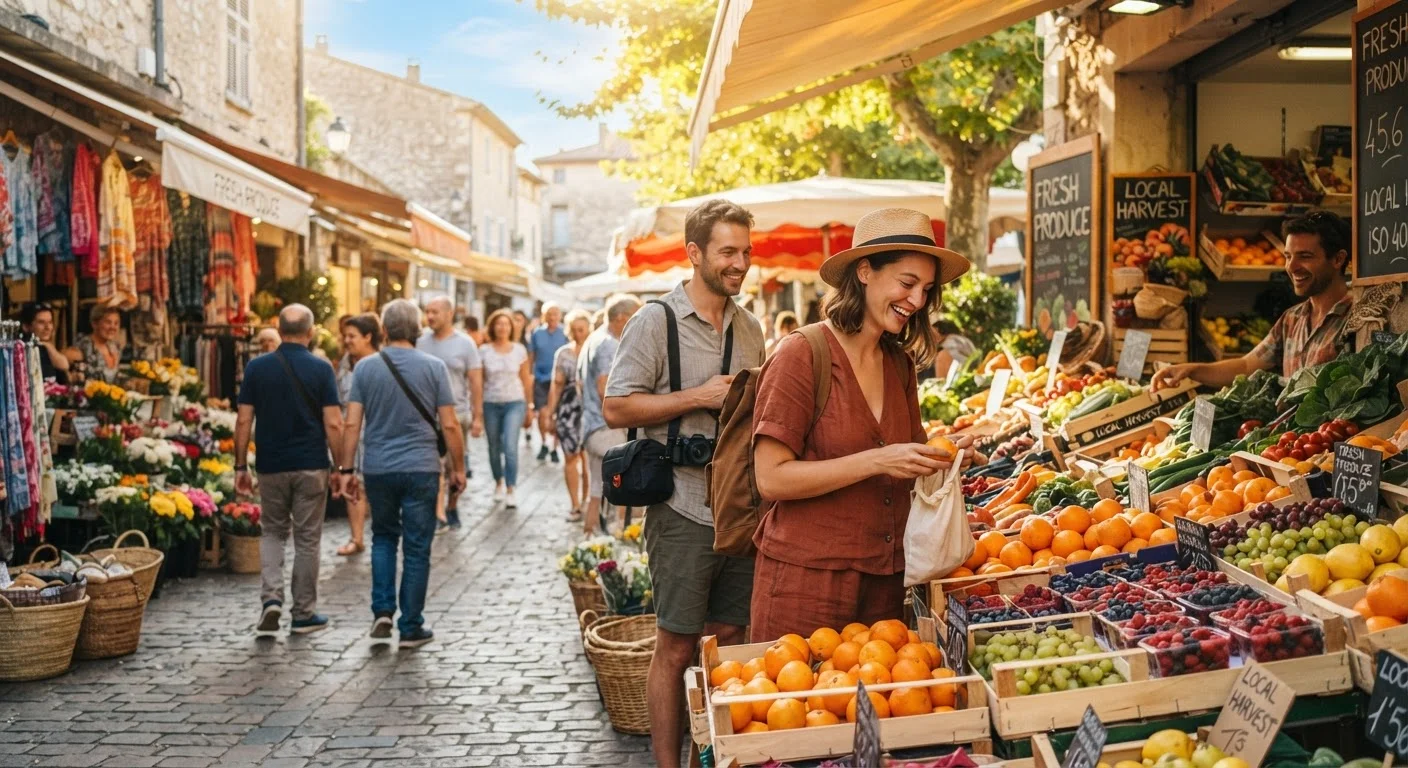
Public markets — farmers markets, covered municipal markets, food halls in repurposed warehouses — are among the most authentic windows into local life a traveler can find. They're free to enter, alive with vendors, and typically offer better food at lower prices than tourist-area restaurants. A morning spent at a regional market, sampling produce and talking to vendors, often becomes the trip's most vivid memory. For tactics on building great meals around markets and local canteens, eating well while traveling without draining your budget is a practical companion read.
Public markets offer an authentic, affordable window into local culture that packaged tours rarely match.
Free Museum Days and Cultural Institutions
Many major museums — art, natural history, science, local history — offer free admission on specific days or evenings, a policy designed to serve residents but equally available to visitors. Smithsonian Institution museums in Washington, D.C., for example, have no admission charge. Municipal libraries, public art installations, botanical gardens, and historic sites often follow similar models. A bit of pre-trip research into a destination's free cultural calendar can fill an itinerary with richly stimulating experiences at zero cost.
Pre-trip research into free museum days can fill a full itinerary with world-class cultural experiences.
Hiking and Urban Green Spaces
Trails — from local nature preserves to mountain routes in the Rockies — are free to access in most cases and deliver experiences that no ticketed attraction can replicate. The physical engagement of a hike, combined with immersion in a landscape, tends to create memories that outlast nearly anything else on a trip. Urban parks, greenways, and riverfronts offer similar benefits within city limits. If the Rocky Mountain region draws you, mountain towns that don't require a ski-resort budget shows how to access dramatic scenery without premium price tags. For everyday fitness through outdoor movement, see also outdoor movement as a free fitness resource.
Trails and green spaces deliver physical, emotional, and scenic rewards that ticketed attractions rarely match.
Attending Local Events and Festivals
Community events — outdoor concerts, street fairs, cultural festivals, farmers market performances — are frequently free or very low cost, and they offer something packaged tourism almost never can: a glimpse of how residents actually spend their leisure time. Checking a destination city's parks and recreation website, community calendar, or local arts organization listings before a trip often reveals a rich program of events that won't appear in any guidebook. These spontaneous discoveries tend to become the stories travelers retell most.
Local community events reveal how residents actually live — and they're often free to attend.
Public Beaches, Rivers, and Lakefronts
America's public shorelines — ocean beaches, Great Lakes beaches, river access points, and reservoir recreation areas — are broadly open to the public. Swimming, picnicking, watching a sunset, or simply sitting near moving water are experiences that carry no price tag but consistently rank among travelers' most cherished moments. Parking and facility fees may apply at some sites, but the core experience is free. Seeking out lesser-known public access points away from crowded main beaches often yields quieter, more memorable visits.
A quiet public beach or riverbank is free — and often the most peaceful hour of any trip.
Slow Neighborhood Wandering
Perhaps the most undervalued travel experience of all: simply walking through an unfamiliar neighborhood with no agenda. Residential streets, local bakeries, community murals, small independent bookshops — these are the textures of real life in a place. This kind of wandering costs nothing, requires no reservation, and consistently produces the unexpected encounters that define a trip in retrospect. It works equally well in major cities and in the smaller American cities that reward slow travel.
Aimless neighborhood wandering — with no agenda — is how travelers stumble onto a trip's best moments.
Making the Most of What's Already There
The thread connecting every item on this list is availability — these experiences don't require advance booking six months out or a premium credit card. They exist in cities, small towns, and natural landscapes across the country, waiting for travelers willing to step off the tourist conveyor belt. If you're drawn to smaller, walkable places where slow exploration rewards patience, the underrated small cities that reward slow travel are natural hunting grounds for exactly this kind of experience.
The goal isn't to spend as little as possible for its own sake — it's to spend intentionally, so your dollars go toward the experiences that actually matter to you. Free morning hikes and $2 market lunches create space in your budget for the splurge that genuinely moves you. That's not sacrifice; that's strategy.
Build Your Itinerary Around Free Anchors
Try structuring each travel day around one or two free anchor experiences — a morning hike, a market visit, a neighborhood walk — before adding paid activities. This approach naturally limits overspending while ensuring the day has meaningful shape. It also reduces the pressure to 'get your money's worth' from every single stop.