

Key Takeaways
- Permits and reservations for popular trailheads often sell out weeks or months in advance — book early.
- A written trip plan left with a trusted contact is one of the most important safety steps you can take.
- Navigation skills and a paper map matter more than phone battery in remote areas.
- Budget-conscious adventurers can avoid costly surprises by auditing hidden fees before departure.
- Physical preparation tailored to your specific terrain dramatically reduces injury risk on trail.
Summary
28 items · 45–90 minutes
Why a Checklist Changes Everything
Most outdoor trips that go sideways don't fail because of bad luck — they fail because of skipped steps. A forgotten permit, an uncharged headlamp, no emergency contact briefed — small oversights compound fast when you're three miles from the trailhead. This checklist is designed for everyday explorers: people who don't do this for a living but still want to have a genuinely great time outdoors without blowing their budget or their safety margin.
Whether you're planning a weekend car-camping trip, a multi-day backpacking loop, or a kayaking day tour, the categories below apply. Work through them in order — ideally one to two weeks before departure — so you have time to fix gaps, not just discover them.
If you're heading into the backcountry for the first time, also check out what first-timers actually encounter on overnight hikes before you finalize your plan.
Permits, Reservations & Research
Safety & Emergency Preparation
Gear & Pack Audit
Food, Water & Nutrition
Navigation & Communication
Leave No Trace & Regulations
Tools That Make This Checklist Easier
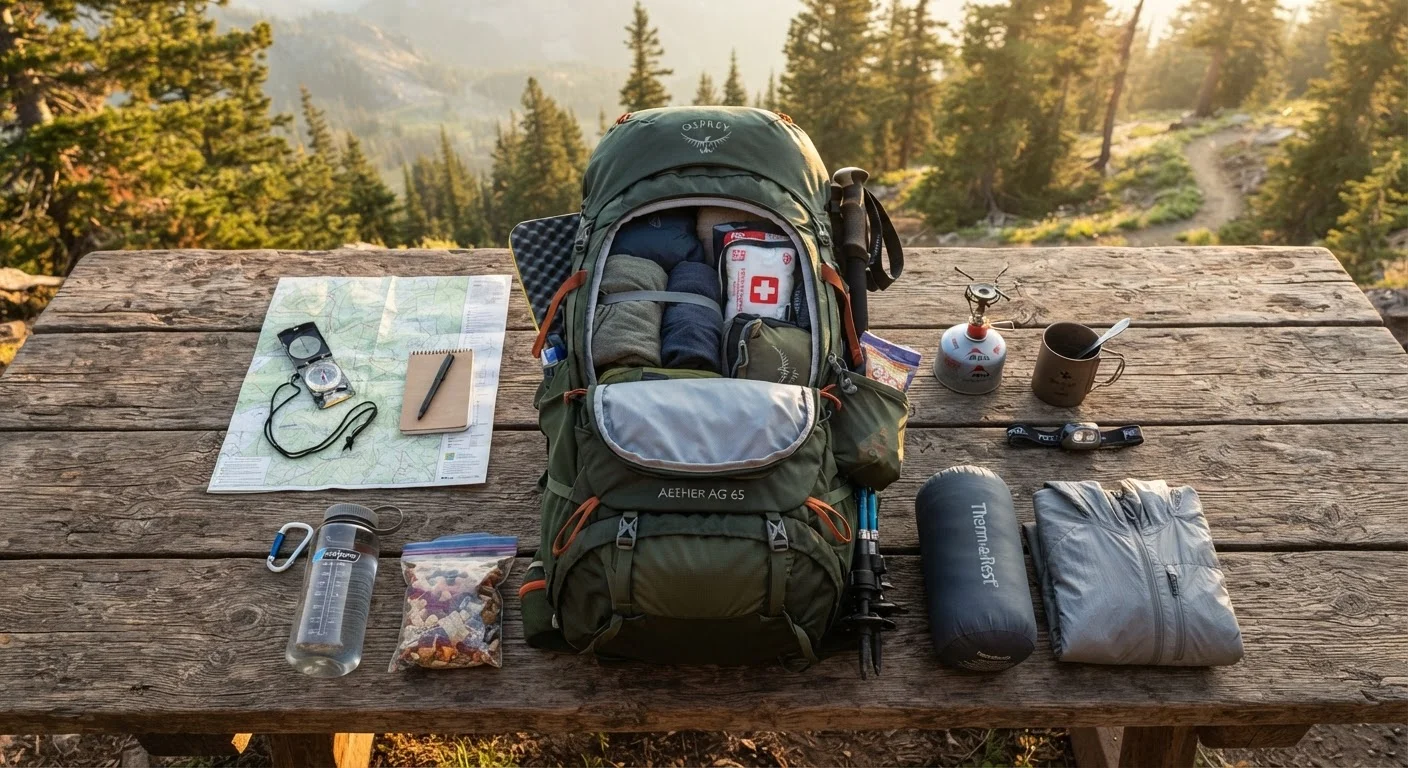
You don't need expensive gear to work through this list — but a few key tools make the process smoother and the outcome safer. Here's what we recommend having on hand as you prep:
Paper Topographic Map
Serves as a reliable backup navigation tool that requires no power and works in any weather or terrain.
Baseplate Compass
Enables map-based navigation when GPS devices fail or run out of battery.
Offline Mapping App
Lets you download route maps to your phone for use without cell service — a practical primary navigation layer.
Personal Locator Beacon (PLB) or Satellite Communicator
Allows you to call for help from remote areas where no cell coverage exists.
First Aid Kit (Activity-Specific)
Provides the supplies needed to manage common trail injuries like blisters, sprains, cuts, and allergic reactions.
Water Filter or Purification Tablets
Makes natural water sources safe to drink, reducing pack weight versus carrying all water from home.
One often-overlooked resource: your destination's official land management website. National forests, state parks, and Bureau of Land Management areas publish current conditions, permit availability, and fee schedules — always verify directly. For a fuller picture of expenses that don't show up in the headline price, see our guide on hidden adventure trip costs most planners overlook.
Navigation and Physical Readiness
Two areas that get underestimated on nearly every first-time adventure: navigation skills and fitness preparation. A downloaded GPS app with offline maps is valuable — but it depends on battery power and signal. A paper topographic map costs a few dollars and never runs out of charge. Learning to read one before you need it in the field is time well spent. Our guide to reading topographic maps walks you through contour lines, elevation profiles, and scale in plain language.
On the fitness side, the goal isn't to become an athlete before your trip — it's to prepare your body progressively for the specific demands ahead. Elevation gain, uneven terrain, and pack weight all stress different muscle groups than everyday walking. Building a realistic fitness base for your adventure doesn't require a gym membership or months of training — just a smart ramp-up over four to six weeks.
Don't Skip the Physical Prep
Underestimating the physical demands of your route is one of the leading causes of wilderness rescues. Elevation gain, heavy pack weight, and uneven terrain stress joints and muscles that typical daily activity doesn't train. Build up your load-bearing walks and stair climbing progressively in the weeks before your trip — and be honest with yourself about your current fitness level when choosing a route.
Finally, if you're heading to a US state park and want a destination-specific breakdown of reservations, gear requirements, and on-site safety basics, our state park pre-visit checklist covers the essentials before you go.