

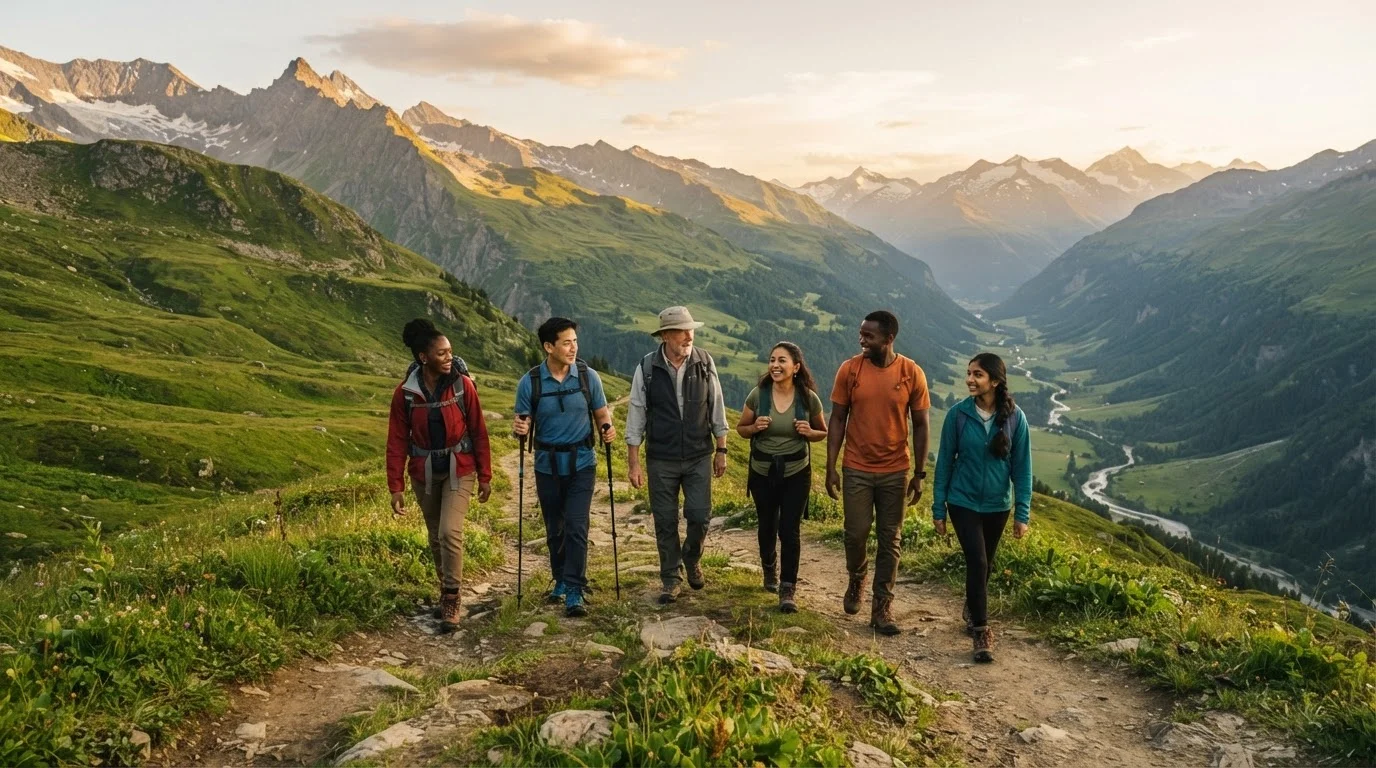
Key Takeaways
- You don't need elite fitness to enjoy adventure travel — most trips have beginner-friendly options.
- Adventure travel can fit modest budgets; costs vary widely depending on destination and style.
- Solo adventure trips are manageable and safe with proper planning and research.
- Gear requirements are often overstated — renting or borrowing is a practical alternative.
- Age and physical limitations rarely disqualify travelers; suitable adventures exist at every level.
Why These Myths Stick Around
Adventure travel has a branding problem. Social media feeds are packed with elite athletes summiting glaciers or kayaking remote rapids — images that make the whole category feel inaccessible to anyone without a six-pack and a six-figure gear budget. The result? Millions of curious would-be travelers talk themselves out of booking before they ever start planning.
The reality is far more encouraging. Most adventure travel — hiking, cycling tours, kayaking weekends, national park road trips — is genuinely within reach for everyday people on real budgets. The gap between perception and reality is wide, and budget travel myths share a lot of the same DNA as adventure travel myths. Both categories suffer from extreme examples dominating the conversation.
Below, we tackle the most persistent misconceptions head-on so you can start planning with accurate information instead of fear.
Myth
You need to be in excellent physical shape before attempting any adventure travel.
Fact
Most adventure destinations offer tiered difficulty levels, including options well-suited to beginners and moderate fitness levels.
The image of adventure travel is dominated by extreme athletes, but the category spans an enormous range. A scenic two-mile waterfall hike, a guided cycling tour on flat terrain, or a beginner rafting float are all legitimately "adventure travel" — and none require months of training beforehand. Fitness helps, but the right trip for your current ability exists at nearly every destination. The same logic applies to fitness in general: the myths that keep people from starting a fitness routine often mirror the ones keeping them from booking a trip.
Myth
Adventure travel is only for young people in their twenties.
Fact
People of all ages participate in adventure travel; many operators specifically design programs for older adults and mixed-age groups.
Age is not a barrier — physical condition and trip selection are what matter. National parks across the US see visitors in their 60s, 70s, and beyond completing meaningful hikes and river trips regularly. Guided tour operators increasingly cater to older adults with itineraries that prioritize comfort, pacing, and accessibility alongside the adventure itself. Consulting a healthcare provider before physically demanding travel is a sensible precaution for anyone with existing health conditions, regardless of age.
Myth
Adventure travel is prohibitively expensive and reserved for wealthy travelers.
Fact
Trip costs vary enormously; domestic camping, hiking, and cycling adventures can be done for a fraction of the price of international resort travel.
A weekend in a national park campground, a multi-day bike tour on a rail trail, or a guided kayaking day trip can all cost less than a standard hotel city break. Where costs climb — international expeditions, guided mountaineering, remote safari travel — they do so for real logistical reasons. Understanding where adventure travel money actually goes helps travelers identify which costs are fixed versus where flexibility exists. Plenty of budget travel strategies apply directly to adventure planning.
Myth
You need to own a full set of specialized, expensive gear before you go.
Fact
Renting or borrowing gear is standard practice and often the smarter choice, especially for first-time adventure travelers.
Gear rental is built into most adventure travel ecosystems — outfitters near trailheads, kayak liveries, bike rental shops, and guided tour operators routinely supply everything you need. Buying a full kit before you know whether you'll enjoy an activity is both costly and unnecessary. Many experienced adventure travelers rent for new activities until they're certain they'll repeat the experience, then invest selectively. Borrowing from friends or local gear libraries (increasingly common in many US cities) is another practical option.
Myth
Solo adventure travel is dangerous and irresponsible.
Fact
Solo adventure travel is widely practiced and manageable with appropriate preparation, route research, and communication planning.
Millions of solo travelers complete hiking, cycling, kayaking, and international adventure trips every year without incident. Risk is real but manageable: sharing your itinerary, carrying a communication device, choosing well-trafficked routes, and following local guidance dramatically reduces exposure. The honest comparison is between well-prepared solo travel and poorly-prepared group travel — preparation matters more than headcount. For a balanced look at the actual trade-offs, see our piece on solo adventure vs. group trips.
What Actually Matters When You're Planning
Once you've moved past the myths, a few practical principles make planning much simpler. First, match the trip to your current fitness and experience level — not the level you aspire to. Matching trips to experience level is one of the most useful frameworks a new adventure traveler can use, and it prevents the discouragement that comes from biting off more than you're ready for.
Second, budget honestly — and plan for the costs that catch people off guard. Park fees, gear rentals, travel insurance, and food resupply are all expenses worth researching early. Our look at hidden adventure trip costs is a good starting point for building a realistic number.
Third, decide early whether you're going solo or with a group — both are valid, and both have genuine trade-offs worth understanding before you commit. Explore the real trade-offs of solo vs. group adventure travel to figure out which style suits you.
Verify Safety and Entry Requirements Independently
Trail conditions, permit requirements, local regulations, and entry requirements for international adventure destinations change regularly. Always verify current conditions with official sources — including land management agencies, government travel advisories, and your destination's tourism authority — before finalizing any trip. Do not rely solely on travel articles or social media posts for safety-critical information.