

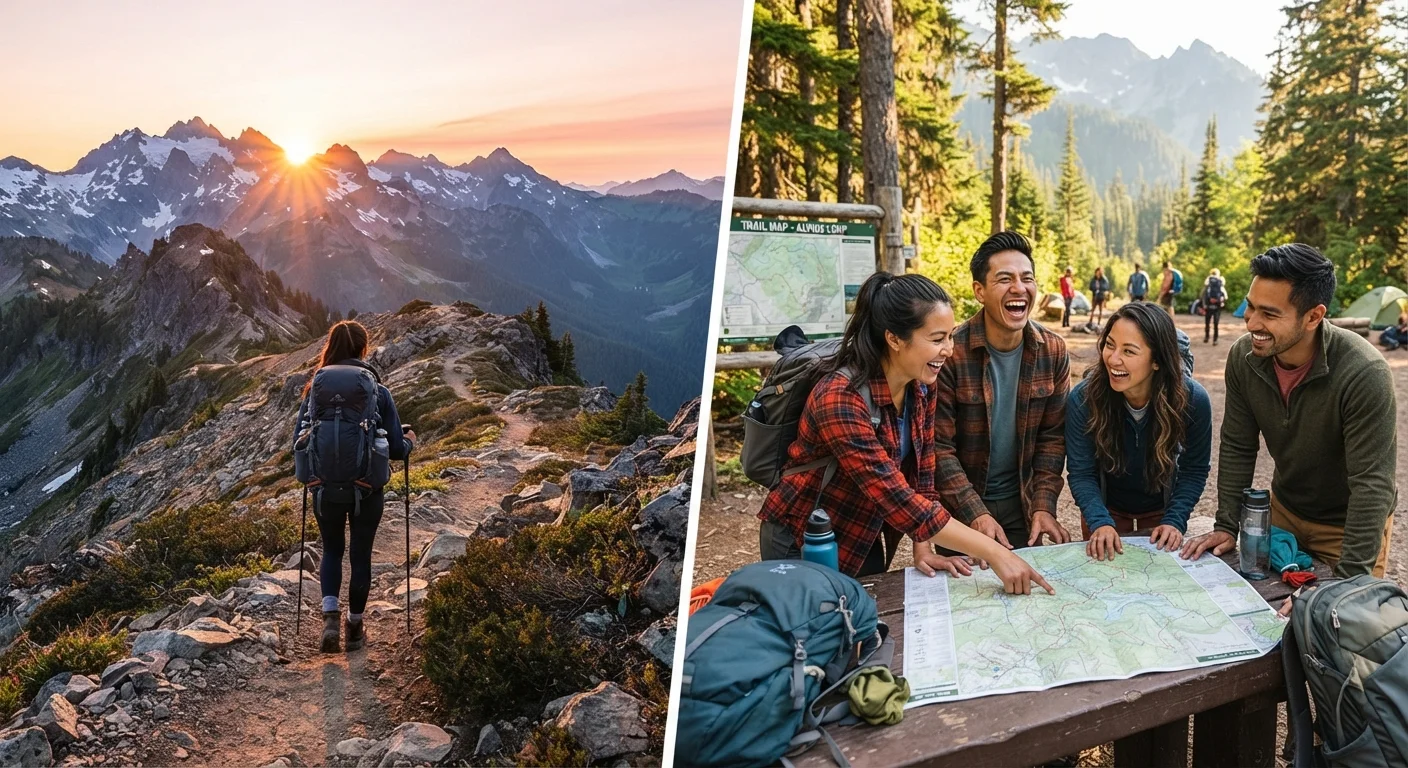
Key Takeaways
- Solo travel offers unmatched flexibility but typically costs more per person than group trips.
- Group trips unlock shared accommodation and transport savings but require more coordination and compromise.
- Safety considerations differ significantly between solo and group formats, especially in remote areas.
- Both formats can work on a budget — the right choice depends on your travel personality and destination.
- Hidden costs like single supplements and gear rentals can tip the financial balance in unexpected directions.
Option A
Solo Adventure
The ultimate freedom-first travel experience.
Best for: Independent travelers who want full control over pace, route, and spending without compromise.
Option B
Group Trip
Shared costs, shared memories, shared headaches.
Best for: Social travelers who value camaraderie, cost-splitting, and having a built-in support system on the road.
If you crave full autonomy and hate waiting on others
Solo Adventure
You set the schedule, choose the campsite, and pivot whenever you want — no group consensus required.
If minimizing per-night lodging and transport costs is your top priority
Group Trip
Splitting a vacation rental or van rental among four people can cut individual accommodation costs dramatically.
If you're heading somewhere remote or technically challenging
Group Trip
Having partners nearby adds a meaningful safety margin — someone can go for help if things go wrong.
If you want to grow your confidence as a traveler
Solo Adventure
Navigating challenges alone builds problem-solving skills and self-reliance that group dynamics can dilute.
If you want a fun, social trip without deep logistical planning on your own
Group Trip
Distributing research and booking duties among group members lightens the planning load for everyone.
The Cost Reality: Solo vs. Splitting the Bill
Budget is often the first lens people apply — and it's where the comparison gets genuinely complicated. Solo travelers absorb every expense alone: the full nightly rate at a hostel, the entire car rental, every bag of trail mix. Group travelers split those line items, which can produce real savings on accommodation, transportation, and even gear rentals.
The catch for solo adventurers is the notorious single supplement — a surcharge applied by hotels, cruise lines, and some tour operators when you're not sharing a room. That fee can add 10–50% to lodging costs, depending on the property. Meanwhile, group travelers face a different math problem: one person's budget ceiling limits everyone's options, and compromise often lands you somewhere nobody loves.
For a practical look at expenses that catch both solo and group travelers off guard, see our guide to hidden adventure trip costs. Thinking through those line items before you commit to either format can save you from a mid-trip budget crisis.
| Criterion | Solo Adventure | Group Trip |
|---|---|---|
| Per-person accommodation cost | Higher — no cost-splitting | Lower — shared rooms or rentals |
| Schedule flexibility | Full — change plans anytime | Limited — requires group consensus |
| Safety in remote areas | Lower redundancy | Higher — help is nearby |
| Transport costs | Full fare or solo rental | Split among members |
| Decision-making | Entirely yours | Shared — potential friction |
| Social experience | Self-directed — you choose interactions | Built-in — constant companionship |
| Planning complexity | Lower — one schedule to manage | Higher — coordinating multiple people |
Flexibility, Safety, and the Social Equation
Freedom of movement is where solo travel earns its devoted following. You wake up, check the weather, and decide — stay an extra day, skip the crowded trail, eat street tacos for breakfast. No vote required. That spontaneity is genuinely harder to preserve when you're coordinating five people's schedules and preferences.
Safety is the counterpoint. In remote or unfamiliar terrain, a group provides redundancy: extra navigation skills, shared gear weight, and — critically — someone to seek help if there's an injury. Solo travelers should be more deliberate about trip selection relative to their experience level. Our adventure destination difficulty framework is a useful tool for calibrating ambition against skill honestly.
Groups introduce their own friction: scheduling conflicts before departure, clashing energy levels on trail, and the emotional labor of keeping everyone happy. These aren't reasons to avoid group travel — they're just trade-offs worth naming upfront. Strong group dynamics start with clear expectations about pace, spending, and decision-making before anyone books a flight.
Single Supplements: Read the Fine Print
Many hotels, guided tours, and cruise packages charge solo travelers a single supplement — effectively penalizing you for not sharing a room. This fee varies widely but can add a meaningful percentage to your total trip cost. Always check whether a single supplement applies before booking, and consider hostel dormitories or camping as supplement-free alternatives. Some tour operators specifically cater to solo travelers and structure pricing to avoid this charge.
Planning fatigue is real either way. Whether you're researching solo or dividing tasks with a group, our trip-planning burnout guide offers a practical framework for keeping the process sane.
Which Format Actually Fits You?
The honest answer is that neither solo nor group travel is inherently superior — they serve different travelers and different moments in life. Someone rebuilding confidence after a difficult year might find solo travel transformative. Someone craving connection after months of isolation might find a group trip exactly right.
A few questions help clarify the fit: Do you get energized or drained by constant social contact? How comfortable are you making real-time decisions under pressure alone? Are you traveling somewhere where language barriers or safety risks make companionship genuinely valuable?
If you haven't locked in a format yet, budget travel strategies apply to both approaches — and some, like choosing flexible accommodation or avoiding peak-season flights, pay dividends regardless of whether you're alone or with a crew. It's also worth considering how your lodging choice intersects with each format: see accommodation options beyond hotels for a breakdown of what hostels, home-shares, and camping actually deliver for solo versus group travelers.
~$1,500
Average single-supplement cost per trip
Industry travel research consistently identifies single supplements as one of the largest hidden costs solo travelers face on packaged and guided trips.
4 in 10
Americans who've taken a solo trip
Survey data from the U.S. Travel Association has found solo travel to be a growing segment, with a significant portion of Americans having traveled alone at least once.