

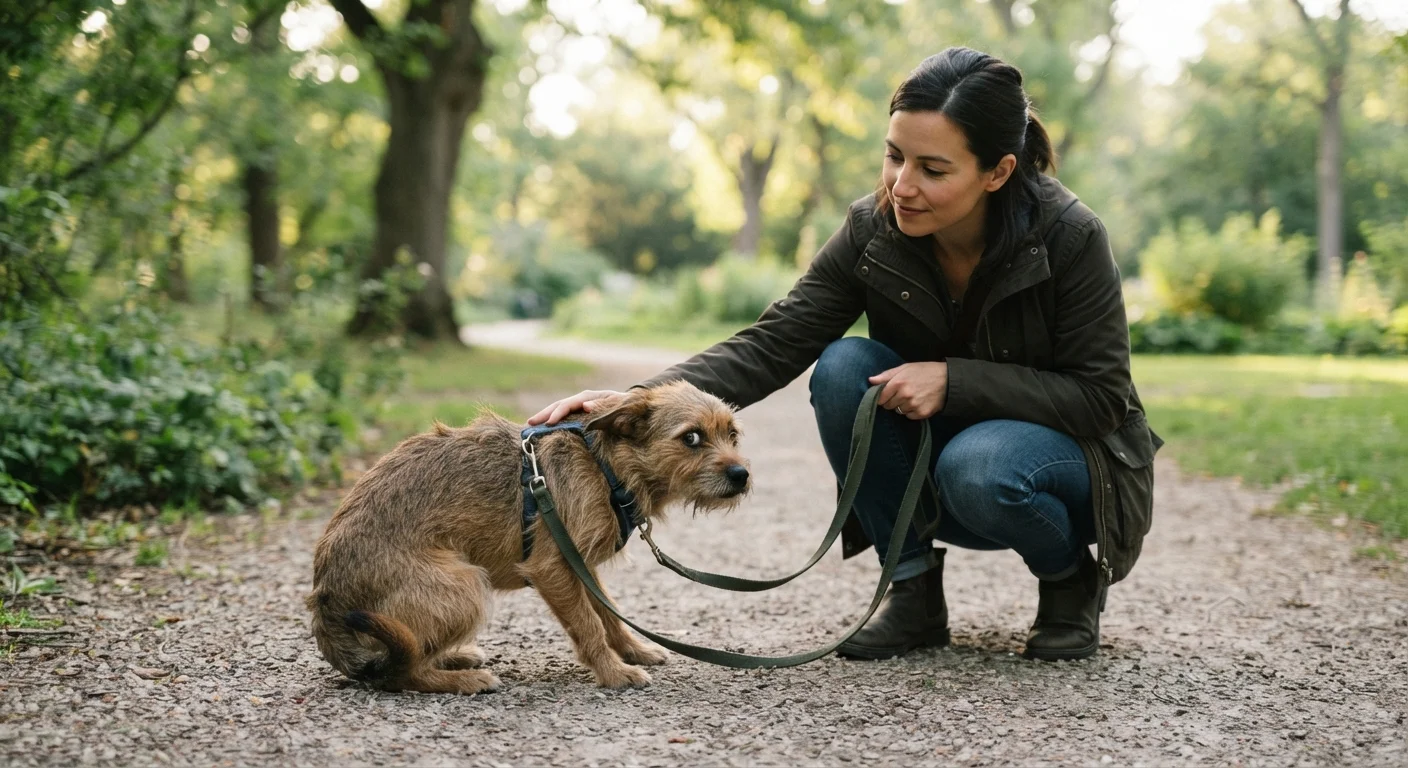
Key Takeaways
- Punishment-based methods often intensify fear in anxious dogs rather than correcting behavior.
- Flooding — forcing a dog to face fears without choice — can cause lasting psychological harm.
- Moving too fast through training stages overwhelms sensitive dogs and stalls progress.
- Recognizing stress signals early lets you adjust before a fearful dog shuts down or reacts.
- Positive, low-pressure techniques rooted in reward and choice build genuine, lasting confidence.
Why Sensitive Dogs React Differently to Standard Training
Not all dogs process training the same way. While a confident, socially bold dog might bounce back quickly from a correction or a busy environment, a fearful or sensitive dog operates under a much higher baseline level of stress. For these dogs, approaches that work fine for others can trigger a fear response instead of learning.
Understanding this difference is the starting point. A dog that appears to be ignoring commands, shutting down, or acting out during training is often communicating something important about its emotional state. Stress versus stubbornness looks very similar from the outside — but the response should be completely different.
The mistakes below reflect real patterns that well-meaning owners fall into. Recognizing them is the first step toward a training approach that actually helps.
Using leash corrections or physical punishment when a fearful dog fails to comply.
Why it happens: Many owners learned that corrections teach dogs what not to do, and it can feel intuitive to apply pressure when a dog doesn't respond.
Forcing a dog to approach or interact with something it is clearly afraid of.
Why it happens: Owners often believe pushing through the fear will help the dog 'get over it,' especially when the feared trigger seems harmless to humans.
Skipping foundation steps and moving to advanced or public training too quickly.
Why it happens: Progress in a quiet home environment can look like readiness, so owners move to busier settings before the dog has truly generalized the skill.
Ignoring or misreading early stress signals and continuing the training session anyway.
Why it happens: Subtle signals — lip licking, yawning, looking away, whale eye — are easy to miss, especially for newer dog owners who focus mainly on whether the dog is 'obeying.'
Using repeated, loud, or sharp verbal corrections that startle an already anxious dog.
Why it happens: Firm 'no' commands feel natural when a behavior needs stopping, and many owners were taught that a strong voice signals authority.
Relying solely on group classes without considering whether the environment suits the dog.
Why it happens: Group classes are common and accessible, and owners reasonably assume socialization in a class setting is universally beneficial.
Building a Training Environment That Works for Fearful Dogs
Once you know what to avoid, the path forward becomes clearer. Fearful dogs learn best when they feel safe, can predict what comes next, and have some control over their experience. Short sessions — often five minutes or less — in low-distraction spaces give their nervous systems room to settle and absorb new information.
Fear Reactions Are Not Defiance
A dog that freezes, cowers, snaps, or refuses to respond during training is almost always communicating fear or stress — not stubbornness or dominance. Responding with corrections or force at these moments can deepen distrust and escalate the behavior. If your dog regularly shuts down or reacts during sessions, consult a certified professional trainer or veterinary behaviorist.
Counter-conditioning and desensitization are the two most widely supported methods for working with fear-based behavior. Counter-conditioning means changing how a dog feels about a trigger — not just what it does — by consistently pairing that trigger with something genuinely rewarding. Desensitization means starting at an intensity the dog can tolerate without reacting, then very slowly closing the gap over many sessions.
Avoid Flooding as a 'Quick Fix'
Flooding — prolonged, inescapable exposure to a feared stimulus — is sometimes used to 'desensitize' dogs quickly. For fearful dogs, this approach frequently causes panic, learned helplessness, and worsening anxiety. If a trainer recommends this method, seek a second opinion from a certified professional who uses evidence-based techniques.
If your dog's fear is significantly affecting its quality of life or your ability to manage it safely, working with a certified professional trainer or a veterinary behaviorist is the most reliable path. Some dogs also benefit from a veterinary assessment, since anxiety in dogs can have medical components. For dogs that struggle specifically around unfamiliar people, our guide to staying calm around strangers offers practical steps grounded in these same principles.
Training a fearful dog takes longer than training a confident one — and that is completely normal. Progress measured in weeks and months, not days, is still real progress. Consistency, patience, and a willingness to follow the dog's pace are what move the needle over time.