

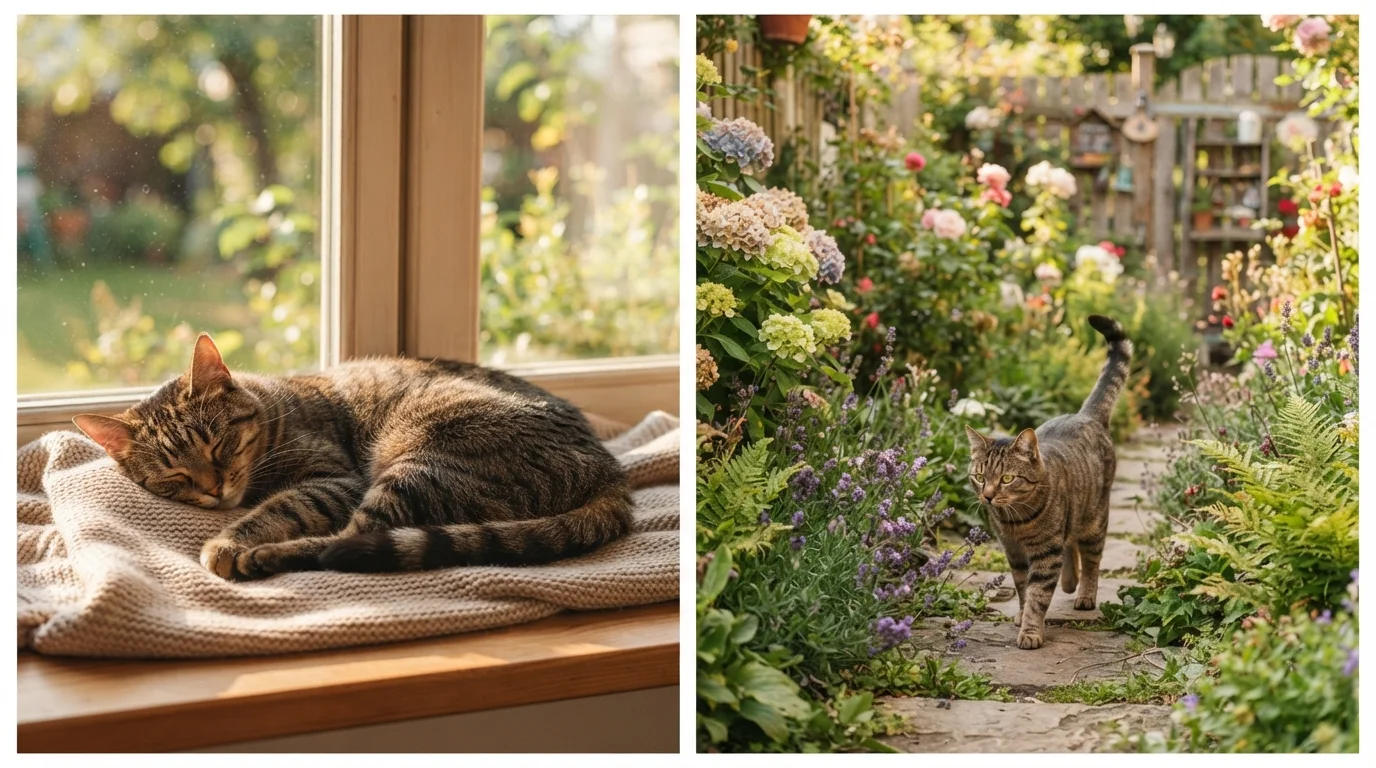
Key Takeaways
- Indoor cats generally live longer on average due to reduced exposure to hazards, predators, and disease.
- Outdoor cats face higher risks of injury, parasites, and infectious illness but get more natural stimulation.
- Indoor cats are more prone to obesity, dental disease, and stress-related behavioral issues.
- Both lifestyles require regular veterinary care, but the specific preventive needs differ significantly.
- A cat's individual temperament and environment should guide your decision, not a single rule.
Option A
Indoor Cats
The sheltered, lower-risk lifestyle choice.
Best for: Owners in urban areas or those who want to minimize exposure to external hazards and infectious disease.
Option B
Outdoor Cats
The free-roaming, stimulation-rich alternative.
Best for: Cats with high activity drives living in lower-traffic, rural or suburban environments where supervised access is possible.
If you live in a high-traffic urban area
Indoor Cats
Road traffic and dense populations of stray animals sharply increase injury and disease risk for cats allowed to roam freely.
If your cat shows signs of stress or boredom indoors
Outdoor Cats
Some cats have strong exploratory instincts that confinement doesn't satisfy — supervised outdoor access can improve mental wellbeing.
If you're managing a tight pet care budget
Indoor Cats
Fewer emergency vet visits for trauma, bites, and parasites typically makes indoor cats less costly to care for over time.
If your cat is already accustomed to outdoor life
Outdoor Cats
Transitioning a confirmed outdoor cat to full indoor living can cause chronic stress; the priority is managing outdoor risks rather than forcing confinement.
Lifespan and Physical Safety
One of the most consistent findings in feline veterinary care is that indoor cats tend to live significantly longer than their outdoor counterparts. Veterinary sources commonly cite average lifespans of 12–18 years for indoor cats, compared to estimates of 2–5 years for cats that roam freely outdoors — though this lower figure reflects worst-case conditions and varies widely by environment.
The reasons aren't hard to understand. Outdoor cats face vehicle traffic, predators (including dogs and wildlife), falls from height, and territorial fights with other cats. Bite wounds in particular are a common source of serious infections, including abscesses that require veterinary treatment. For budget-conscious owners, these emergency visits add up fast.
That said, physical safety indoors isn't automatic. Household hazards are real. Common toxic items — from certain houseplants to cleaning products — pose genuine risks to cats confined indoors. Awareness and cat-proofing your home matters just as much as keeping the door closed.
| Criterion | Indoor Cats | Outdoor Cats |
|---|---|---|
| Average lifespan | 12–18 years (typical range) | Varies widely; higher mortality risk |
| Injury risk | Low (household hazards) | High (traffic, fights, predators) |
| Infectious disease exposure | Low to moderate | High (FeLV, FIV, respiratory illness) |
| Parasite burden | Low | High (fleas, ticks, worms) |
| Obesity risk | Higher without active management | Lower due to activity levels |
| Mental stimulation | Requires active enrichment | Naturally high |
| Preventive care needs | Core vaccines, annual exams | Broader vaccines, frequent parasite control |
Disease Exposure and Preventive Care
Outdoor cats encounter a far broader range of infectious threats. Feline leukemia virus (FeLV), feline immunodeficiency virus (FIV), and upper respiratory infections spread through contact with other cats — common outdoors but unlikely for a cat with no access to strays. Parasites such as fleas, ticks, ear mites, and intestinal worms are also substantially more prevalent in free-roaming cats.
This means the preventive care checklist differs meaningfully between the two lifestyles. Outdoor cats typically need more frequent parasite control, broader vaccination coverage, and more regular wellness checks to catch issues early. Indoor cats still need core vaccines and annual exams, but the urgency around some preventive treatments is lower.
For owners watching their spending, it's worth knowing upfront that keeping an outdoor cat healthy often requires a higher baseline investment in preventive products — but that investment can still be less than the cost of treating a disease caught late. Lifestyle differences affect more than just cats — the same logic applies across many pet species.
12–18 yrs
Typical indoor cat lifespan
Veterinary consensus generally places indoor cat life expectancy significantly above that of free-roaming cats.
~50%
US cats estimated to be overweight
The Association for Pet Obesity Prevention has reported that roughly half of domestic cats in the US are overweight or obese, a trend driven largely by sedentary indoor lifestyles.
3–4x
Higher parasite exposure outdoors
Veterinary parasitology literature consistently notes that outdoor cats face substantially greater flea, tick, and intestinal parasite burdens than indoor-only cats.
Weight, Behavior, and Mental Health
Indoor cats are significantly more prone to weight gain. Without the physical demands of roaming, hunting, and territorial patrol, many indoor cats simply don't burn enough calories — especially if fed free-choice dry food. Obesity in cats is linked to diabetes, joint disease, and urinary tract problems, so managing portion sizes and encouraging play is essential. Our guide to dry vs wet food covers how feeding choices affect weight management.
Behavioral issues are also more common indoors. Boredom, under-stimulation, and lack of choice over their environment can lead to overgrooming, litter box avoidance, and anxiety. Learning to read your cat's body language helps owners catch stress early before it becomes a chronic problem.
Outdoor cats generally get more physical and mental stimulation naturally, but this comes with trade-offs — stress from territorial conflicts, exposure to environmental toxins, and the chronic activation of a prey-driven nervous system. Neither lifestyle is stress-free; they just present different challenges. And as cats age, those challenges shift further — see how senior pets' health needs change for what to expect in later years.
This article is for general informational purposes only and is not a substitute for professional veterinary advice. Always consult a licensed veterinarian for guidance specific to your cat's health and circumstances.