

Key Takeaways
- Short, positive grooming sessions build trust faster than long, infrequent ones.
- Desensitization — gradually introducing tools before using them — significantly reduces pet anxiety.
- Treats and calm praise reinforce grooming as a safe, rewarding experience.
- Nail trims are the most anxiety-provoking task; splitting them into smaller sessions helps.
- Recognizing stress signals early lets you stop before your pet becomes overwhelmed.
What you will need
Why Home Grooming Often Goes Wrong
Most grooming struggles aren't about stubborn pets — they're about skipping the preparation phase. When a pet has never been gradually introduced to a brush, clippers, or a tub, its first reaction is often fear. That fear hardens into resistance over time, making every future session harder.
The good news is that most pets can learn to tolerate — and even enjoy — grooming when the process is broken into small, predictable steps. Consistent daily care habits make a real difference: the more routine grooming feels, the less threatening it becomes.
Before you start, take stock of your pet's baseline. Does your dog tense up when you touch its paws? Does your cat bolt at the sight of a brush? These reactions tell you where to begin your desensitization work — not where to power through.
What you will need
Building the Right Environment
Set your pet up for success before any tool comes out. Choose a time when your pet is calm — after a walk or a meal, not when they're wired and playful. Pick a consistent location so the space itself becomes a familiar cue.
Reduce distractions: close doors, keep other pets away, and mute the TV. For dogs, a non-slip mat on the floor or in the tub reduces the physical anxiety of sliding around. For cats, a stable surface at a comfortable height works better than wrestling on the floor.
Keep grooming sessions short at first — five to ten minutes is plenty when you're building trust. End on a positive note, even if you only managed to brush one side. This approach aligns with the broader principle behind preventive pet care: small, consistent efforts prevent bigger problems down the road.
Use Treats Strategically
Reserve your pet's highest-value treats exclusively for grooming sessions. This creates a positive association that's distinct from everyday rewards. Offer treats during the session — not just at the end — so your pet connects calm behavior throughout with something good happening.
Step-by-Step: Brushing, Bathing, and Nail Trims
Each grooming task has its own learning curve. Work through them in the order below — brushing first, since it's the least invasive, then bathing, then nail trims.
Introduce tools before using them
Before the first real grooming session, let your pet sniff and investigate the brush, clippers, and any other tools. Place them near your pet's resting area for a day or two. Then practice touching your pet with the tool — without actually brushing or clipping — while offering treats. Repeat until they show no reaction to the tool's presence.
Start with short brushing sessions
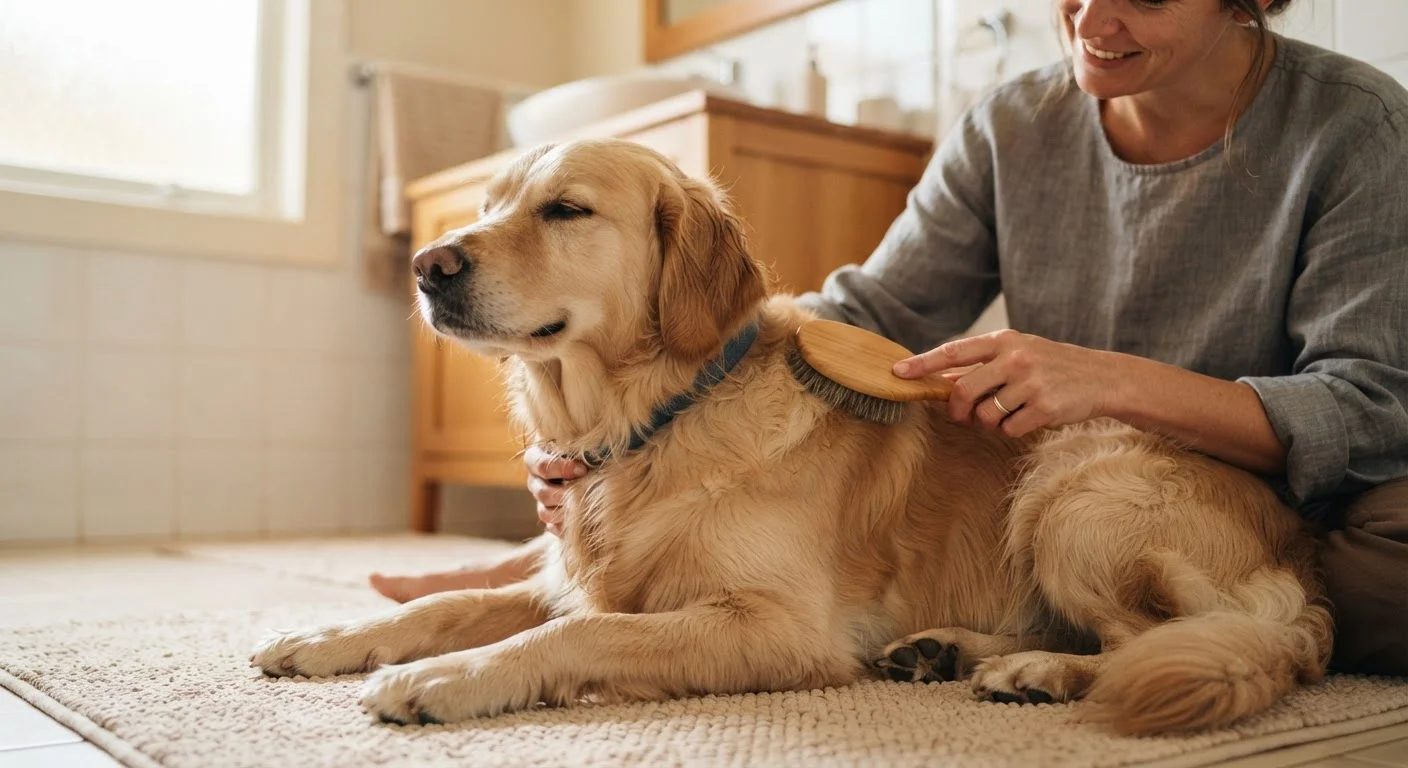
Begin brushing in areas your pet is comfortable being touched — typically the back and sides. Use slow, gentle strokes in the direction of fur growth. Offer a treat every few strokes. Gradually work toward more sensitive areas (belly, paws, ears) over multiple sessions as your pet relaxes. Always stop before your pet shows stress signals.
Introduce bath water gradually
Place your pet in a dry tub or basin first with a treat. Then add a small amount of lukewarm water — never hot. Wet your pet slowly from the shoulders back, saving the face and head for last. Apply shampoo, lather gently, and rinse thoroughly. Residual shampoo is a common cause of skin irritation.
Dry your pet completely
Towel dry first, then use a blow dryer on the lowest heat setting if your pet tolerates it — introduce it at a distance before moving it closer. Many pets are more comfortable air-drying in a warm room. Damp fur, especially in dense or double-coated breeds, can lead to skin issues if left too long.
Trim nails one at a time
Handle your pet's paws daily in the weeks before attempting nail trims, rewarding calmly. When ready, trim just the very tip of one nail — avoid the quick (the pink vascular core visible in light-colored nails; err well short of it in dark nails). Offer a treat, then stop. Do one or two nails per session rather than all nails at once. Gradually work up to a full trim over time.
If your pet shows persistent fear responses — trembling, growling, snapping — consider consulting a veterinary behaviorist or a certified professional groomer before continuing. Some animals benefit from a structured behavior plan, similar to the approach used when teaching a dog to stay calm around strangers.
Know When to Call a Professional
Severely matted coats, overgrown nails that curve into the paw pad, or signs of skin infection should be addressed by a professional groomer or veterinarian — not managed at home. Attempting to cut out deep mats can cause lacerations. If your pet's grooming needs have been neglected for a long time, a professional reset session is a reasonable starting point before building a home routine.
Reading Your Pet's Stress Signals
Knowing when to stop is as important as knowing how to start. Dogs signal stress through yawning, lip-licking, whale eye (showing the whites of their eyes), tucked tails, or stiffening. Cats may flick their tail rapidly, flatten their ears, or vocalize. Either species may freeze, try to escape, or escalate to biting if pushed past their threshold.
When you spot these signals, pause. Give your pet space, let them settle, and try again another day with a shorter goal. Forcing through stress doesn't build tolerance — it reinforces the idea that grooming is something to dread.
As your pet ages, grooming needs shift. Senior pets may have more sensitive skin, arthritis that makes handling painful, or reduced coat condition. See our guide on how pet care changes across life stages for tailored guidance. Keeping up with coat and nail care remains part of broader pet health and wellness at every age.