

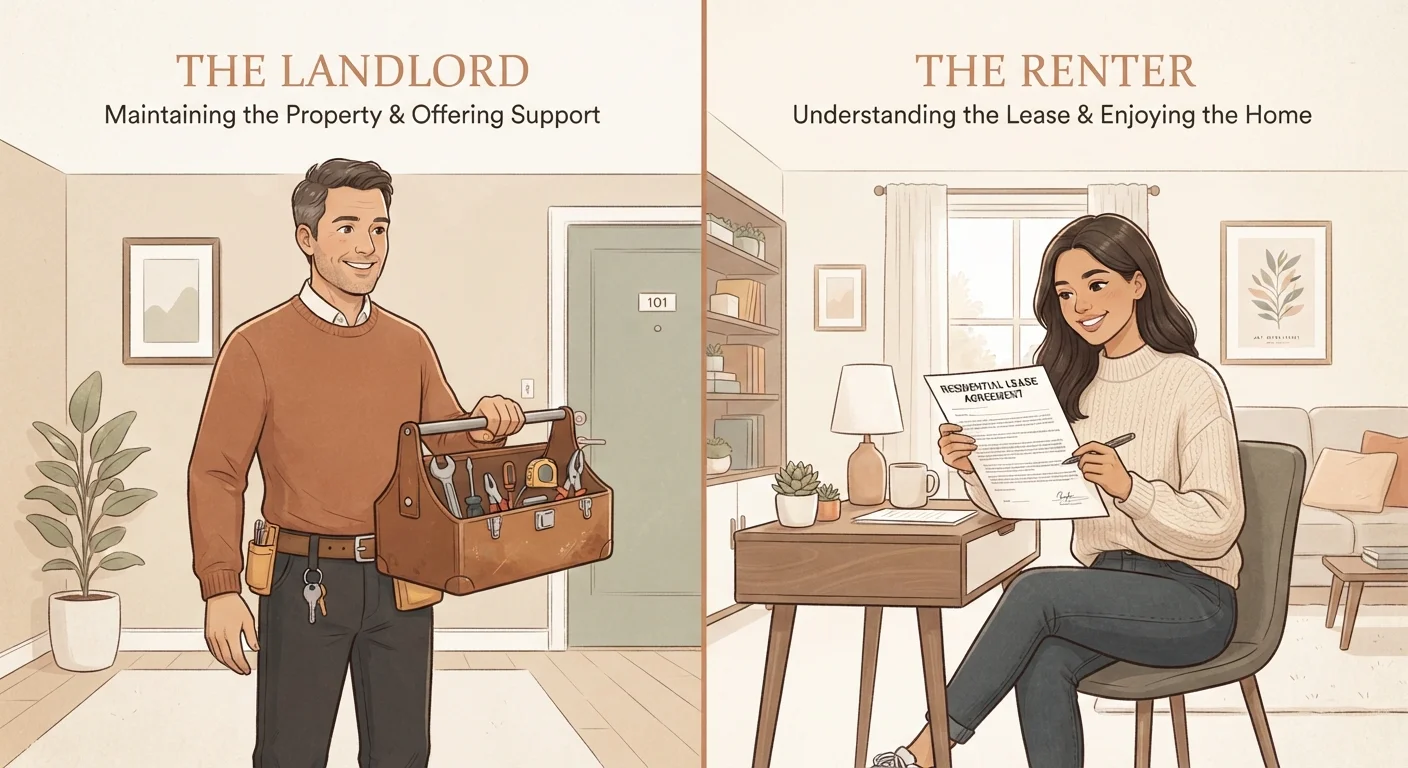
Key Takeaways
- Landlords are generally required by law to keep rental units safe and habitable.
- Tenants are typically responsible for damage they cause and minor routine upkeep.
- Lease agreements can assign additional responsibilities — always read yours carefully.
- Repair obligations vary by state and local law; always verify what applies where you live.
- Unreported issues that worsen over time can shift financial liability to the tenant.
Option A
Landlord / Property Owner
The party legally responsible for the property's habitability.
Best for: Handling structural, system-level, and safety-related repairs that affect the livability of the unit.
Option B
Renter / Tenant
The occupant responsible for day-to-day care and minor upkeep.
Best for: Managing small, routine maintenance tasks caused by normal daily use of the rental unit.
If the heat or hot water stops working
Landlord / Property Owner
In virtually every U.S. state, landlords must provide functioning heat and hot water as part of habitability standards. This is their repair to handle, typically on a set timeline.
If you accidentally crack a window or damage a wall
Renter / Tenant
Damage caused by tenant negligence or accidents is almost always the renter's financial responsibility, and failing to fix it can cost you your security deposit.
If a light bulb or smoke detector battery burns out
Renter / Tenant
Routine consumable replacements like bulbs and batteries are generally considered tenant upkeep in most lease agreements and state laws.
If a major appliance provided by the landlord breaks down
Landlord / Property Owner
If the landlord supplied the appliance as part of the rental, they are typically responsible for repairing or replacing it when it fails through normal use.
If you want to understand your specific rights before disputing a repair
Renter / Tenant
Tenants should document issues in writing, review their lease, and consult local tenant rights resources before escalating — this protects both parties.
The General Rule: Habitability Is the Landlord's Job
Most U.S. states follow what's called the implied warranty of habitability — a legal principle requiring landlords to keep rental units in a livable condition. That means working heat, a weathertight roof, functioning plumbing, safe electrical systems, and no serious pest infestations. These aren't optional extras; they're baseline obligations.
When something goes wrong with a core system — the furnace quits in January, a pipe bursts, or the roof starts leaking — that repair generally falls on the landlord to arrange and pay for. Timelines vary by state, but urgent safety issues often must be addressed within 24 to 72 hours under local law.
Ignoring these issues doesn't just inconvenience tenants — it can expose landlords to legal liability. In some states, tenants can withhold rent or arrange repairs themselves and deduct the cost if a landlord fails to act. Always check what your state specifically allows.
State Laws Vary Significantly
Habitability requirements, repair timelines, and tenant remedies differ from state to state — and sometimes city to city. California, New York, and Illinois, for instance, have more detailed tenant protections than some other states. Always check your state's landlord-tenant statutes or consult a local tenant rights organization before assuming a general rule applies to your situation.
What Tenants Are Typically Responsible For
Renters aren't off the hook entirely. As the occupant, you're expected to treat the property with reasonable care and handle a defined set of small tasks. That usually includes:
- Replacing light bulbs, batteries in smoke detectors, and HVAC filters (if specified in the lease)
- Keeping the unit reasonably clean to prevent pest or mold problems
- Reporting maintenance issues promptly — sitting on a known problem that then worsens can shift the repair cost to you
- Paying for damage you, your guests, or your pets cause — accidental or not
The key distinction courts and landlords generally apply is normal wear and tear versus tenant-caused damage. A scuff on the baseboard after years of living somewhere is wear and tear. A hole in the wall or a stained carpet from a spill is damage. That line matters enormously at move-out time.
If you want to build the skills to handle minor issues yourself, see our DIY repair skills guide for renters — it covers basics that protect both your deposit and your peace of mind.
Side-by-Side: Common Repair Scenarios
The table below outlines how common repair situations are typically assigned. Keep in mind these are general patterns — your lease and local law may shift responsibility in specific cases.
| Criterion | Landlord / Owner | Renter / Tenant |
|---|---|---|
| Broken furnace or heating system | Responsible | Must report promptly |
| Leaking roof | Responsible | Must report promptly |
| Plumbing failures (pipes, fixtures) | Responsible (normal failure) | Responsible (if tenant-caused) |
| Pest or rodent infestation | Usually responsible | Responsible if caused by uncleanliness |
| Supplied appliance breaks down | Responsible | Responsible if misused |
| Light bulb replacement | Not typically required | Generally tenant's task |
| Accidental damage (holes, stains) | Not responsible | Responsible |
| Smoke detector battery | Installs detector | Typically replaces battery |
| Normal wear and tear | Responsible at turnover | Not charged at move-out |
When in doubt, put repair requests in writing (email works well) and keep copies. A paper trail protects both sides if a dispute arises. And if you're a renter unsure whether a fix is worth flagging, remember: delaying small repairs rarely saves anyone money in the long run.
When the Lease Changes the Equation
A signed lease can legally shift some responsibilities from landlord to tenant — or vice versa — as long as it doesn't strip away rights protected by state law. For example, some leases require tenants to handle lawn care, snow removal, or even certain appliance maintenance. Those clauses are generally enforceable if you agreed to them.
What a lease cannot do is waive your right to a habitable unit. A clause saying the landlord has no responsibility for heat or running water would not hold up in court in any U.S. state.
Before signing, read your lease carefully and ask about anything unclear. If you already have a lease and a repair dispute has come up, understanding when to call a professional versus handling something yourself can also help you avoid overstepping — or under-reporting.
For those managing home upkeep on a limited budget — whether renting or owning — prioritizing repairs strategically is a practical skill worth developing early.
This article provides general information about typical repair responsibilities in U.S. rental situations. It is not legal advice. Laws vary significantly by state and locality. Consult a qualified attorney or local tenant rights organization for guidance specific to your situation.