
Outdoor Movement as a Free Fitness Resource: Parks, Paths, and Public Spaces

Key Takeaways
- Public parks, trails, and open spaces can replace a gym for most everyday fitness needs.
- Structured variety — mixing walking, bodyweight work, and hills — makes outdoor movement more effective.
- Consistency matters more than intensity; even short, regular outdoor sessions build lasting fitness.
- Most communities have underused fitness infrastructure like pull-up bars, benches, and open fields.
- Outdoor movement supports mental wellness alongside physical health, making it doubly valuable.
What's Already Out There (That Most People Walk Past)
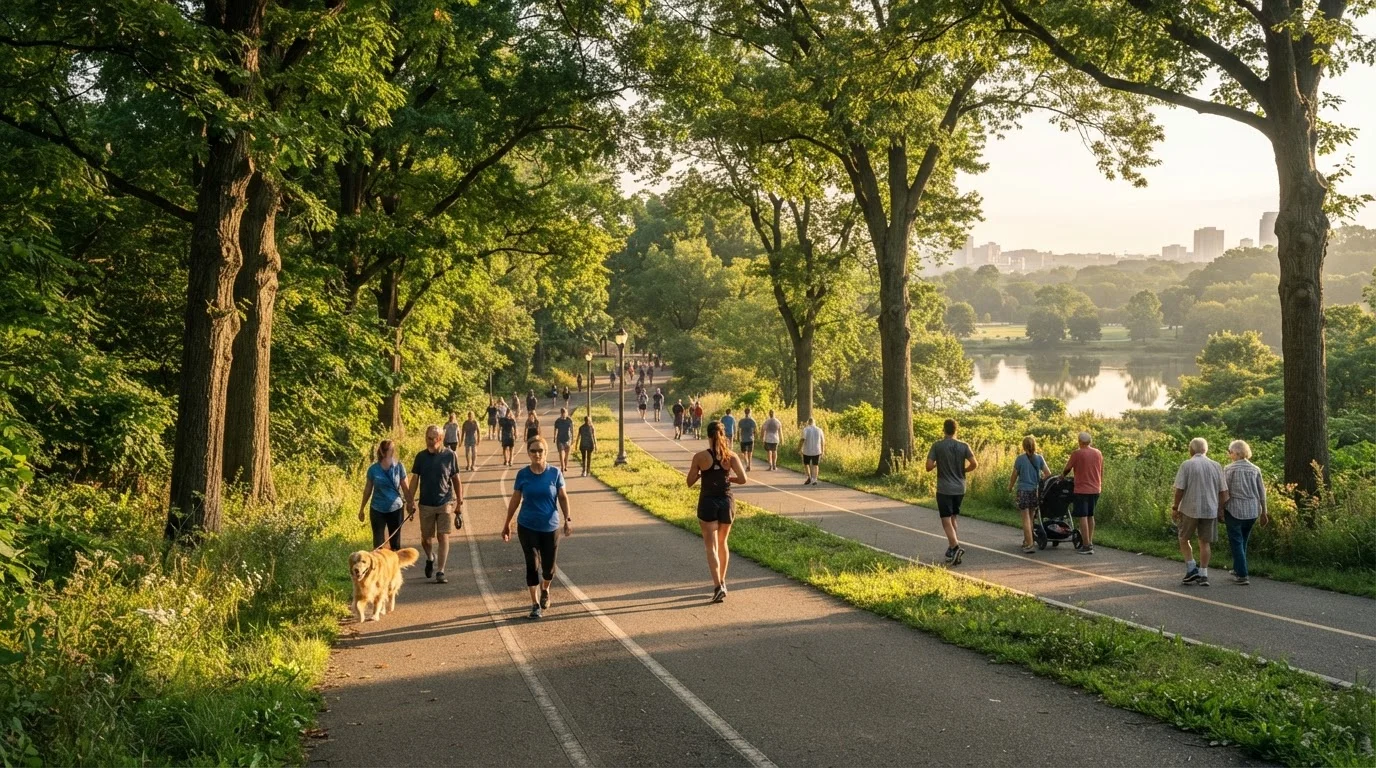
Most neighborhoods contain more fitness infrastructure than residents ever use. Community parks frequently include open grass fields, paved loops, fitness stations with pull-up bars and parallel bars, hills, and stairways — all accessible at no cost and no membership required. Paved greenways and rail trails stretch for miles through suburban and urban areas alike, offering a ready-made cardio route.
The key shift is treating these spaces as a genuine fitness resource rather than a backdrop for a casual stroll. Once you start looking at a park bench as a step-up platform or a grassy slope as a resistance tool, the same route you've walked for years becomes a full workout environment. If you're newer to structured movement, our guide on starting a realistic first month of movement covers how to ease in without overdoing it.
Use a consistent outdoor loop as your movement anchor
A repeatable route removes the decision fatigue that often derails exercise plans. Knowing exactly where you're going lowers the mental barrier to starting and makes it easier to track gradual improvements in pace or endurance over time.
Incorporate bodyweight exercises using park infrastructure
Park benches, low walls, and fitness station equipment allow for strength training without any gear. Adding a few sets of push-ups, step-ups, or tricep dips to a walk transforms a cardio session into a more complete workout.
Vary your terrain deliberately to increase intensity
Flat walking is valuable, but adding hills, stairs, or soft grass challenges different muscle groups and raises cardiovascular demand without requiring you to run. Terrain variation also keeps sessions from feeling monotonous.
Set simple session goals before you leave the house
Going outside with a vague intention to 'get some exercise' often results in a shorter, less effective session. Even a small, specific goal — a target number of laps, a duration, or a bodyweight circuit — gives the session structure and a clear endpoint.
Explore different public spaces to keep movement fresh
Routine is helpful for consistency, but novelty sustains motivation over the long term. Different parks, greenways, and public paths provide new sensory experiences and occasionally new challenges like elevation or surface changes.
Build a morning outdoor habit to front-load your movement
Morning movement tends to be more consistent than sessions planned for later in the day, because competing demands haven't yet accumulated. Even 15–20 minutes outdoors before other obligations start pays dividends in energy and mood.
Best Practices for Getting More From Outdoor Movement
Moving outdoors is simple in concept, but a few key habits separate a frustrating experience from a sustainable one. The following practices help you turn any outdoor space into a structured, effective fitness session.
Making It Stick: Consistency Over Intensity
The biggest predictor of fitness progress isn't how hard any single session is — it's how reliably you show up over weeks and months. Outdoor movement has a natural advantage here: it's free, requires minimal planning, and the change of scenery tends to make the time pass more easily than indoor repetition.
Consider anchoring outdoor movement to existing habits. A 20-minute walk before breakfast, a lunchtime loop around a nearby park, or an evening wind-down on a local trail all count. Mental wellness benefits — reduced stress, improved mood, better sleep — often arrive before the physical changes do, and these early wins are worth recognizing as motivation to continue.
If your living situation is space-constrained and outdoor access is limited on certain days, indoor movement for small spaces can fill the gaps. And if outdoor fitness starts sparking a bigger interest in active travel, building a fitness base for an outdoor adventure trip shows how everyday park workouts can translate into hiking or trekking readiness.
77%
Adults who live within a 10-minute walk of a park
According to the Trust for Public Land's ParkScore data, a large majority of urban Americans live close to a public park — a resource many underuse for structured movement.
30 min
Daily moderate movement linked to broad health benefits
The U.S. Department of Health and Human Services Physical Activity Guidelines indicate that approximately 150 minutes of moderate activity per week — roughly 30 minutes on most days — is associated with meaningful health benefits for most adults.
This article is for general informational and educational purposes only and is not a substitute for personalized medical or fitness advice. Consult a qualified healthcare professional before beginning any new exercise program, especially if you have an existing health condition.