

Key Takeaways
- Checking four key fluids at home takes less than 30 minutes and no specialist tools.
- Always check fluids on a cold, level engine to get accurate readings.
- Low brake fluid can signal worn brake pads or a leak — investigate before simply topping up.
- Using the wrong fluid type can damage your vehicle; always check your owner's manual first.
- Regular fluid checks between service visits can prevent costly breakdowns.
What you will need
Why Fluid Checks Matter Between Services
Most vehicles go 6,000 to 12,000 miles between service visits, and a lot can happen in that window. Fluids get consumed, leak slowly, or degrade — and the consequences of letting them run low range from a cracked engine block to brake failure. The good news is that checking them yourself is genuinely simple, costs nothing, and takes about 20 minutes.
If you're newer to vehicle ownership, our introduction to car maintenance for first-time owners is a good starting point for the broader picture. And when you want to understand what a full service actually covers — so you know what you're supplementing, not duplicating — see our guide to car service schedules.
What you will need
The Four Fluids Every Driver Should Monitor
There are four fluids worth checking regularly at home: engine oil, coolant, brake fluid, and windshield washer fluid. Each has a different job and a different consequence if it runs low or degrades.
- Engine oil lubricates moving parts and prevents metal-on-metal wear. Running low accelerates engine damage rapidly.
- Coolant (also called antifreeze) regulates engine temperature and prevents both overheating in summer and freezing in winter.
- Brake fluid transfers the force from your foot to the brakes. It's hygroscopic — meaning it absorbs moisture over time — and should be replaced on schedule even if the level looks fine.
- Windshield washer fluid is the least critical mechanically, but essential for visibility, especially in winter driving conditions.
For less commonly checked fluids like transmission fluid and power steering fluid, see fluids, filters, and belts most drivers forget to check.
Owner's manual
Identifies the exact fluid grades and capacities your specific vehicle requires.
Lint-free cloth or paper towels
Needed to wipe the dipstick clean before taking an accurate oil reading.
Funnel
Prevents spills when pouring fluid into narrow reservoir openings.
Nitrile gloves
Protects skin from brake fluid and coolant, both of which are corrosive or toxic.
Torch or flashlight
Helps read fluid levels clearly in dim engine bays.
Step-by-Step: Checking and Topping Up Each Fluid
Follow these steps in order. The whole process should take between 10 and 25 minutes depending on your familiarity with your engine bay.
Wrong fluid can cause serious damage
Every vehicle has specific fluid requirements for oil grade, coolant type, and brake fluid specification. Using the wrong type — even if it looks the same — can damage seals, corrode components, or void warranty coverage. Always cross-reference your owner's manual before purchasing any fluid.
Park safely and let the engine cool
Park on a flat, level surface and switch the engine off. For an accurate oil reading, the engine should be cold — either before you start the car for the day or at least 10 minutes after switching it off. Hot engines give misleading dipstick readings and present a burn risk when opening the coolant cap.
Check the engine oil
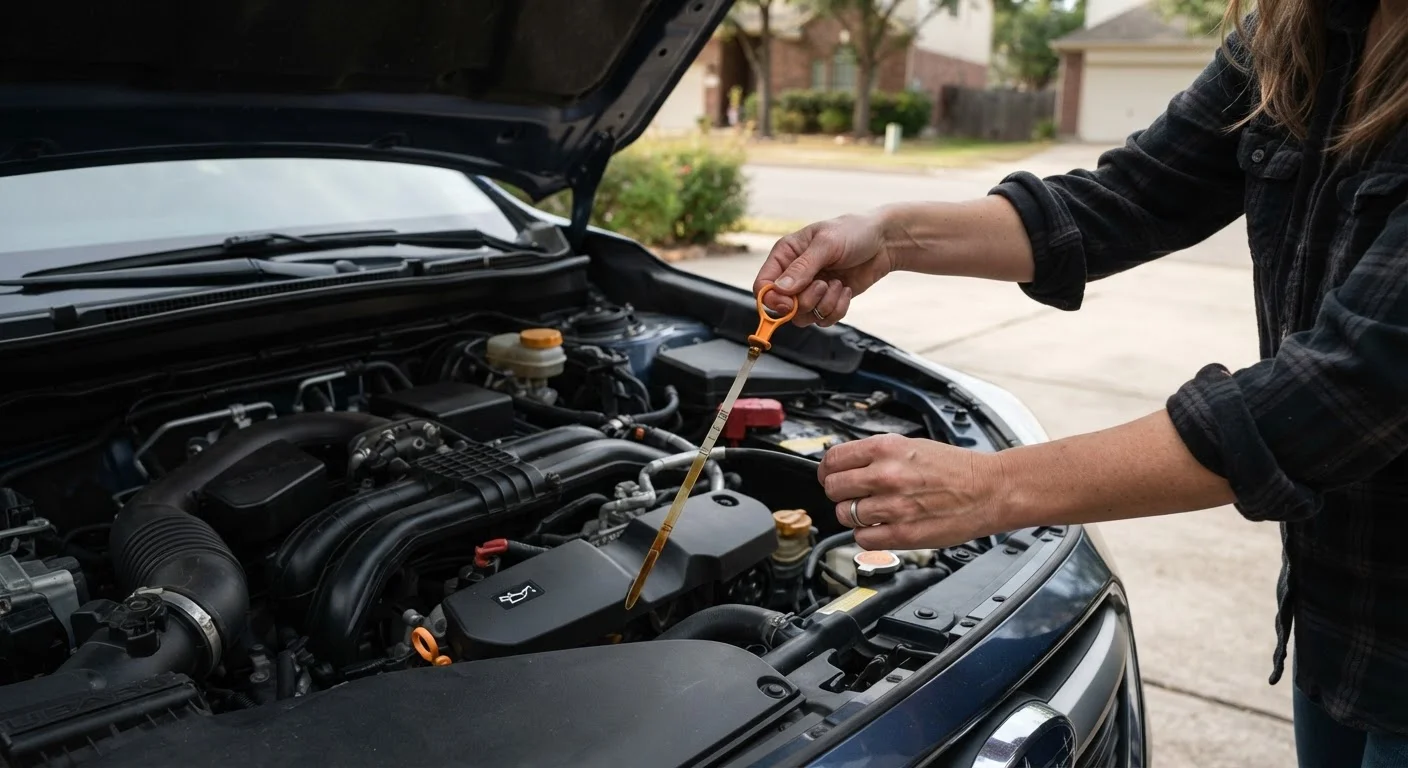
Open the hood and locate the oil dipstick — it usually has a brightly coloured handle (yellow or orange). Pull it out, wipe it clean with your cloth, reinsert it fully, then pull it out again. The oil level should sit between the MIN and MAX marks. The oil itself should be amber-brown; very dark or gritty oil is a sign a change is due soon.
If topping up is needed, remove the oil filler cap (marked with an oil can symbol), use a funnel, and add small amounts at a time, rechecking the dipstick after each addition. Do not overfill past the MAX mark.
Check the coolant level
Locate the coolant expansion tank — a translucent plastic reservoir, usually with a coloured cap marked with a thermometer or snowflake symbol. You can read the level through the side of the tank without opening it. The level should fall between the MIN and MAX lines marked on the tank.
If topping up is needed, wait until the engine is fully cold, then slowly open the cap and add the correct pre-mixed coolant or distilled water as specified in your manual. Do not use tap water as a long-term fix — mineral deposits can build up inside the cooling system.
Check the brake fluid
The brake fluid reservoir is typically a small, square translucent container near the back of the engine bay on the driver's side. Without opening it, check that the fluid level sits between the MIN and MAX lines. Brake fluid naturally darkens with age and moisture absorption.
If the level is noticeably low, do not simply top it up and move on. Low brake fluid can indicate worn brake pads (which is normal as pads wear down) or a leak in the system. Have the brakes inspected before driving further if you suspect a leak.
Check and top up the windshield washer fluid
The washer fluid reservoir is a large plastic tank, usually with a blue cap showing a windshield and wiper symbol. Unlike the other fluids, the level here isn't critical to safety in the same way, but an empty reservoir in winter — when road grime and salt make visibility a constant challenge — is a real hazard.
Top up with purpose-formulated washer fluid, not plain water. In cold climates, use a winter-rated formula to prevent freezing in the lines and jets.
After the Checks: What to Watch For
Once you've completed your checks, note any fluids that were low and monitor them again in two to three weeks. A single top-up is usually nothing to worry about. A pattern of needing to add fluid regularly is a signal worth investigating.
Make fluid checks part of a routine
Pairing fluid checks with a monthly tyre pressure check keeps both tasks from slipping. It takes less time than a coffee break and catches problems — like slow coolant loss or darkening brake fluid — well before they become expensive. See our guide to small checks that cut running costs for more quick wins.
Before the seasons change, it's also worth running through a broader checklist. Our seasonal car maintenance guide walks through what to inspect before summer heat and winter cold, including coolant concentration, washer fluid rating, and battery condition — all things that interact directly with the fluids covered here.
Brake fluid concerns need a mechanic
If your brake fluid is consistently low or you notice a spongy brake pedal, do not delay. These can be signs of a brake system leak or failing components. This is not a situation to monitor and revisit — have the vehicle inspected by a qualified mechanic before driving it further.