

Key Takeaways
- Relationship counselling is most effective when started early, not as a last resort.
- Common reasons couples seek help include recurring arguments, emotional distance, and major life transitions.
- A first session typically involves the therapist gathering background and setting collaborative goals.
- Progress varies, but many couples report meaningful improvement within 8–20 sessions.
- Either partner can initiate counselling, even if the other is initially hesitant.
Relationship Counselling
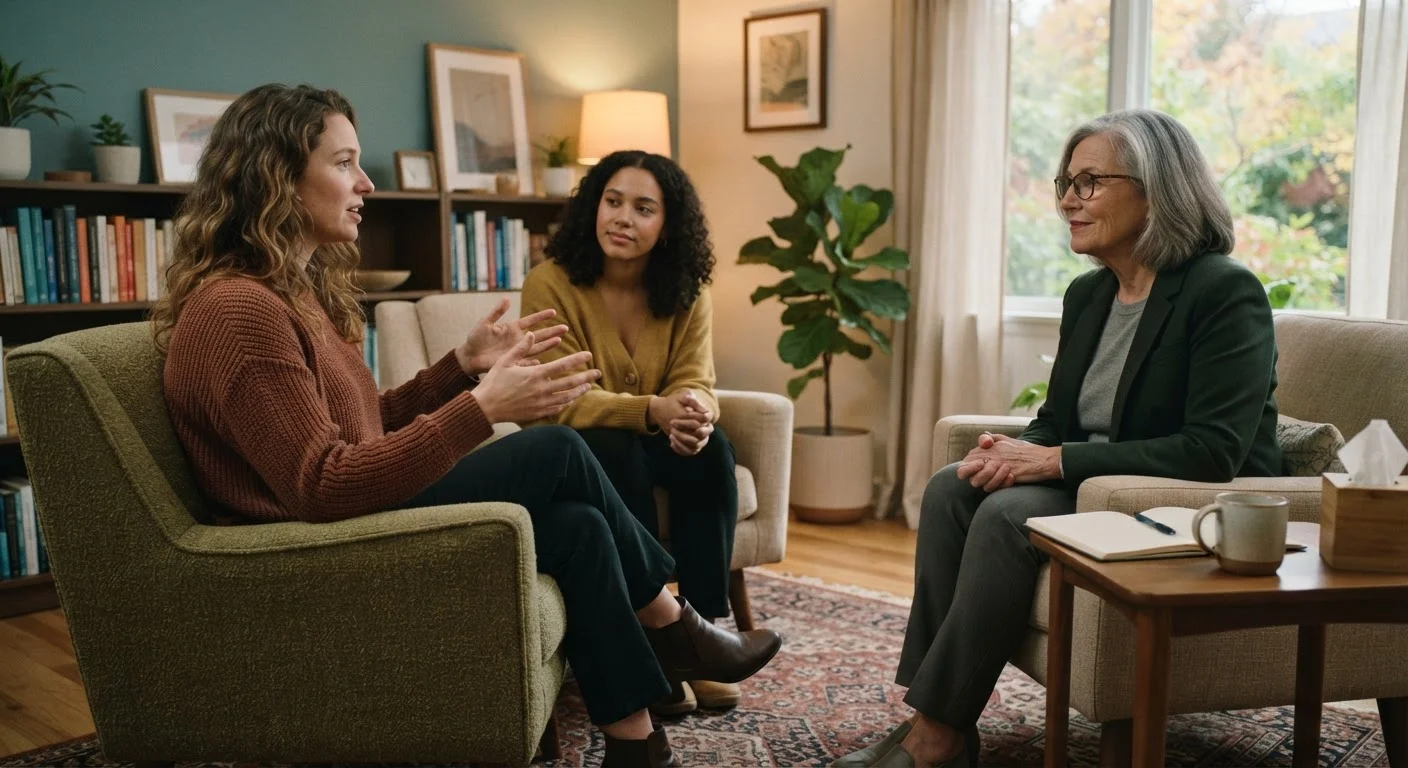
Relationship counselling (also called couples therapy) is a form of talk therapy in which a licensed mental health professional helps two or more people in a relationship work through conflict, improve communication, and better understand each other. Sessions typically involve both partners and are guided by structured techniques tailored to the couple's specific challenges. It is not exclusively for relationships in crisis — many couples use it proactively to strengthen their connection.
Common approaches include Emotionally Focused Therapy (EFT), the Gottman Method, and Cognitive Behavioral Couples Therapy — each with a distinct theoretical framework but broadly evidence-supported for improving relationship satisfaction.
Why Counselling Isn't a Sign of Failure
One of the most persistent myths about relationship counselling is that it's something you turn to when everything has already fallen apart. In reality, waiting until you're in full-blown crisis is one of the most common — and costly — mistakes couples make. Research consistently shows that couples wait an average of six years after problems begin before seeking professional help, according to the American Association for Marriage and Family Therapy. That's a long time to carry preventable pain.
Seeking support early is an act of care — for yourself, your partner, and the relationship you've built together. If stigma is part of what's holding you back, it may help to read about the common myths that stop people from getting help. Understanding what therapy actually involves tends to make it feel far less daunting.
You Don't Both Have to Be Ready at the Same Time
It's common for one partner to feel more open to counselling than the other. If your partner is reluctant, expressing your own desire for support — rather than framing it as something they need — can reduce defensiveness. Many therapists are experienced in working with couples where one person is initially hesitant, and some offer an individual session to help a reluctant partner feel more comfortable before joining together.
Common Reasons Couples Seek Support
There's no single trigger that signals it's time for counselling. Some couples arrive after a specific rupture — infidelity, a major betrayal, or a significant loss. Others come because they've noticed a slow drift apart and can't quite pinpoint why. Both are equally valid reasons to seek help.
Common prompts include:
- Recurring conflict — the same argument cycles without resolution, often escalating over time
- Emotional disconnection — feeling like roommates rather than partners
- Communication breakdown — conversations frequently turn defensive, dismissive, or shut down entirely
- Life transitions — a new baby, job loss, relocation, or retirement can stress even strong relationships
- Intimacy concerns — physical or emotional intimacy has diminished and neither partner knows how to address it
- Trust repair — working through the aftermath of dishonesty or a boundary violation
If you're unsure whether what you're experiencing rises to the level of needing professional support, it can help to explore when therapy versus self-help approaches make sense for your situation.
6 years
Average wait before couples seek help
According to the American Association for Marriage and Family Therapy, couples typically wait about six years after problems emerge before pursuing counselling.
~70%
Couples who report improved relationship functioning
A range of published studies on Emotionally Focused Therapy suggests that a substantial majority of couples show meaningful improvement after completing a course of treatment.
What to Expect from the Process
Starting counselling can feel vulnerable, especially if one or both of you are uncertain about the process. Here's a realistic picture of what typically unfolds.
First session: Think of this as an intake. The therapist will ask about your relationship's history, current challenges, and individual backgrounds. They won't take sides — their role is to understand the full picture and help you both feel heard.
Goal-setting: Within the first few sessions, you'll usually establish shared goals. These might be specific ("communicate without raising our voices") or broader ("feel emotionally close again"). Clear goals help measure progress.
Working sessions: The therapist will introduce tools — conversation structures, reflective exercises, or techniques drawn from approaches like Emotionally Focused Therapy (EFT) or the Gottman Method — to help you practise different ways of relating. Progress isn't always linear, and some sessions will feel harder than others.
Endings and next steps: When goals are met or both partners feel ready, therapy typically tapers rather than stops abruptly. Some couples return periodically for check-ins. Others find that the skills they've built carry them forward independently. If the relationship itself ends during the process, individual therapy can be a valuable next step — something explored in depth in our guide on rebuilding your sense of self after a long-term relationship ends.
Finding the Right Therapist
Not every therapist is the right fit for every couple, and that's okay. Look for someone licensed in couples or marriage and family therapy (LMFT, LPC, LCSW, or PhD-level psychologist with relevant training). Ask about their theoretical approach and experience with the specific issues you're facing.
The therapeutic alliance — how safe and understood you both feel with this person — matters enormously. If after two or three sessions it doesn't feel like a good fit, it's reasonable to seek a different therapist. This isn't failure; it's being a good advocate for yourselves.
If cost is a barrier, many therapists offer sliding-scale fees, and some community mental health centers provide low-cost couples counselling. It's also worth checking whether your employer's Employee Assistance Program (EAP) covers sessions. Being budget-conscious doesn't have to mean going without support.
This article is for general informational purposes only and does not constitute professional mental health advice. For personal guidance, please consult a licensed therapist or mental health professional.