

Key Takeaways
- Mental stimulation is essential for pet wellbeing and directly impacts behavior and mood.
- Most effective enrichment activities cost little or nothing and use items you already own.
- Rotating activities and introducing novelty keeps pets engaged without buying new toys.
- Structured routines reduce boredom-driven behavioral problems like chewing or excessive vocalization.
- Even short, intentional daily sessions — five to ten minutes — make a meaningful difference.
Why Mental Stimulation Matters More Than You Might Think
Physical exercise gets most of the attention in pet care conversations, but mental stimulation is just as critical for a pet's overall health. Dogs, cats, rabbits, and birds all have cognitive needs — they're wired to solve problems, explore, and interact with their environment. When those needs go unmet, the results are predictable: destructive chewing, excessive barking or meowing, anxiety, and depression-like withdrawal.
The good news is that meeting those needs rarely requires expensive gear. As explored in our look at overlooked behavioral causes, boredom and unmet cognitive needs are among the most common — and most fixable — root causes of pet behavior problems. The strategies below are grounded in everyday practicality, designed for owners who want to do right by their animals without stretching a tight budget.
Start Small and Build Consistency
If you're new to enrichment routines, start with just one activity per day for a week before adding others. Consistency matters more than variety when you're building new habits — for both you and your pet. Even five focused minutes each day adds up to meaningful cognitive engagement over time.
Budget-Friendly Ways to Keep Your Pet Mentally Engaged
Turn feeding time into a puzzle
Instead of placing food in a bowl, make your pet work for it. For dogs, a muffin tin with kibble hidden under tennis balls is a classic DIY puzzle that costs nothing if you have those items at home. For cats, scatter dry food across a clean floor or hide small portions in different rooms to trigger their hunting instinct. Lick mats can be improvised using a silicone baking mat with soft food pressed into the ridges. These approaches slow eating, reduce bloating risk, and engage problem-solving circuits in the brain — all without spending a dime.
Making pets earn their meals engages their brain and slows eating at zero extra cost.
Use cardboard and household packaging creatively
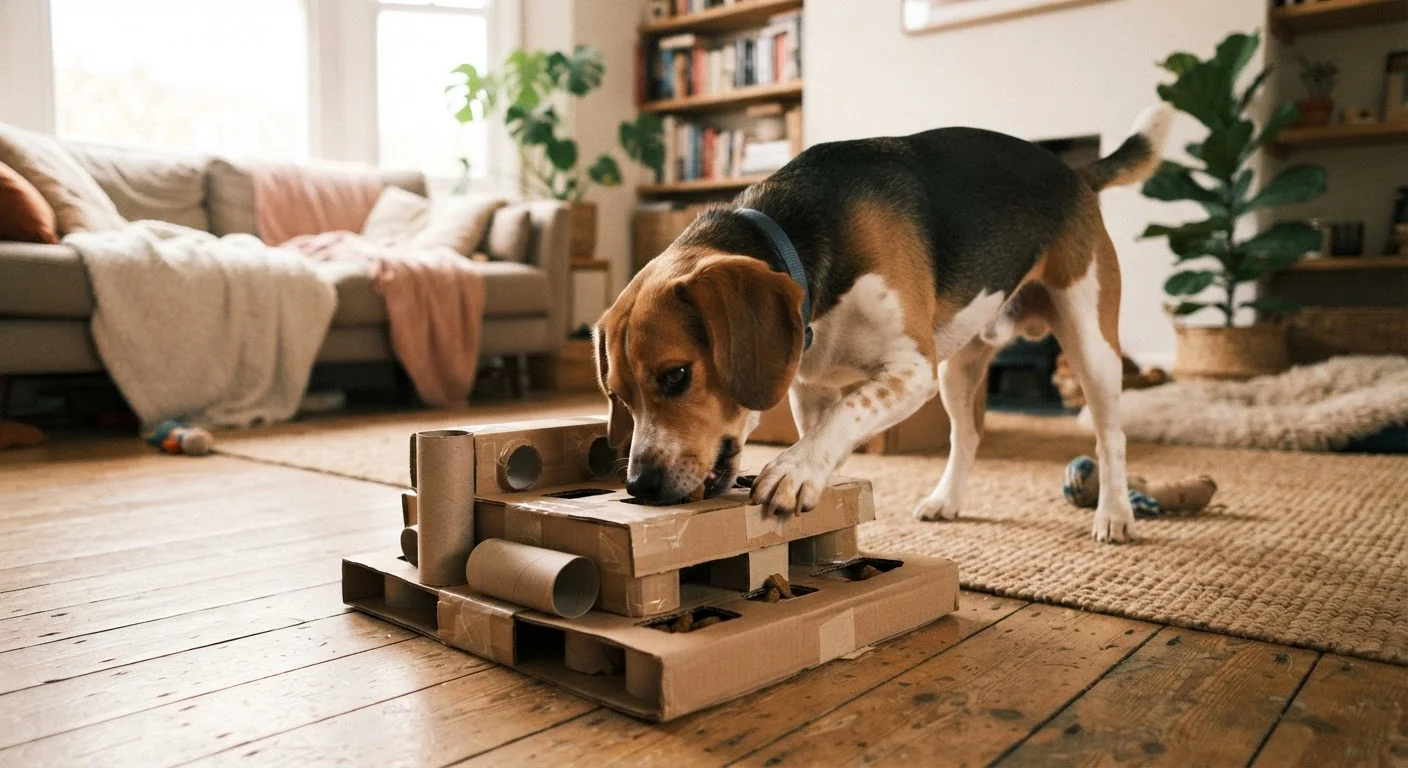
Cardboard boxes, paper bags, toilet paper rolls, and egg cartons are genuinely useful enrichment tools. Fold a few treats into a paper bag and crinkle the top closed — most dogs and cats will spend surprisingly long figuring out how to get inside. Stack small cardboard boxes inside a larger one with treats hidden in layers. Rabbits and birds especially enjoy shredding cardboard, which doubles as foraging enrichment and a natural chewing outlet. Rotate which packaging you use week to week so the novelty stays fresh. Always supervise to ensure your pet isn't swallowing large pieces.
Cardboard and packaging you'd otherwise recycle can become your pet's favorite puzzle.
Introduce short, daily training sessions
Training isn't just about obedience — it's one of the most powerful mental workouts available to pets. A five-to-ten-minute session teaching a new trick or reinforcing an existing one can tire a dog out as effectively as a much longer walk. Use kibble from their daily food ration as reward treats so you're not adding extra cost or calories. Cats can be trained too, often responding well to clicker-style positive reinforcement for simple behaviors like sit, high-five, or coming when called. The mental effort of learning and performing, combined with the social bonding with you, creates a rich experience at no additional expense.
A ten-minute training session can be more mentally tiring for a dog than a long walk.
Leverage scent as a stimulation tool
A dog's nose processes the world at a depth humans can barely imagine — and nose work games are among the most cognitively demanding activities you can provide. Hide a small treat or a piece of worn clothing under cups, inside rolled towels, or in different corners of a room and encourage your dog to sniff it out. This is often called "nose work" or "scent games," and it requires no equipment. For cats, rotating small amounts of pet-safe herbs like dried valerian or silver vine in a sock gives them something genuinely novel to investigate. Scent-based enrichment is particularly valuable for senior pets who may be less physically active but still need cognitive engagement.
Scent games tap into one of a pet's most powerful senses and cost almost nothing.
Create environmental variety indoors
Rearranging furniture occasionally, opening a window for safe supervised outdoor sights and smells, or setting up a simple climbing structure from stacked sturdy boxes gives indoor pets a refreshed world to explore. Cats in particular benefit from vertical space — a cleared bookshelf or a blanket-covered step ladder can serve as a cat tree substitute. Birds thrive when their cage arrangement is periodically changed or when new safe perches are added. Even moving a dog's sleeping spot to a different room for a few days introduces novelty. Environmental enrichment doesn't require new purchases — it requires thinking about your space differently. For context on how confinement shapes pet health and behavior, see our guide on indoor vs. outdoor pet lifestyles.
Rearranging your home periodically gives indoor pets a genuinely new world to explore.
Rotate toys instead of buying new ones
Toy rotation is one of the simplest and most underused enrichment strategies. Instead of leaving all toys available at once — which leads to rapid boredom — divide them into two or three groups and rotate which group is accessible every few days. When a toy comes back out after a week away, pets often engage with it as if it's new. This approach also helps you spot which toys your pet genuinely enjoys versus which ones sit ignored, so future decisions about what to keep are better informed. If your pet is part of a broader routine of daily habits that support their health, toy rotation fits naturally into that structure.
Rotating toys every few days rekindles interest without spending a dollar on replacements.
Enrichment Looks Different for Every Pet
A strategy that engages one dog may bore another completely. Species, breed, age, and individual personality all shape what kinds of mental challenges a pet finds rewarding. Observe your pet's response to each activity — genuine engagement looks like focused attention, problem-solving effort, and relaxed body language afterward. If an activity causes frustration or anxiety, simplify it or try a different approach.
Making Enrichment a Sustainable Daily Habit
The most effective enrichment isn't a one-off purchase — it's a consistent pattern woven into your daily routine. Rotating which activities you use each day keeps the novelty alive without adding cost. A muffin tin puzzle on Monday, a scatter-feed session on Wednesday, and a training game on Friday is more stimulating than the same activity every day.
As your pet moves through life stages, their cognitive needs shift too — what engages a puppy differs from what suits a senior dog. Pay attention to what holds your pet's interest and adjust accordingly. For a broader look at keeping your animal healthy without overspending, preventive care on a tight budget is a natural companion to these enrichment habits. Small, consistent investments of your time — not your wallet — are what keep pets thriving.
This article is for general informational purposes only and is not a substitute for professional veterinary advice. If your pet shows signs of significant behavioral distress or health changes, consult a qualified veterinarian.