

Key Takeaways
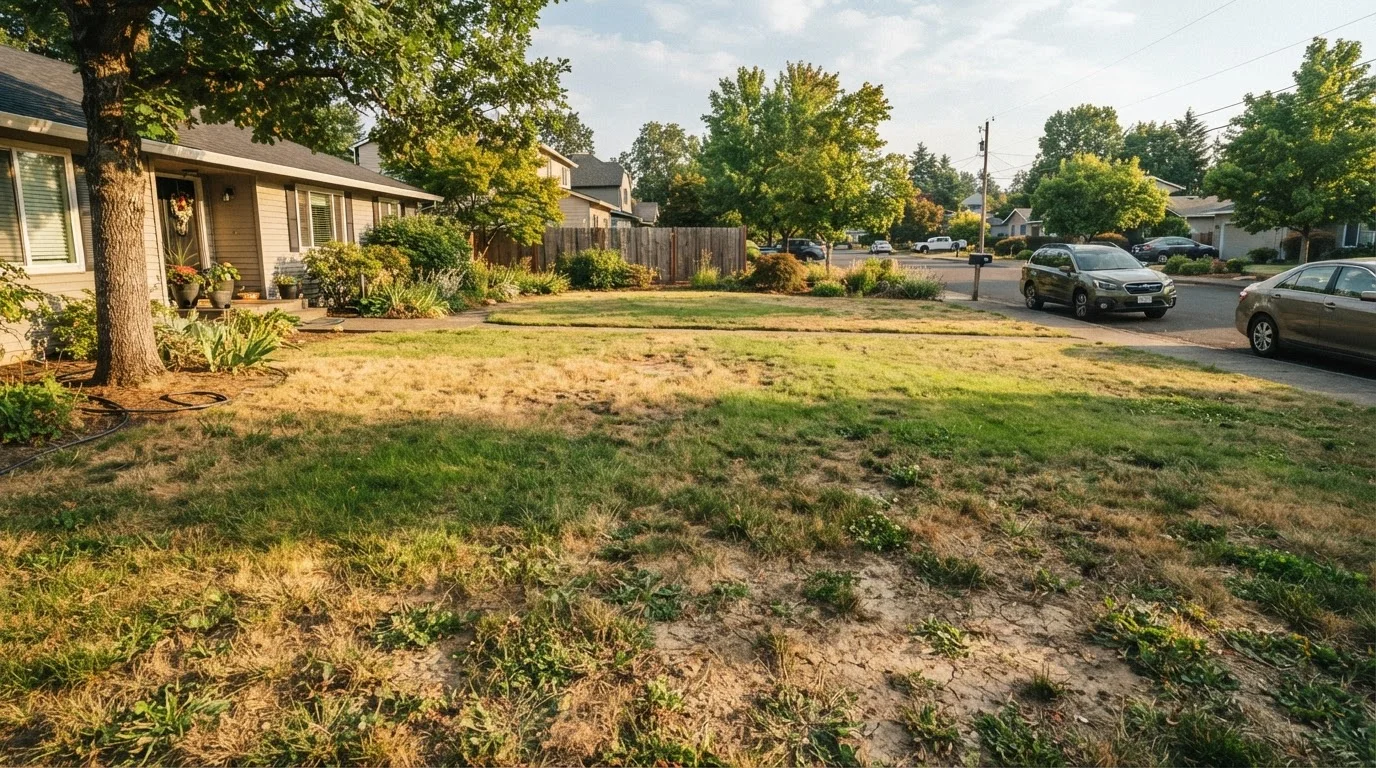
- Yellow grass in summer has several distinct causes, each requiring a different response.
- Overwatering is just as damaging as underwatering and produces similar yellowing symptoms.
- Soil compaction prevents roots from accessing water and nutrients, causing gradual decline.
- Mowing too short stresses grass and exposes it to heat and drought damage.
- Misreading the cause often leads to the wrong fix, wasting time and money.
Why Summer Turns Your Lawn Yellow
Yellow grass in July doesn't automatically mean your lawn is dying — but it does mean something is wrong. The challenge is that several different problems produce nearly identical symptoms on the surface. Getting the cause right is the only way to apply the right fix.
The most common culprits fall into a few categories: water management errors, mowing habits, soil health, and disease. Each one has a distinct set of signals if you know what to look for, and each one responds to a different correction. Reaching for the hose or the fertilizer bag before you've identified the actual problem often makes things worse.
This is also an area where common gardening advice can steer you wrong. Before acting on tips you've heard around the neighborhood, it's worth checking whether they hold up — our piece on garden myths that keep homeowners from getting results covers several widely repeated ideas that do more harm than good.
Don't Assume Yellow Means Drought
Many homeowners immediately increase watering when they see yellow grass, but overwatering causes the same visible symptoms as underwatering. Applying more water to an already waterlogged lawn can suffocate roots and invite fungal disease. Before adjusting your watering schedule, check the soil moisture a few inches down — it should feel like a wrung-out sponge, not muddy or bone dry.
The Most Common Mistakes — and What to Do Instead
Understanding the typical errors homeowners make during summer helps you both diagnose an existing problem and prevent one from developing. Most of these mistakes are easy to reverse once you know what you're dealing with.
Watering too frequently but too shallowly, keeping only the surface soil moist.
Why it happens: Daily light watering feels attentive and responsible, but it trains roots to stay near the surface where heat and evaporation do the most damage.
Mowing the lawn too short during summer heat, a practice often called scalping.
Why it happens: Shorter grass looks neater and means mowing less often, so homeowners cut as low as the mower allows — not realizing this removes the leaf area the plant needs for energy.
Ignoring soil compaction, which blocks water and air from reaching grass roots.
Why it happens: Compaction builds gradually through foot traffic, mowing, and time — it's invisible from the surface until the lawn starts to decline.
Misidentifying a fungal disease as drought stress and responding with more water.
Why it happens: Fungal problems like dollar spot or brown patch create yellow or straw-colored patches that closely resemble drought symptoms, especially to an untrained eye.
Applying too much nitrogen fertilizer in late spring before summer heat sets in.
Why it happens: Homeowners want lush, green lawns going into summer and apply fertilizer generously, not realizing it pushes excessive leaf growth that the plant can't sustain under heat stress.
Fertilizing Stressed Grass Makes Things Worse
When grass turns yellow, fertilizer can seem like a logical solution — but applying nitrogen-heavy fertilizer during heat stress or drought can burn already-struggling roots and accelerate damage. If your lawn is under stress, hold off on fertilizing until conditions improve and the grass shows active growth again.
50%
Of residential water use goes to landscaping
According to the EPA, roughly half of residential outdoor water use goes to landscaping, yet much of it is applied inefficiently.
3–4 inches
Recommended summer mowing height
Turf specialists generally recommend maintaining grass at 3 to 4 inches tall during summer heat to reduce stress and moisture loss.
Soil compaction is one of the most underappreciated causes of summer yellowing. When soil is packed too tightly, even adequate rainfall can't penetrate to the root zone — the water runs off or pools instead of soaking in. If you push a screwdriver into your lawn and it barely moves through the top two inches, compaction is likely a factor.
Fungal disease is another common misread. Unlike drought stress, which tends to affect large uniform areas, fungal problems usually appear as irregular patches, often with distinct borders or a slightly matted texture. Watering in the evening — when moisture sits on blades overnight — creates ideal conditions for fungal spread. Switching to morning watering alone sometimes clears up mild cases.
The good news is that in most cases, yellow summer grass can recover. Identifying the actual cause, correcting the specific issue, and giving the lawn a few weeks of consistent care is usually enough to see improvement. Patience and accuracy matter more than aggressive intervention.