

Key Takeaways
- Carbohydrates are your body's preferred and most efficient energy source.
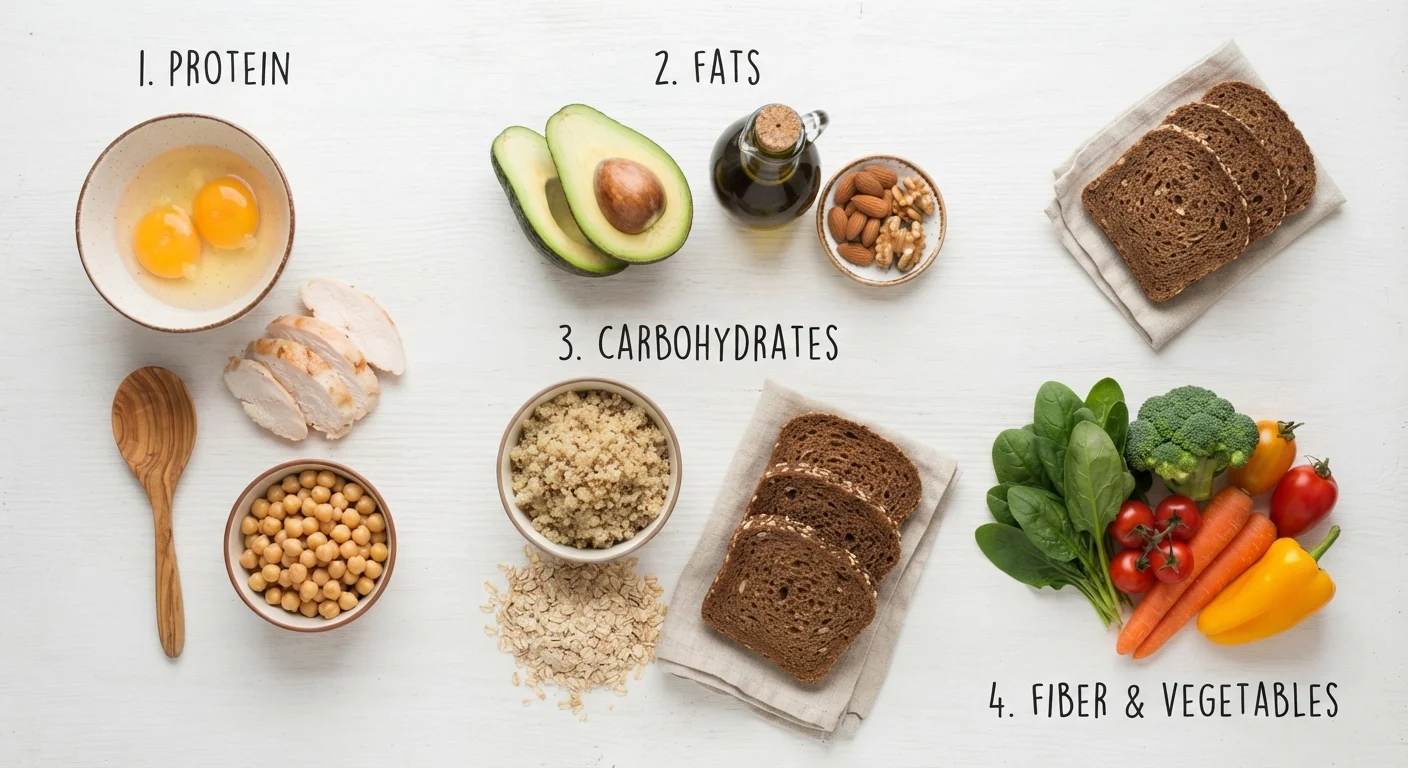
- Protein builds, repairs, and maintains virtually every tissue in the body.
- Fats support hormone production, brain function, and fat-soluble vitamin absorption.
- All three macronutrients work together — cutting any one out entirely creates imbalances.
- You can meet macronutrient needs with affordable, everyday foods without specialty products.
Macronutrients
Macronutrients are the three main categories of nutrients your body needs in relatively large amounts every day: carbohydrates, proteins, and fats. Each one provides energy and serves specific functions that keep your organs, muscles, and cells working properly. Unlike vitamins and minerals, which are needed in tiny amounts, macronutrients make up the bulk of what you eat.
Energy from macronutrients is measured in kilocalories (commonly called calories): carbohydrates and protein each provide 4 kcal per gram, while fat provides 9 kcal per gram.
Carbohydrates: Your Body's Go-To Fuel
Carbohydrates are broken down into glucose — a simple sugar your cells use as their primary fuel source. Your brain alone runs almost exclusively on glucose, which is why a skipped meal can leave you foggy and irritable before it leaves you physically tired.
Not all carbohydrates behave the same way. Simple carbohydrates (found in fruit, milk, and added sugars) digest quickly and raise blood glucose fast. Complex carbohydrates — the starches and fiber in whole grains, legumes, and vegetables — digest more slowly, providing steadier energy and supporting digestive health.
Fiber, technically a carbohydrate, deserves special mention: it isn't digested for energy, but it feeds beneficial gut bacteria, helps regulate blood sugar, and keeps you full longer. Most Americans fall short of the general fiber recommendations, making whole-food carbohydrate sources a practical priority.
Budget-Friendly Carbohydrate Sources
Oats, brown rice, dried lentils, and canned beans consistently rank among the most affordable, nutrient-dense carbohydrate options at any grocery store. Buying dried grains and legumes in bulk can reduce costs further without sacrificing nutritional quality.
For budget-friendly carbohydrate sources, oats, brown rice, dried lentils, and canned beans consistently rank among the most affordable, nutrient-dense options available at any grocery store.
Protein: Builder, Repairer, Regulator
Protein is made of amino acids — the raw materials your body uses to build and repair virtually everything: muscle fibers, skin, hair, enzymes, antibodies, and hormones. Of the 20 amino acids your body uses, nine are called essential amino acids because your body can't make them; they must come from food.
Animal proteins (meat, fish, eggs, dairy) contain all nine essential amino acids in one source. Plant proteins (beans, lentils, nuts, grains) each contain different combinations, so variety across a day — not necessarily at every meal — covers the full spectrum.
Protein also plays a role in satiety. It takes longer to digest than simple carbohydrates and triggers hormones that signal fullness, which is why protein-rich meals tend to keep hunger at bay longer.
Protein Needs Vary by Individual
General population guidelines suggest a baseline of around 0.8 grams of protein per kilogram of body weight per day for sedentary adults, but active individuals, older adults, and those recovering from illness often have higher needs. These figures are starting points, not personal prescriptions. A registered dietitian can help you determine what's appropriate for your specific situation.
Protein needs vary based on age, body size, activity level, and health status. General population guidelines suggest a baseline of around 0.8 grams per kilogram of body weight per day for sedentary adults, but active individuals, older adults, and those recovering from illness may have higher needs. A registered dietitian can help you determine what's appropriate for your situation.
Fats: More Essential Than Their Reputation Suggests
Dietary fat has a complicated public image, but the body genuinely depends on it. Fats provide a concentrated energy reserve, form the membrane around every cell in your body, support brain development, and are required to absorb the fat-soluble vitamins — A, D, E, and K — that your diet provides.
Fat also enables the production of hormones, including sex hormones and those that regulate inflammation. Without adequate dietary fat, these systems can be disrupted.
The distinction that matters most nutritionally is between fat types. Unsaturated fats — found in olive oil, avocados, fatty fish, nuts, and seeds — are broadly associated with cardiovascular benefits. Saturated fats (in butter, fatty meats, and full-fat dairy) are fine in moderation for most people. Industrially produced trans fats are the type most consistently linked to harm and are largely phased out of the US food supply.
To explore how these macronutrients interact with vitamins and minerals, see our guide to vitamins and minerals.
How the Three Work Together — and Why Balance Matters
Macronutrients don't operate in isolation. A meal of rice (carbohydrate), black beans (protein and carbohydrate), and olive oil (fat) illustrates how they complement each other: the fat slows digestion, steadying the energy release from the carbohydrates; the protein supports muscle maintenance; the fiber feeds the gut. The whole is genuinely more useful than any single part.
Eliminating any macronutrient entirely forces the body to compensate, often inefficiently. Very low carbohydrate intake, for instance, prompts the body to convert protein into glucose — a process called gluconeogenesis — which diverts protein away from its repair and building roles.
Rather than chasing a specific ratio, a practical approach is to include a source of each macronutrient at most meals and to prioritize less-processed forms: whole grains over refined, whole foods over powders and bars, and a variety of proteins and fat sources across the week.
For a broader look at what the number on a nutrition label actually tells you, see why nutrient density matters more than calorie counts. And if you want to understand what gaps are common in everyday diets, the nutrients most people aren't getting enough of is a useful next read.
This article is for general informational and educational purposes only and is not a substitute for professional medical or dietary advice. Consult a qualified healthcare provider for guidance specific to your health needs.