

Key Takeaways
- Carbohydrates are your body's preferred and fastest source of energy.
- Protein is essential for building and repairing nearly every tissue in your body.
- Dietary fat supports brain function, hormone production, and vitamin absorption.
- All three macronutrients are necessary — eliminating any one entirely can cause problems.
- The quality of each macronutrient matters as much as the quantity you consume.
Macronutrients
Macronutrients are the three main categories of nutrients your body needs in relatively large amounts to function: carbohydrates, proteins, and fats. Each one serves a distinct purpose, from fueling your brain to repairing muscle tissue. Together, they supply all the calories (energy) in the food you eat.
Unlike micronutrients (vitamins and minerals), macronutrients are measured in grams rather than milligrams or micrograms, and each provides a set number of calories per gram: carbohydrates 4 kcal/g, protein 4 kcal/g, fat 9 kcal/g.
Carbohydrates: Your Body's Go-To Fuel
Carbohydrates get a lot of mixed press, but their job in the body is straightforward: they are your primary energy source. When you eat carbs — whether from oats, beans, fruit, or bread — your digestive system breaks them down into glucose. That glucose enters your bloodstream and powers everything from muscle movement to brain activity.
Not all carbs work the same way. Simple carbohydrates (like table sugar or white bread) digest quickly, delivering fast energy but little staying power. Complex carbohydrates (like brown rice, lentils, and sweet potatoes) digest more slowly and also bring fiber, which supports digestive health and helps you feel satisfied longer.
Your brain alone uses roughly 20% of the glucose your body produces — making carbohydrates especially important for focus and mental clarity. For a broader look at how food quality shapes what the body actually gets out of a meal, see why nutrient density matters more than calorie counts.
Choose Whole-Food Carb Sources When Possible
Swapping refined grains for whole grain versions — like brown rice instead of white, or whole wheat bread instead of white — adds fiber and nutrients without costing much more. Legumes like lentils and canned beans are among the most affordable complex carb sources available. Small swaps, done consistently, make a real nutritional difference over time.
Protein: Builder and Repair Crew
Protein is the structural material of the body. It builds and repairs muscle, skin, organs, and connective tissue. It also makes enzymes (which drive chemical reactions) and antibodies (which help fight infection). Without adequate protein, the body's ability to heal and maintain itself is genuinely compromised.
Proteins are made of smaller units called amino acids. Your body can produce some of these on its own, but nine — called essential amino acids — must come from food. Animal products like eggs, dairy, meat, and fish contain all nine. Plant sources like legumes, tofu, quinoa, and nuts can provide all essential amino acids too, often by eating a variety throughout the day.
Protein also plays a practical role in appetite management: it tends to be more satiating than an equivalent amount of carbohydrates, which can help with feeling full between meals.
Protein Needs Vary by Individual
General dietary guidelines suggest adults need roughly 0.8 grams of protein per kilogram of body weight per day as a baseline, but this varies based on age, activity level, and health status. Older adults, pregnant individuals, and people recovering from illness or injury typically have higher needs. A registered dietitian can help you determine what's right for your situation.
Fat: More Useful Than Its Reputation Suggests
Dietary fat has been unfairly villainized over the decades. In reality, fat is essential for several critical body functions. It helps absorb the fat-soluble vitamins A, D, E, and K — meaning a very low-fat diet can leave you deficient in those nutrients even if your food contains them. Fat also insulates organs, contributes to cell membrane structure, and is a key raw material for producing hormones.
The type of fat matters. Unsaturated fats — found in foods like olive oil, avocados, walnuts, and fatty fish — are widely associated with heart and brain health. Saturated fats, found in butter and red meat, are best consumed in moderation according to most dietary guidelines. Trans fats, largely removed from the U.S. food supply, are the type most consistently linked to negative health outcomes.
Fat also provides more than twice the calories per gram as protein or carbs (9 vs. 4), making it a concentrated and efficient energy source — especially useful during prolonged physical activity.
How the Three Work Together
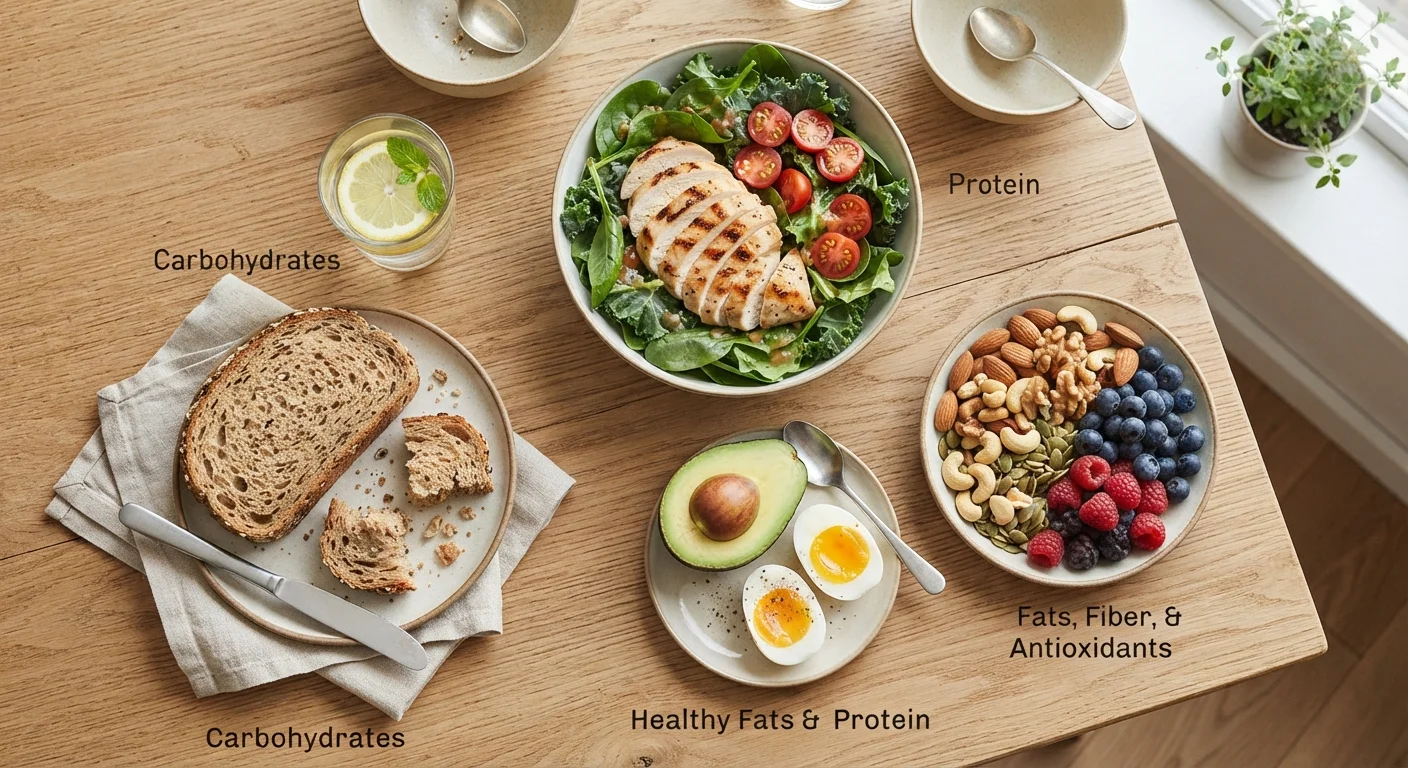
In real meals, macronutrients rarely act in isolation. A bowl of chicken and vegetable rice contains carbs for immediate energy, protein for tissue repair, and small amounts of fat to help absorb fat-soluble vitamins in the vegetables. This synergy is one reason nutrition scientists consistently recommend variety over eliminating food groups.
When one macronutrient is dramatically reduced — as in very low-carb or very low-fat diets — the body adapts, but not always without trade-offs. Your brain may experience a transitional slump without sufficient carbohydrates, for instance, or vitamin absorption may suffer with very little dietary fat.
Understanding what each macronutrient does is the first step toward making food choices that genuinely serve your body. For a complete picture of how these nutrients fit into an overall eating pattern, the comprehensive nutrition guide covers everything from meal balance to hydration. And if you're curious about the vitamins and minerals that work alongside macronutrients, understanding micronutrients is a natural next read.
20%
Brain's share of the body's glucose use
The brain is one of the most energy-demanding organs, relying heavily on glucose derived from dietary carbohydrates for normal cognitive function.
9 kcal/g
Calories per gram of dietary fat
Fat provides more than twice the energy per gram compared to carbohydrates or protein, making it the most calorie-dense of the three macronutrients.
9
Essential amino acids from food
Of the 20 amino acids used to build proteins, nine cannot be synthesized by the body and must be obtained from dietary sources.
This article is for general informational and educational purposes only and is not a substitute for professional medical or dietary advice. Consult a qualified healthcare provider before making significant changes to your diet.