

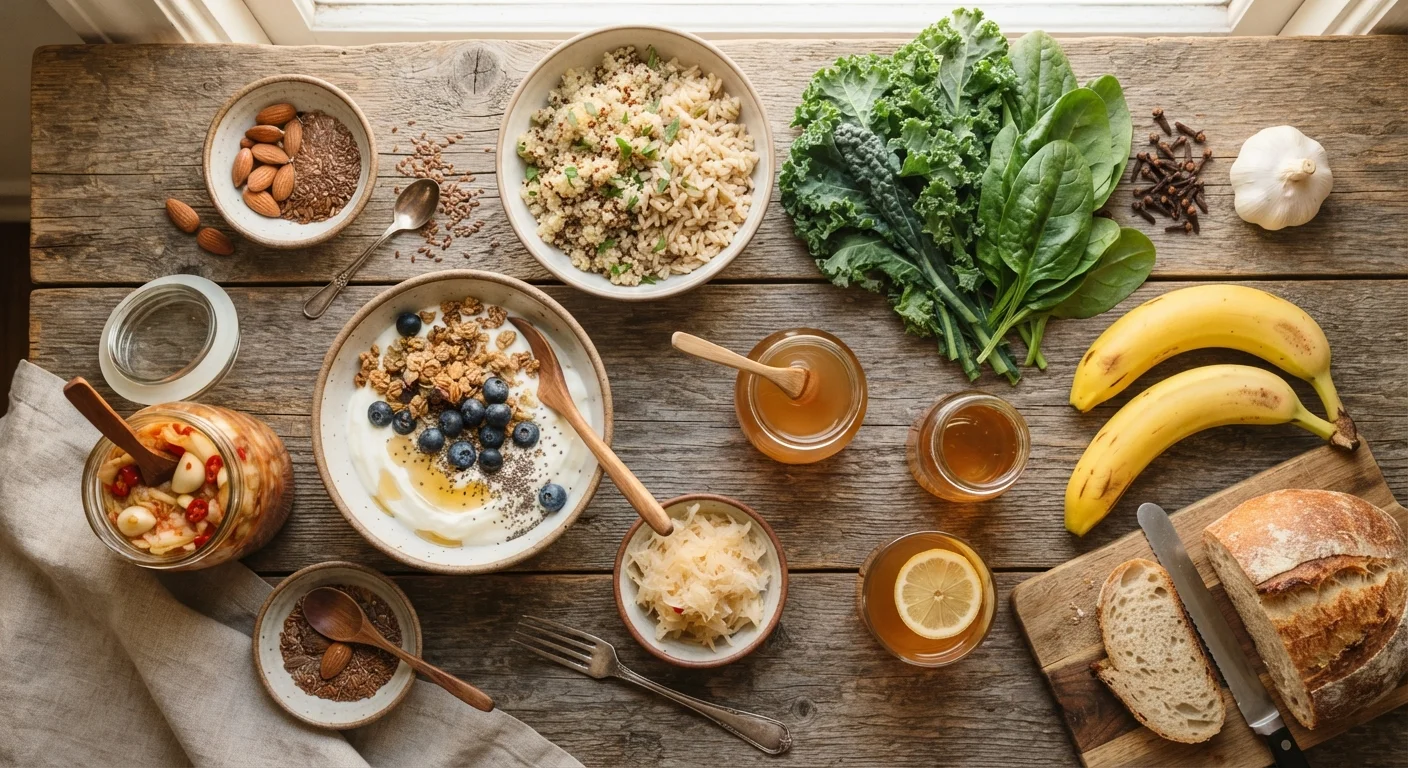
Key Takeaways
- Fermented foods like yogurt and kefir contain live bacteria that may benefit gut microbial diversity.
- Dietary fibre from plants feeds beneficial gut bacteria and supports digestive regularity.
- Variety in plant foods is one of the most evidence-supported strategies for a healthier microbiome.
- Prebiotic foods — like garlic, onions, and bananas — feed the good bacteria already living in your gut.
- Small, consistent dietary shifts tend to have more lasting impact than drastic overhauls.
What Your Gut Actually Needs
Your gut is home to trillions of microorganisms — bacteria, fungi, and other microbes — collectively known as the gut microbiome. Research consistently links microbiome diversity with better digestive function and overall health, though science in this area is still evolving. The encouraging news: you don't need expensive supplements or specialty products to support it. Many affordable, everyday foods have well-established roles in gut health.
This list focuses on food categories backed by nutritional research. It's not a treatment plan or a cure for any condition — it's general dietary guidance. As always, if you have specific digestive health concerns, a registered dietitian or your healthcare provider is the right person to consult. For a broader look at eating well, see our plain-language nutrition guide.
Fermented foods
Fermented foods like plain yogurt, kefir, kimchi, sauerkraut, and miso contain live microorganisms — commonly called probiotics — that may contribute to microbial diversity in the gut. Research published in journals such as Cell has found that a diet high in fermented foods can increase microbiome diversity in healthy adults. Look for products labeled "live and active cultures" and choose varieties without excessive added sugar.
Fermented foods are one of the most studied dietary tools for supporting gut microbial diversity.
High-fibre plant foods
Dietary fibre passes through the digestive tract largely undigested, where it becomes fuel for beneficial gut bacteria — a process called fermentation in the colon. Both soluble fibre (found in oats, beans, and apples) and insoluble fibre (found in whole grains, nuts, and vegetables) play roles in gut health. Most Americans fall well short of the recommended daily fibre intake. Our article on why fibre keeps getting overlooked explains why this gap matters and where to find affordable sources.
Fibre feeds beneficial bacteria in your colon — and most people don't eat nearly enough of it.
Prebiotic foods
Prebiotics are specific types of fibre and plant compounds that selectively feed beneficial gut bacteria. Garlic, onions, leeks, asparagus, slightly underripe bananas, and Jerusalem artichokes are particularly rich in prebiotic compounds like inulin and fructooligosaccharides. These foods don't need to be eaten in large amounts — even modest, regular servings can support the bacteria already present in your gut.
Prebiotic foods like garlic and bananas feed the good bacteria already living in your gut.
Legumes and pulses
Beans, lentils, chickpeas, and split peas are nutritional workhorses: high in fibre, plant-based protein, and resistant starch — a type of carbohydrate that functions like a prebiotic by feeding gut bacteria. Canned legumes are especially convenient and budget-friendly. If you're not used to eating them regularly, introducing them gradually can help your digestive system adjust comfortably. They're a natural fit for soups, stews, salads, and grain bowls.
Legumes combine fibre, protein, and resistant starch — making them one of the most gut-supportive foods available.
Whole grains
Unlike refined grains, whole grains — such as oats, brown rice, barley, quinoa, and whole wheat — retain their bran and germ layers, which contain fibre, B vitamins, and other compounds that support the gut environment. Oats in particular contain a soluble fibre called beta-glucan, which has been well studied for its effects on both gut bacteria and cholesterol levels. Making whole grains a regular part of your diet is one of the more straightforward changes associated with improved digestive health.
Whole grains retain the bran and germ that refined grains lose — along with the fibre that gut bacteria depend on.
A wide variety of vegetables and fruits
Eating a diverse range of colorful produce — rather than the same few items every week — is consistently associated with greater microbiome diversity in nutritional research. Different plant foods contain different types of fibre and polyphenols (natural plant compounds), which support different species of gut bacteria. Practically speaking, this means rotating your vegetable choices, including leafy greens, cruciferous vegetables like broccoli and cabbage, and a range of fruits. The goal is variety, not perfection. Visit the Nutrition Basics hub for more straightforward eating guidance.
Rotating the types of produce you eat each week is a simple way to support greater gut diversity.
Building These Foods Into Your Routine
You don't need to eat every food on this list daily. The goal is gradual, sustainable variety — not a rigid overhaul. Start by adding one or two categories you don't currently eat often. Swap white bread for a whole-grain option. Stir some plain yogurt into a smoothie. Toss canned beans into a soup. Small additions compound over time.
Start with one change at a time
If this list feels overwhelming, pick just one food category you're not currently eating and add it to your weekly grocery run. Eating yogurt a few times a week, adding a can of beans to dinner, or swapping to oats at breakfast are small steps that don't require a complete diet overhaul. Consistency with small changes tends to produce more lasting results than short-term intensity.
If you're shopping on a budget, it's worth knowing that many of the most gut-supportive foods — beans, oats, bananas, cabbage, garlic — are among the most affordable items in the grocery store. Our weekly grocery nutrition checklist can help you cover your bases without overspending. For more on building habits that last, see small nutrition habits that actually stick.
This article is for general informational and educational purposes only and is not a substitute for professional medical or dietary advice. Speak with a qualified healthcare provider about any digestive health concerns.