
Comprehensive vs. Third-Party Car Insurance: What the Coverage Gap Actually Means

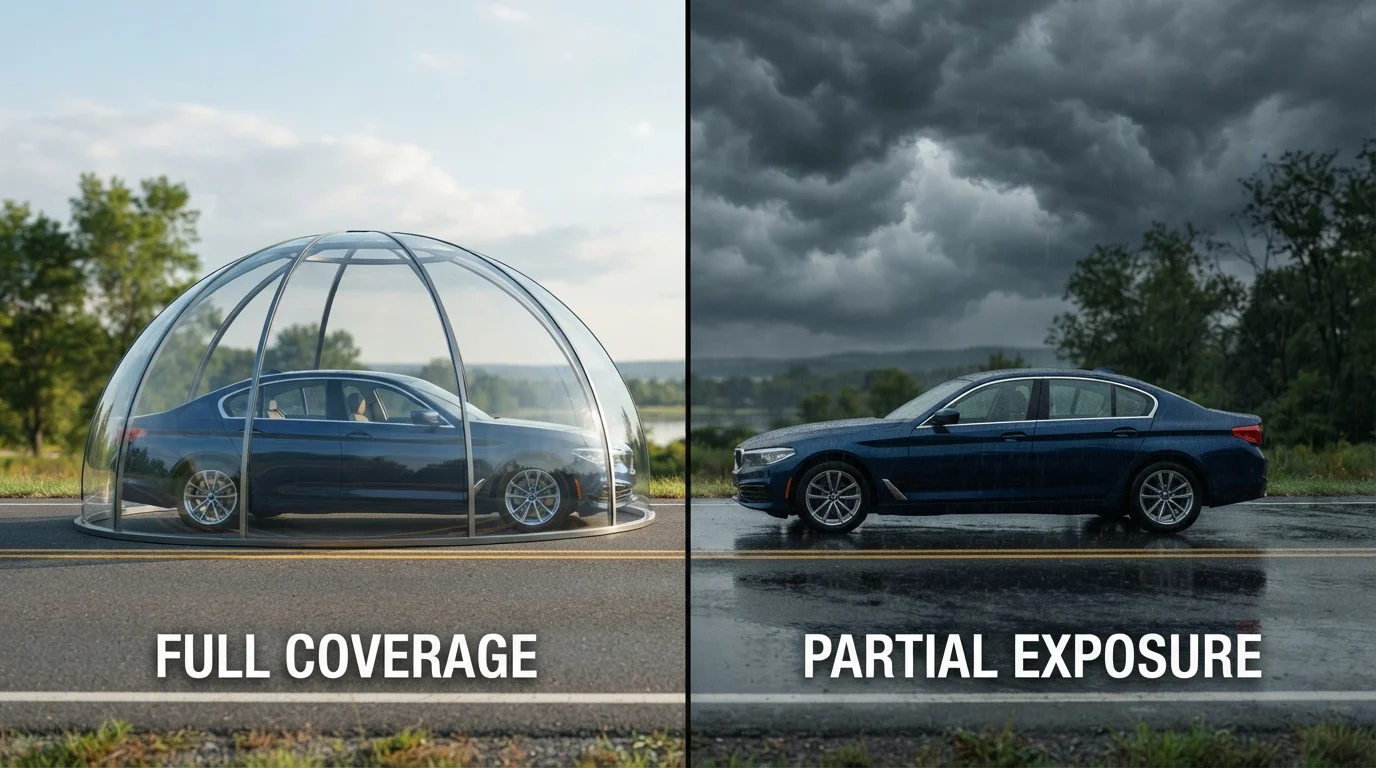
Key Takeaways
- Third-party insurance covers damage you cause to others; it does not cover your own vehicle.
- Comprehensive insurance adds protection for theft, weather events, fire, and non-collision damage to your own car.
- Neither tier is universally better — the right choice depends on your vehicle's value and your financial risk tolerance.
- Lenders typically require comprehensive coverage on financed or leased vehicles.
- Premiums are only one part of the cost equation; your deductible and coverage limits matter just as much.
Option A
Comprehensive Car Insurance
The broadest protection a personal auto policy typically offers.
Best for: Drivers with newer, higher-value vehicles or those who want protection against non-collision events like theft, weather, and fire.
Option B
Third-Party Only (Liability) Insurance
The legal minimum — covers others, not your own vehicle.
Best for: Drivers of older, lower-value vehicles where the cost of broader coverage outweighs the potential payout.
If you drive a newer or financed vehicle
Comprehensive Car Insurance
Your lender likely requires it, and the vehicle's value justifies the added premium. A single theft or hailstorm claim can far exceed years of coverage costs.
If your car is older and worth under $4,000
Third-Party Only (Liability) Insurance
When a vehicle's market value is close to or below your deductible plus annual premium, comprehensive coverage may pay out less than it costs over time.
If you live in an area prone to theft, flooding, or severe weather
Comprehensive Car Insurance
Geographic risk is a real factor. Non-collision events like hail and floods account for a substantial share of auto claims in high-risk regions.
If you're on a tight budget and your car is paid off
Third-Party Only (Liability) Insurance
Dropping to liability-only on a low-value, owned vehicle can free up meaningful annual savings, provided you can absorb a total loss out of pocket.
What Each Policy Actually Covers
Third-party insurance — also called liability-only coverage — pays for injuries and property damage you cause to other people in an accident. It does not pay a cent toward repairing or replacing your own vehicle. In most U.S. states, carrying at least a minimum level of liability coverage is required by law.
Comprehensive insurance bundles liability protection with coverage for your own vehicle across a wide range of scenarios: collision with another vehicle (through a separate collision component), theft, vandalism, fire, falling objects, flooding, hail, and animal strikes. In common usage, when people say "full coverage," they usually mean comprehensive plus collision plus liability — though no single policy automatically includes everything.
Understanding what each tier excludes is just as important as knowing what it includes. See our breakdown of the true annual cost of running a car for context on how insurance fits into your total ownership spend.
| Criterion | Comprehensive Insurance | Third-Party Only |
|---|---|---|
| Covers damage to others | Yes | Yes |
| Covers your own vehicle in a collision | Yes (with collision add-on) | No |
| Covers theft of your vehicle | Yes | No |
| Covers weather or fire damage | Yes | No |
| Required by lenders | Typically yes | No |
| Typical annual premium | Higher | Lower |
| Best vehicle age/value fit | Newer or higher-value cars | Older or lower-value cars |
Where the Coverage Gap Bites Hardest
The gap between these two tiers becomes financially painful in specific situations. If your car is stolen and you carry only liability coverage, your insurer pays nothing for the loss — that's entirely on you. The same applies to a tree falling on your hood during a storm, a flood submerging your vehicle, or a hit-and-run where the other driver can't be identified or is uninsured.
Drivers often underestimate these non-collision risks. According to the National Insurance Crime Bureau, vehicle theft remains a significant issue across the country, with hundreds of thousands of vehicles reported stolen annually. Weather-related losses — hail in particular — are also among the most common comprehensive claims filed each year.
On the flip side, drivers who pay for comprehensive coverage on a vehicle worth less than their deductible are effectively over-insured. If your car's market value is $2,500 and your deductible is $1,500, the maximum net payout in a total loss is only $1,000 — potentially less than one year's premium difference between tiers.
~1M+
Vehicle thefts reported annually in the U.S.
The National Insurance Crime Bureau tracks vehicle theft trends; figures have fluctuated but remain in the hundreds of thousands to over one million in recent years.
~40%
Share of comprehensive claims tied to weather events
Industry data from sources like the Insurance Information Institute indicates weather-related losses — particularly hail — make up a significant portion of comprehensive auto claims.
$500–$1,500
Typical comprehensive deductible range
Policyholders choose their deductible at purchase; a higher deductible lowers the premium but increases out-of-pocket exposure in any claim.
How to Decide Which Tier Makes Sense for You
The practical test is straightforward: look up your vehicle's current market value using a third-party valuation tool, then compare it against your deductible and the annual premium difference between tiers. If the math doesn't favor comprehensive coverage, liability-only may be the more rational choice — as long as you can absorb the vehicle's loss without financial hardship.
A few other factors carry real weight:
- Financing or leasing: Most lenders contractually require comprehensive and collision coverage for the life of the loan or lease.
- Local risk: If you live in a hail corridor, a flood-prone area, or a city with elevated vehicle theft rates, the actuarial case for comprehensive coverage strengthens.
- Emergency savings: Dropping to liability-only is a calculated risk. Make sure you have the liquidity to replace a vehicle if it's totaled or stolen.
For a deeper look at what moves your premium in either direction, see what actually drives your car insurance premium.
This article provides general educational information about auto insurance coverage types. It is not legal or financial advice. Coverage terms, requirements, and definitions vary by state and insurer. Consult a licensed insurance professional for guidance specific to your situation.